Solar Candles and Ninghai Shuangmei Electronic Co., Ltd.: An Overview of Luminous Innovation
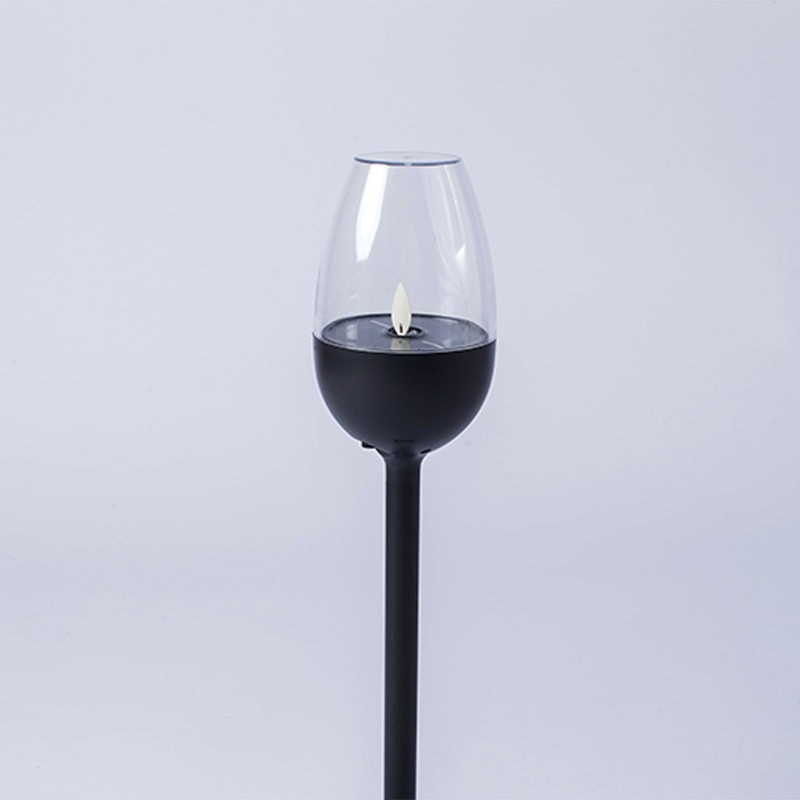
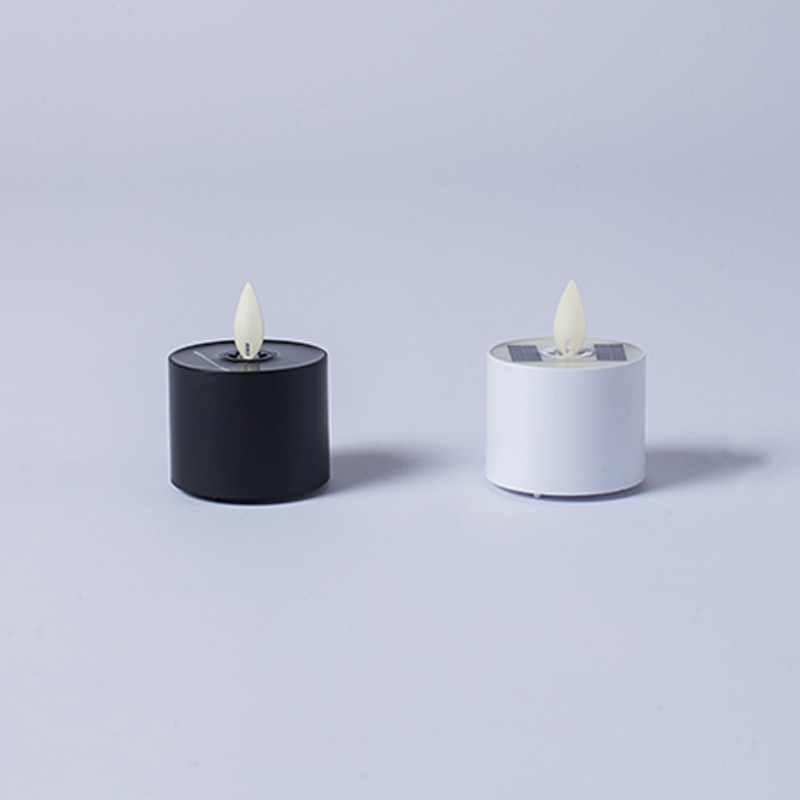
The convergence of sustainable technology and practical illumination is best exemplified by Solar Candles. These devices represent a significant evolution from traditional lighting, leveraging photovoltaic principles to offer a safe, energy-efficient, and environmentally conscious alternative. When viewed through the lens of a company deeply committed to quality and global standards, such as Ninghai Shuangmei Electronic Co., Ltd., the inherent value and market suitability of Solar Candles become exceptionally clear.
Core Principles of Solar Candle Technology
Solar Candles are fundamentally simple yet technologically sophisticated, integrating several key components to function effectively. Their operation hinges on a closed-loop energy cycle that requires no external power source beyond ambient light.
Photovoltaic Conversion: At the heart of a Solar Candle is a small photovoltaic panel—often concealed within the device's design. This panel captures incident solar radiation, transforming the light energy directly into electrical energy. The efficiency of this conversion process is a critical determinant of the candle's performance, particularly in varying light conditions.
Energy Storage: The generated electrical current is channeled into a rechargeable battery (typically NiMH or Li-ion). This battery acts as the energy reservoir, storing the charge accumulated during daylight hours. The capacity and cycle life of this storage component are vital for ensuring a long, consistent illumination period after sunset.
Light Emitting Diode (LED) Illumination: Instead of a traditional wick and flame, Solar Candles utilize an LED emitter. LEDs are chosen for their superior energy efficiency and longevity. Moreover, specialized warm-white or amber LEDs are often employed, sometimes coupled with flicker-effect circuitry, to convincingly mimic the aesthetic and ambiance of a genuine flame. This electronic simulation is a key differentiator in the product category.
Intelligent Activation: A crucial element is the photoresistor or light sensor. This sensor automatically detects the onset of darkness. Upon detecting a sufficiently low light level, the sensor triggers a switch, allowing the stored energy to flow from the battery to the LED, initiating the illumination cycle. This automatic dusk-to-dawn operation provides convenience and maximizes battery life.
Quality Assurance and Global Compliance: The Ninghai Shuangmei Advantage
The successful manufacturing and global distribution of technologically driven products like Solar Candles demand an unwavering commitment to quality management and regulatory compliance. This is where the established operational framework of Ninghai Shuangmei Electronic Co., Ltd. provides a robust foundation for product excellence.
Rigorous Quality Management System: The integration of Solar Candles into the production portfolio of Ninghai Shuangmei benefits from their already established and stringent quality management protocols. This system mandates comprehensive checks that extend from the initial sourcing of photovoltaic cells and battery components to the final assembly and sealing of the candle unit. This multi-stage inspection process is non-negotiable, ensuring that every unit meets defined performance and durability benchmarks prior to shipment.
Material and Component Verification: Critical to the reliability of a Solar Candle are its components, particularly the PV panel's performance and the battery's longevity. Ninghai Shuangmei's focus on inspection guarantees the use of highly stable and reliable materials. This preemptive quality control minimizes potential defects such as poor charge retention or premature LED failure, which are common challenges in the broader market.
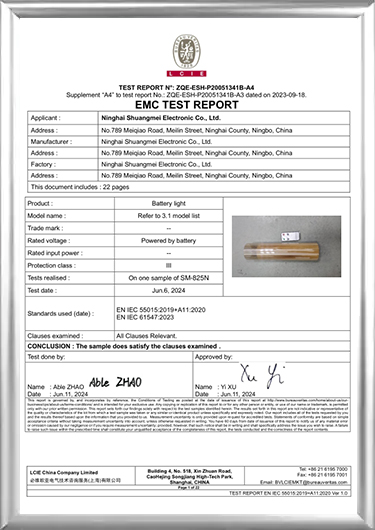
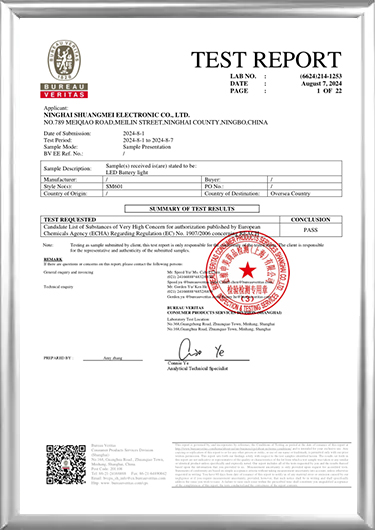
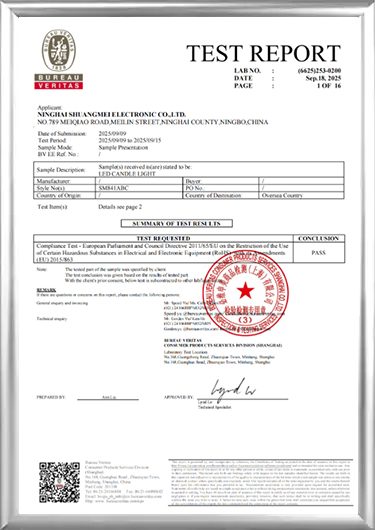
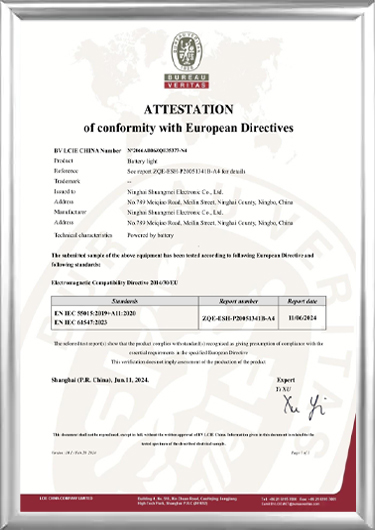
International Regulatory Adherence: The suite of international certifications secured by Ninghai Shuangmei—including CE, ROHS, REACH, and EMC—is highly pertinent to the global acceptance of Solar Candles.
ROHS and REACH compliance signifies that the materials used in the Solar Candles are free from specific hazardous substances, a major concern for electronic goods distributed worldwide.
The CE marking confirms conformity with relevant European product directives, guaranteeing the Solar Candle's safety for sale within the European Economic Area.
EMC (Electromagnetic Compatibility) certification is essential, as it validates that the candle's electronic flickering circuitry and charging components will not generate or be susceptible to unacceptable electromagnetic interference.
Ethical Manufacturing Validation (BSCI): Beyond product technical compliance, the BSCI (Business Social Compliance Initiative) audit passed by Ninghai Shuangmei underscores an ethical supply chain. This assures international customers and end-users that the Solar Candles are produced under fair labor conditions, aligning product quality with corporate social responsibility.
Comparative Attributes of Solar Candles
| Attribute |
Solar Candle (LED/PV) |
Traditional Wax Candle (Combustion) |
Battery-Powered LED Candle (Non-PV) |
| Energy Source |
Renewable (Solar Radiation) |
Chemical (Wax/Oil) |
Stored Chemical (Disposable Batteries) |
| Environmental Impact |
Minimal; No emissions; Reusable |
Produces Soot, $\text{CO}_2$, and $\text{PM}$ (Particulate Matter) |
Generates Battery Waste |
| Safety Risk |
Extremely Low; No Heat, No Flame |
High (Fire Hazard, Melted Wax) |
Low; Minimal Heat Generation |
| Operational Lifetime |
Multi-year component lifespan; Rechargeable |
Limited to the volume of fuel (wax) |
Limited to the lifespan of disposable batteries |
| Maintenance |
Minimal (Occasional cleaning of PV panel) |
Frequent (Trimming wick, replacing candle) |
Replacement of exhausted batteries |
| Cost over Time |
Low (Initial cost, negligible running cost) |
Medium to High (Continuous fuel purchase) |
Medium (Recurring cost of new batteries) |
Frequently Asked Questions (FAQ)
| Question |
Expert Answer |
| How does weather impact a Solar Candle's operation? |
While direct, bright sunlight maximizes charging efficiency, most modern Solar Candles are engineered to charge effectively even under overcast conditions or on cloudy days through diffused light capture. However, extended periods of extreme darkness or heavy snow accumulation on the panel will naturally reduce the total illumination time available that evening. |
| What is the typical operational lifespan of the internal battery? |
The lifespan is determined by the charge/discharge cycle capacity of the cell used. High-quality batteries, as specified under a strict quality system like Ninghai Shuangmei's, are rated for multiple hundreds of cycles, ensuring they retain a usable capacity for several years before a significant decline in evening performance is observed. |
| Are Solar Candles truly waterproof and suitable for outdoor use? |
Reputable manufacturers ensure their outdoor Solar Candles carry a sufficient Ingress Protection (IP) rating, certifying their resistance to dust and moisture penetration. This is critical for preventing short-circuiting and corrosion of the sensitive electronic components when exposed to rain, humidity, and sprinklers. |
| How should the Solar Candle be installed for optimum performance? |
For maximum charge acquisition, the candle should be placed in a location that receives the longest possible period of direct, unobstructed sunlight daily. Any shadowing from trees, structures, or window frames will diminish the efficiency of the photovoltaic conversion. |
| Can the illumination color or flicker effect be adjusted? |
Depending on the sophistication of the internal circuitry and LED configuration, some models offer selectable modes for color temperature (e.g., warm white vs. cool white) or variation in the flicker pattern. The inclusion of such features is a design choice that enhances the user's ability to customize the ambient lighting effect. |


 English
 Español