
 English
 Español
 Content
- 1 How Battery-Operated Candles Work
- 2 Types of Battery-Operated Candles
- 3 Key Features to Look For When Buying Flameless Candles
- 4 Battery-Operated Candles vs. Real Candles: A Practical Comparison
- 5 Safety Benefits of Flameless Candles
- 6 Best Uses and Applications for Battery-Operated Candles
- 7 How to Choose the Right Battery-Operated Candle
- 8 Tips for Getting the Most From Your Flameless Candles
- 9 Popular Battery-Operated Candle Brands Worth Knowing
- 10 Environmental Considerations
- 11 Frequently Asked Questions About Battery-Operated Candles
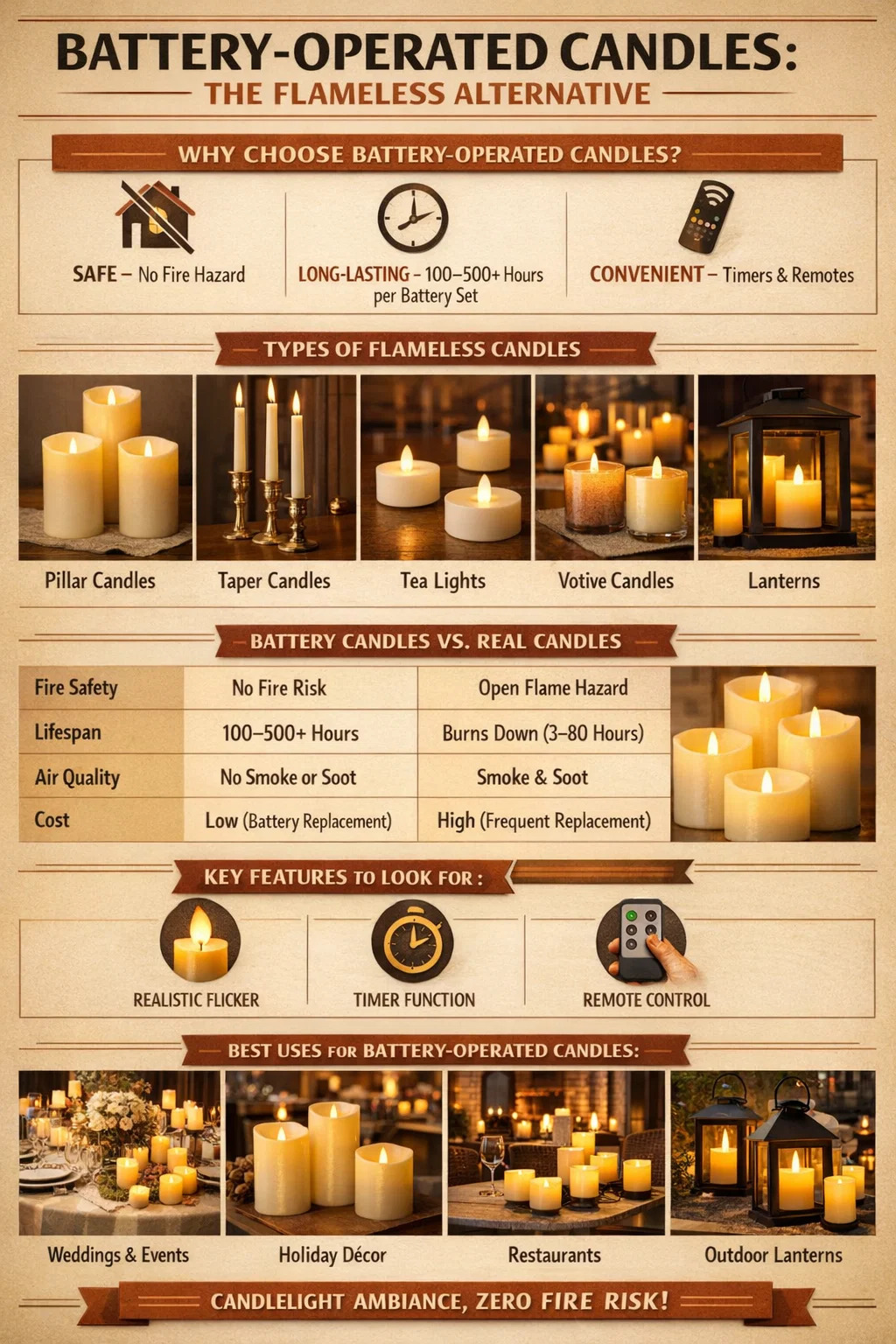
Battery-operated candles are flameless lighting devices designed to replicate the look and ambiance of real wax candles — without any open flame, dripping wax, or fire hazard. They run on standard batteries (typically AA, AAA, or CR2032 coin cells) and use LED bulbs to produce a warm, flickering glow. Most battery-operated candles can last anywhere from 100 to 500+ hours on a single set of batteries, making them a practical, long-lasting alternative to traditional candles. They're used in homes, events, restaurants, hospitals, and anywhere that real flames are prohibited or impractical.
Unlike real candles, battery-operated versions never burn down, never drip wax onto tablecloths, and never pose a fire risk to children, pets, or curtains. Many models include remote controls, timers, and adjustable brightness — features that no wax candle can offer. Whether you're decorating a wedding venue or simply want a cozy glow in your bedroom without the worry, battery-operated candles have become a mainstream solution that millions of households rely on.
How Battery-Operated Candles Work
The core technology behind battery-operated candles is straightforward. A small LED light sits at the center of the candle body — usually made from real wax, plastic, or paraffin-coated materials — and is powered by a battery compartment hidden at the base. The LED is connected to a microcontroller or simple circuit that produces a flickering effect by rapidly varying the light output in a randomized pattern that mimics how a real flame moves in a gentle breeze.
The Flickering Mechanism
Early battery candles used a simple on-off circuit to flicker. Modern versions use a more sophisticated algorithm — sometimes called "authentic flame technology" — that incorporates random timing variations so the flicker never repeats the same exact pattern twice. Some high-end models even use two or three LEDs at slightly different angles to simulate the three-dimensional movement of a real flame. The result is noticeably more realistic than first-generation products from the early 2000s.
Materials and Construction
Battery-operated candles come in several material types:
- Real wax: Looks and feels identical to traditional candles. The wax body is solid, but the wick is either fake (a plastic filament) or a small LED tip that glows amber. These are the most realistic-looking option.
- Plastic with wax coating: A plastic core is dipped in wax for appearance. More durable and less expensive to manufacture.
- Hard plastic: Found in lower-cost products. Less realistic but very durable, often used in outdoor settings or children's décor.
- Glass jar candles (flameless): Some battery-operated candles are placed inside glass containers to mimic the popular "jar candle" aesthetic. The LED sits inside an amber-tinted glass vessel filled with wax or a wax-look material.
Types of Battery-Operated Candles
The market for flameless candles has expanded dramatically since the early 2010s. Today there are several distinct categories, each suited to different needs and settings.
Pillar Candles
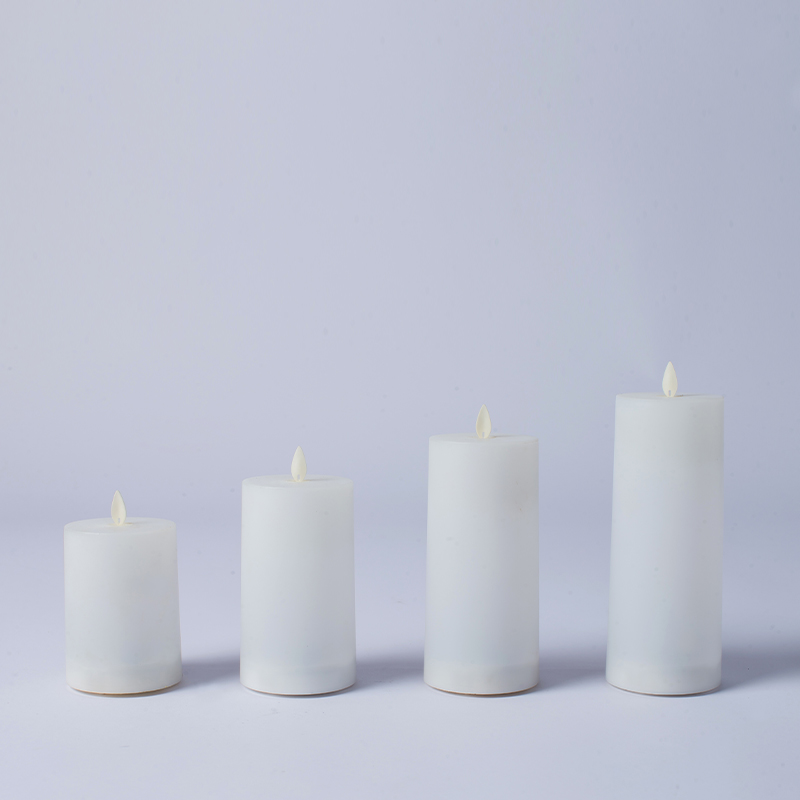
Pillar-style battery candles are the most commonly recognized format — a thick, cylindrical candle body standing on its own without a holder. They range in size from 3 inches tall up to 9 inches or more, and in diameter from 2 to 4 inches. Many are sold in sets of three graduated heights for decorative arrangements on mantels, dining tables, or window sills. Real wax pillar candles from brands like Luminara often retail between $20 and $60 per candle, reflecting the premium craftsmanship involved.
Taper Candles
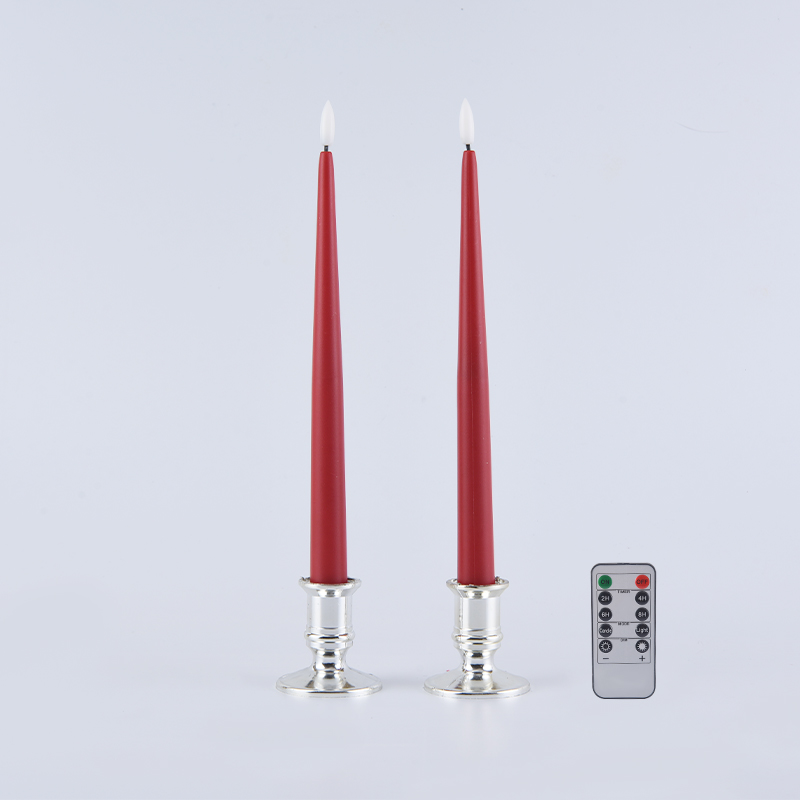
Battery-operated taper candles are tall, slender candles designed to fit into traditional candle holders. They're especially popular for formal dining settings, churches, and holiday décor. Because real taper candles drip wax and require constant supervision, the flameless version has become standard in many restaurants and event venues. A set of 12 battery taper candles typically costs between $15 and $35, compared to real taper candles that need to be replaced after each use.
Tea Light Candles
Flameless tea lights are small disc-shaped candles that fit into the same holders as traditional tea lights. They run on tiny CR2032 coin batteries and can last 50 to 100+ hours. Because real tea lights burn for only 3–5 hours and must be replaced constantly, battery-operated tea lights save significant money and hassle in high-volume settings like spas, restaurants, or holiday decorations where dozens of tea lights are used at once.
Votive Candles
Battery-operated votives are slightly larger than tea lights and typically used in decorative glass votive holders. They provide a concentrated, glowing pool of light that looks especially atmospheric in colored glass. Many wedding planners use them extensively because they can be set up hours before an event begins without any concern about burning down.
Flameless Candles in Lanterns and Holders
Some battery-operated candles are designed specifically for use inside decorative lanterns — both indoor and outdoor versions. Outdoor flameless lanterns must be weather-resistant, with sealed battery compartments that can handle rain and humidity. These are particularly popular for patio and garden decorating, where an open flame would be blown out by the wind anyway.
Window Candles
Battery-operated window candles are a beloved tradition in New England and many parts of Europe during the winter holiday season. A single taper-style candle is placed in a window to create a welcoming glow visible from outside. Because they sit near curtains and window treatments, the flameless version is obviously far safer than a real candle, and most come with a built-in timer so they turn on automatically at dusk.
Key Features to Look For When Buying Flameless Candles
Not all battery-operated candles are equal. The difference between a $5 plastic candle from a dollar store and a $40 real-wax candle from a premium brand is significant. Here's what separates good products from mediocre ones.
Realistic Flame Effect
The most important quality factor is how closely the flickering LED mimics a real flame. Look for products that describe "natural flame movement" or use multi-LED technology. Cheap candles often flicker in a mechanical, repeating pattern that immediately looks artificial. Higher-end candles use randomized flicker algorithms that are convincing even at close range.
Timer Function
A built-in timer is one of the most useful features on battery-operated candles. The most common option is a 5-hour on / 19-hour off cycle — the candle turns on for 5 hours, shuts off, then turns on again 19 hours later at the same time the following day. Some advanced models offer a programmable timer through a remote control with multiple interval options (4-hour, 6-hour, 8-hour cycles). Candles with timers typically extend battery life by 3–4x compared to leaving the candle on continuously.
Remote Control
Many battery-operated candles come with a remote control — either included with a single candle or sold separately for use with multiple candles simultaneously. A quality remote should be able to control all candles in range at once (useful when you have 10 candles on a dinner table), offer on/off, brightness dimming, and timer settings. Some remotes work from up to 15–20 feet away.
Battery Life
Battery consumption varies widely. A tea light running on a CR2032 battery might last 100 hours. A large pillar candle running on 3 AA batteries with a timer set to 5 hours per day could last 200–300 days before needing new batteries. Always check the manufacturer's stated battery life and consider using rechargeable batteries to reduce ongoing cost — a set of rechargeable AAs costs around $15–25 upfront but saves money within a few months of regular use.
Wax vs. Non-Wax Construction
Real wax candles look and feel far more authentic than plastic ones. When placed in a room, they're nearly indistinguishable from traditional candles. Plastic candles can look noticeably artificial in daylight. If realism matters — for a formal dinner party, a wedding, or premium home décor — invest in real wax construction. For outdoor or high-traffic use where durability matters more than appearance, plastic is perfectly acceptable.
Color Temperature of the LED
LED color is critical for realism. A real candle flame burns at approximately 1,800–2,000 Kelvin — a very warm amber-orange tone. Candles using cool white or daylight LEDs look harsh and artificial. Quality flameless candles use warm white LEDs (2,700–3,000K) or amber LEDs specifically designed to match real flame color. Always check reviews or product photos to confirm the LED color before purchasing.
Battery-Operated Candles vs. Real Candles: A Practical Comparison
The choice between real and flameless candles depends on priorities. The table below breaks down the key differences across the most important factors.
| Factor | Battery-Operated Candles | Real Wax Candles |
|---|---|---|
| Fire Safety | No fire risk | Open flame hazard |
| Lifespan | 100–500+ hours per battery set | Burns down completely (3–80 hours) |
| Scent | None (unless scented wax body) | Yes, strong fragrance options |
| Realism | High-end: very realistic; budget: obvious | 100% authentic |
| Convenience | Timer, remote, no supervision needed | Must be lit and watched |
| Long-term Cost | Low (only battery replacement) | High (must replace candle repeatedly) |
| Indoor Air Quality | No smoke, soot, or VOCs | Emits soot and fine particles |
| Outdoor Use | Works in wind and rain (weather-resistant models) | Extinguished by wind |
| Permitted in Facilities | Allowed virtually everywhere | Banned in many venues and buildings |
The one area where real candles maintain a clear advantage is scent. Many people use candles specifically for aromatherapy or fragrance — lavender, vanilla, sandalwood — and battery-operated candles simply don't produce a scent (unless the wax body has been infused with fragrance oils, which some brands now offer). For pure ambiance and lighting, flameless candles are genuinely superior in almost every practical measure.
Safety Benefits of Flameless Candles
Fire safety is the most compelling reason the majority of buyers switch to battery-operated candles. The numbers are sobering: according to the U.S. Fire Administration, candles cause approximately 7,400 home fires each year in the United States, resulting in an estimated 90 deaths, 670 injuries, and $291 million in property damage annually. The peak period is December, when candle fires spike due to holiday decorating.
The leading cause of candle fires is leaving a burning candle unattended — something a battery-operated candle eliminates entirely. Other contributing factors include candles placed too close to flammable materials (curtains, books, paper decorations) and candles falling over. Because flameless candles produce no heat at the tip, they can be safely placed next to fabric, paper, and dried botanical decorations without any risk.
Who Benefits Most From Flameless Candles
- Families with young children: Children are drawn to candle flames. The burn risk from a real candle is significant; a battery candle's LED tip produces negligible heat and is safe to touch.
- Pet owners: Cats especially are known for knocking over candles. A knocked-over battery candle is a minor inconvenience; a knocked-over real candle can start a fire.
- Elderly or memory-impaired individuals: Forgetting to blow out a candle is a genuine fire risk. Battery candles with auto-timers eliminate this concern entirely.
- Renters and apartment dwellers: Many landlords and building management companies prohibit open flames entirely. Battery candles allow renters to have candlelight ambiance without violating lease terms.
- People with asthma or respiratory sensitivities: Burning candles — even "clean-burning" soy candles — release fine particulate matter and volatile organic compounds (VOCs) into the air. Flameless candles produce zero emissions.
- Hospitals, care facilities, and schools: Fire codes in most healthcare and educational facilities prohibit open flames. Flameless candles are the only option for bringing candle ambiance into these spaces.
Best Uses and Applications for Battery-Operated Candles
Battery-operated candles have moved well beyond their original niche as a safety substitute for real candles. Today they're used creatively across a wide range of applications where traditional candles were never practical.
Weddings and Events
Wedding venues across the country have largely shifted to flameless candles for centerpieces and aisle décor. The practical advantages are enormous: candles can be set up hours before guests arrive without any concern about burn time, venue fire codes are satisfied, and there's no risk of tablecloth fires from tipped-over candles. Many event rental companies now maintain large inventories of battery-operated votives and pillar candles specifically for this purpose. A single wedding reception might use 200–500 individual flameless candles across tables, windowsills, staircases, and outdoor spaces.
Holiday and Seasonal Decorating
The holiday season is by far the biggest sales period for battery-operated candles. Christmas, Hanukkah, Diwali, and other winter celebrations all involve candle traditions — and flameless candles allow families to maintain these traditions safely. Advent wreaths, Kwanzaa kinara displays, and window candle arrangements are among the most popular holiday applications. Sales of flameless candles spike by over 300% in the October–December period compared to summer months, according to home décor retail data.
Restaurants and Hospitality
Candlelit dining is one of the most enduring restaurant atmospherics, but managing real candles in a busy restaurant is labor-intensive. Staff must continuously monitor tables, replace burned-down candles, clean up wax drips, and deal with candles blown out by HVAC systems or opening doors. Battery-operated candles — particularly realistic taper and votive styles — have become standard in mid-range and upscale restaurants. The remote-control feature allows a single staff member to turn all table candles on or off simultaneously at the start and end of service.
Outdoor Entertaining
Real candles outdoors are constantly defeated by wind. Even in a lantern, a real flame can be difficult to keep lit on a breezy evening. Battery-operated outdoor candles and lanterns work regardless of wind conditions and don't present a fire risk near dry grass, mulch, or wooden decks. Many outdoor models are rated for rain exposure, making them useful for year-round outdoor table décor.
Meditation, Yoga, and Wellness Spaces
Wellness studios, yoga spaces, and meditation rooms frequently use flameless candles to create a calm, ambient atmosphere. In commercial settings, fire codes often prohibit real candles, making battery-operated alternatives the only viable option. The gentle, flickering LED light provides the psychological benefit of candlelight — reduced stress, softer atmosphere — without any of the practical downsides.
Photography and Film Sets
Photographers frequently use battery-operated candles as props in shoots because they can be positioned anywhere without fire risk, produce consistent light output (real flames flicker unpredictably and vary in intensity), and can be left running without supervision between shots. Film and TV production crews use flameless candles extensively on sets where fire marshals restrict open flames.
How to Choose the Right Battery-Operated Candle
With hundreds of options on the market ranging from under $5 to over $60 per candle, selecting the right product requires thinking through a few key questions.
Define Your Primary Use Case
If you're looking for candles to use as everyday home décor that needs to look convincing close-up, invest in real wax construction with a quality flickering LED — brands like Luminara, LIOWN, or Homemory offer highly realistic options in this category. If you need a large quantity for a one-time event like a wedding, mid-range sets from brands like Flameless Candles by Kohree or Micandle offer good value at lower per-unit cost. For outdoor use, specifically look for "water-resistant" or "outdoor-rated" models.
Consider the Size and Scale
Think about where the candles will be placed and how they'll be viewed. Large pillar candles work well on mantels and floors, where they'll be seen from across a room. Taper candles are best for dining tables and formal settings. Tea lights and votives work in tight spaces and for creating clusters of warm light. Mixing sizes — a group of three pillars at different heights flanked by a ring of votives — creates a much more interesting arrangement than a single candle.
Check for Timer and Remote Features
For any candle that will be used regularly, a timer is worth the small additional cost. A candle without a timer that's accidentally left on overnight will drain its batteries in 8–10 hours; the same candle with a 5-hour timer could run for months. If you're buying multiple candles for a room or event, look for a single remote that can control all of them simultaneously — this is far more practical than reaching behind each individual candle to operate a switch.
Read Reviews Specifically for Flame Realism
Product photos of battery-operated candles are often taken in controlled lighting that makes even a cheap candle look convincing. The real test is how the candle looks in normal room lighting and in daylight. Read customer reviews specifically for comments about how realistic the flame looks, and look for user-submitted photos if available. Reviews that say "looks just like the real thing" or "couldn't tell the difference" are strong indicators of quality; reviews mentioning "fake-looking" or "obviously plastic" are red flags.
Tips for Getting the Most From Your Flameless Candles
Once you've purchased battery-operated candles, a few practical habits will maximize their lifespan, appearance, and value.
- Use rechargeable batteries: The ongoing cost of disposable batteries adds up quickly if you're running multiple candles. A set of rechargeable AA or AAA batteries with a good charger pays for itself within a few months of regular use.
- Set the timer immediately: Don't rely on remembering to turn the candle off manually. Program the timer right when you first install batteries so you never accidentally drain them overnight.
- Dust the wax surface periodically: Real wax candles collect dust over time, which can dull their appearance. A soft, dry cloth or a light dusting brush keeps them looking fresh.
- Store in a cool location: Real wax battery candles can warp or soften if stored in hot locations (like a car in summer). Store them indoors at room temperature when not in use.
- Remove batteries for long-term storage: If you're storing seasonal candles for several months (like holiday candles), remove the batteries to prevent corrosion from slow discharge, which can permanently damage the battery compartment.
- Group candles in odd numbers: Decorating rule of thumb — groupings of 3, 5, or 7 candles look more natural and visually interesting than even-numbered arrangements.
- Use appropriately sized holders: Taper candles must fit snugly in their holders. Too loose and they'll wobble or fall; too tight and you may damage the wax. Check dimensions before purchasing holders separately from candles.
Popular Battery-Operated Candle Brands Worth Knowing
The flameless candle market has a clear quality hierarchy. Understanding the main brands helps set expectations for what you're getting at different price points.
Luminara
Luminara is widely regarded as the gold standard for realistic flameless candles. The company holds patents on its "moving flame" technology, which uses a small motor to create physical movement in the LED assembly — not just flickering light, but actual subtle swaying motion that closely mimics a real flame. Luminara candles are made from real wax, include both a timer and remote compatibility, and come in a wide range of sizes and colors. They're priced accordingly: a single 7-inch pillar typically retails for $40–$55. Luminara is the brand most frequently specified by high-end hotels, event planners, and set designers.
Homemory
Homemory is among the most popular mid-range brands on Amazon, offering real wax flameless candles with timers and remote controls at a much lower price point than Luminara. A set of 3 pillar candles typically sells for $25–$35. Reviewers generally praise the flame realism and note that the candles look convincing at normal viewing distances, though close inspection reveals the limitations compared to Luminara. For everyday home use, Homemory represents strong value.
Micandle and Kohree
These brands occupy the value segment and are particularly popular for bulk purchasing. Sets of 12 or more tea lights or votives are commonly purchased for events. At this price point, the wax construction is less refined, but for dimly lit event settings where candles are viewed from a distance, the visual result is often perfectly satisfactory. A pack of 24 battery-operated tea lights can be found for $12–$18, making large-scale event decorating economically viable.
GiveU and LIOWN
LIOWN is a newer brand that has developed its own "moving flame" technology as an alternative to Luminara, and many reviewers find the realism comparable at a slightly lower price point. GiveU specializes in outdoor and weatherproof flameless candles, with models specifically designed for all-weather outdoor use in lanterns, garden arrangements, and patio settings.
Environmental Considerations
The environmental impact of battery-operated candles compared to traditional candles is nuanced. On one hand, a single battery-operated candle replaces dozens or hundreds of wax candles over its lifetime, eliminating the raw material extraction, manufacturing, shipping, and disposal of all those consumed candles. On the other hand, batteries contain heavy metals (especially alkaline batteries with manganese dioxide) and require proper disposal.
The most environmentally responsible approach is to use rechargeable batteries with flameless candles. A good set of rechargeable NiMH batteries can be recharged 500–1,000 times before degrading, and when they do finally fail, they can be recycled at battery recycling programs available at most electronics retailers. Using rechargeable batteries essentially eliminates the ongoing battery waste that would otherwise accumulate from single-use alkaline batteries.
It's also worth noting that paraffin wax — used in the majority of traditional candles — is a petroleum byproduct. A household that burns candles regularly contributes to petroleum demand in a small but real way. Soy candles are often marketed as a more sustainable alternative, though soy production carries its own environmental considerations. Battery candles made from real wax do still use paraffin or soy, but since the wax body is never consumed by combustion, a single candle can last for years without needing to be replaced.
Frequently Asked Questions About Battery-Operated Candles
Do battery-operated candles get hot?
No. The LED at the tip of a flameless candle generates minimal heat — far less than a real flame, and not enough to cause burns or ignite nearby materials. The battery compartment may become very slightly warm during extended use, but this is normal and not a safety concern under ordinary operating conditions.
Can battery-operated candles be used outdoors?
Yes, but not all models are rated for outdoor use. Standard indoor models may be damaged by moisture entering the battery compartment. Look specifically for products labeled as weather-resistant, waterproof, or rated for outdoor use. These models have sealed battery compartments and are made from materials that won't warp or discolor from UV exposure or rain.
How long do batteries last in flameless candles?
Battery life varies significantly by candle type and usage pattern. A tea light running on a CR2032 battery might last 80–150 hours of continuous use. A medium pillar candle on 2 AA batteries can last 150–300+ hours. With a 5-hour daily timer, that translates to 30–60 days or more between battery changes. Always check the manufacturer's stated battery life, which is typically listed in product specifications.
Are all battery-operated candles the same size as real candles?
Standard taper candles are made to fit standard candle holders (typically 7/8-inch base diameter). Pillar and votive sizes vary more widely — always check dimensions before purchasing holders separately. Some flameless candles are intentionally slightly smaller than equivalent real candles to accommodate the battery compartment in the base.
Can flameless candles replace real candles for religious ceremonies?
This depends entirely on the religious tradition and the specific requirements of the ceremony. Many religious institutions have adopted flameless candles for safety reasons, particularly in care homes and assisted living facilities where residents observe religious practices. However, some traditions specifically require real fire as part of the ceremony — for example, the Havdalah ceremony in Judaism requires an actual flame. Always consult religious authorities for guidance on specific ceremonial requirements.