
 English
 Español
 Content
- 1 What Are Outdoor LED Candles?
- 2 How Outdoor LED Candles Work: The Technology Behind the Flame Effect
- 3 Types of Outdoor LED Candles Available on the Market
- 4 Key Features That Separate Quality Outdoor LED Candles from Cheap Ones
- 5 Why Outdoor LED Candles Outperform Real Candles in Exterior Spaces
- 6 Best Outdoor Settings and Use Cases for Flameless LED Candles
- 7 Timer and Remote Control Functions: Practical Benefits Explained
- 8 How to Choose the Right Outdoor LED Candles for Your Space
- 9 Maintenance, Battery Life, and Long-Term Care
- 10 Environmental Impact: Are Outdoor LED Candles the Greener Choice?
- 11 Common Questions About Outdoor LED Candles
What Are Outdoor LED Candles?
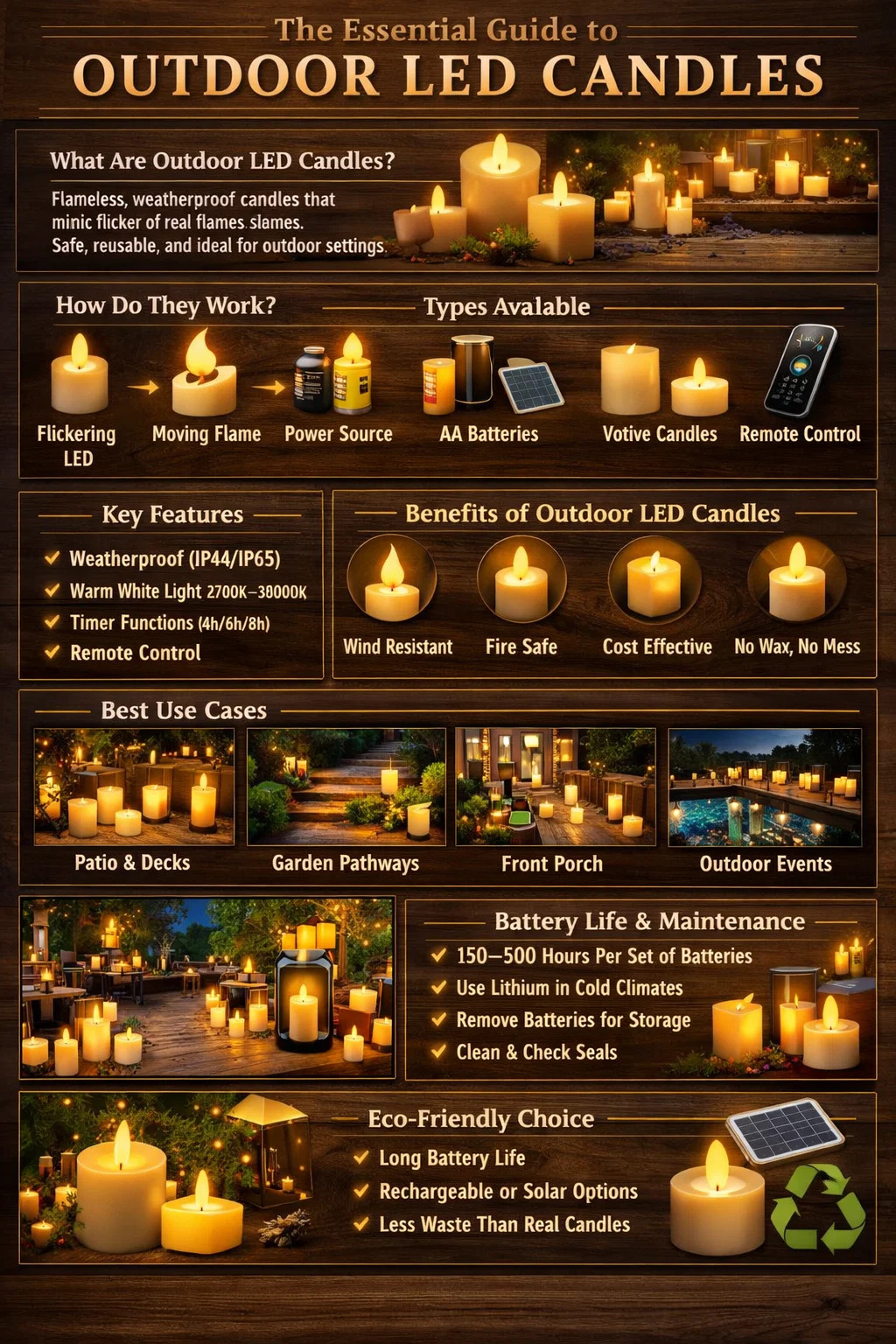
Outdoor LED candles are battery-powered or solar-powered lighting devices designed to replicate the warm, flickering glow of real wax candles — without an open flame. They use light-emitting diode (LED) technology paired with a microcontroller that creates a randomized flicker pattern, closely mimicking how a real candle flame behaves in a breeze. The housing is typically made from durable ABS plastic, resin, or weather-resistant wax-coated material, all built to withstand rain, humidity, wind, and temperature fluctuations.
Unlike traditional pillar or taper candles that melt down, drip wax, and carry an open flame risk, outdoor LED candles are completely flameless, non-toxic, and reusable for thousands of hours. A single set of AA batteries in a standard outdoor LED candle can last anywhere from 150 to 500 hours depending on whether a timer function is used. That means one set of batteries may keep your patio lit every evening for an entire season.
The core distinction between a standard indoor LED candle and an outdoor-rated one is weatherproofing. Outdoor versions typically carry an IP44 or IP65 rating, meaning they are protected against splashing water from any direction, and in some cases, sustained water jets. This makes them genuinely functional in real outdoor environments — not just "outdoor-friendly" in name only.
How Outdoor LED Candles Work: The Technology Behind the Flame Effect
The flame effect in a flameless LED candle is not a simple on/off LED. It relies on a combination of hardware and software components working together:
- Warm-white LED chip: Usually emits light in the 2700K–3000K color temperature range, which matches the amber tone of a real flame far better than a neutral or cool-white LED.
- Flicker circuit or microcontroller: This component rapidly and randomly varies the brightness of the LED, producing an organic, non-repetitive flicker pattern. Cheaper models use a basic oscillator; higher-end models use programmable microcontrollers that create more complex movement.
- Moving flame element: Some premium outdoor LED candles incorporate a small motor that physically tilts or sways a translucent flame-shaped diffuser, adding visual motion on top of the brightness flicker.
- Power source: Most use 2–3 AA batteries. Solar-charged versions include a small photovoltaic panel and a rechargeable NiMH cell. USB-rechargeable models are also increasingly common.
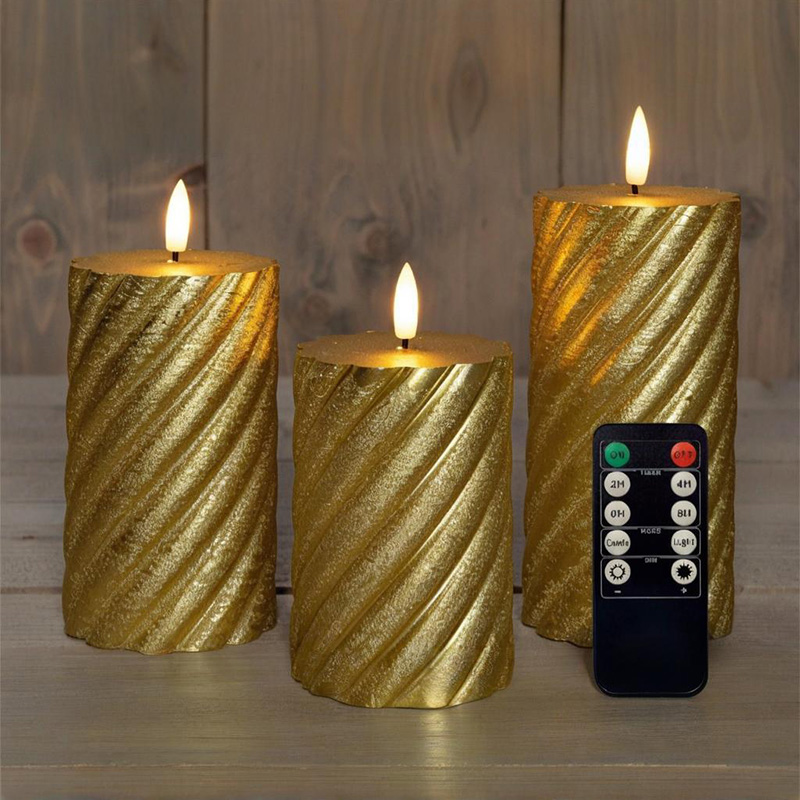
- Remote receiver: Mid-range and higher-end models include an infrared or RF receiver, allowing control of brightness, timer settings, and on/off from a distance of up to 10 meters.
The result is a light source that reads visually as candlelight at normal viewing distances, without any heat, smoke, wax drip, or combustion risk.
Types of Outdoor LED Candles Available on the Market
The category has expanded well beyond simple pillar-style units. Here is a breakdown of the main types currently available:
Pillar LED Candles
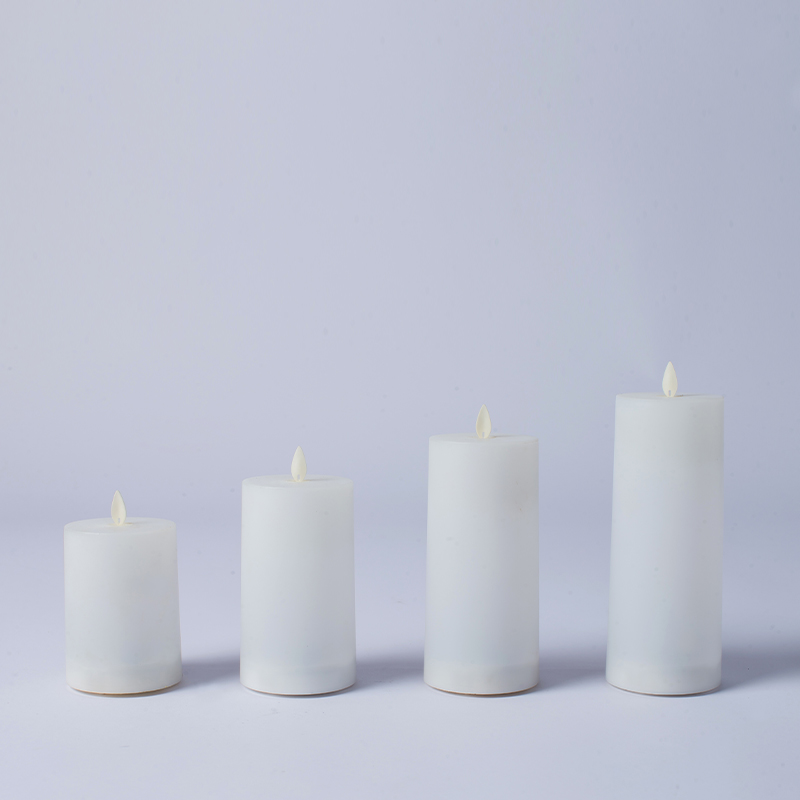
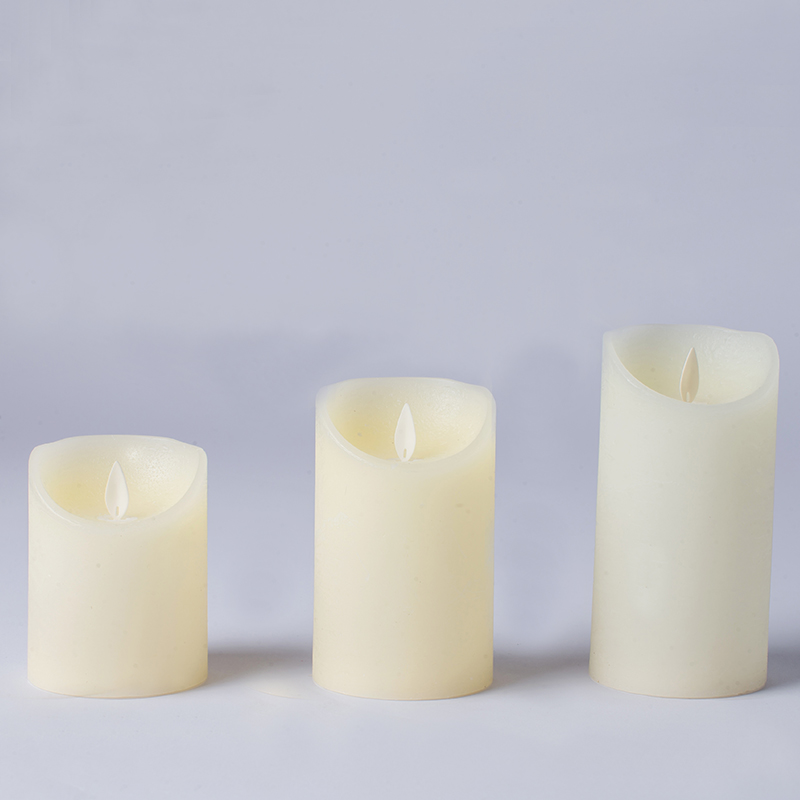
The most common format. These are cylindrical, ranging in diameter from 2 inches to 6 inches and in height from 4 inches to 12 inches. They are designed to sit directly on flat surfaces or inside hurricane lanterns and candle holders. Most outdoor pillar LED candles have a wax or wax-like outer coating to improve appearance and texture realism.
Taper LED Candles
Slim and tapered, meant for candelabras and decorative holders. Less common in outdoor-rated versions, but available. Typically run on AAA batteries and are narrower at the top. More decorative than functional for outdoor settings.
Votive LED Candles
Small, usually 2 inches tall and 1.5 inches in diameter. Designed to be used inside glass votive holders or mason jars. These are popular for table settings at outdoor weddings and restaurant patios. A typical outdoor votive LED candle runs on a single CR2032 coin cell battery and can last 100–200 hours.
Flameless Tea Light LED Candles
These are the outdoor-rated version of the familiar small tea light disc. Typically 1.5 inches in diameter, they fit standard tea light holders. Many are now sold in bulk packs of 24 or 50 and are commonly used for pathways, steps, and table centerpieces at outdoor events.
Solar-Powered Outdoor LED Candles
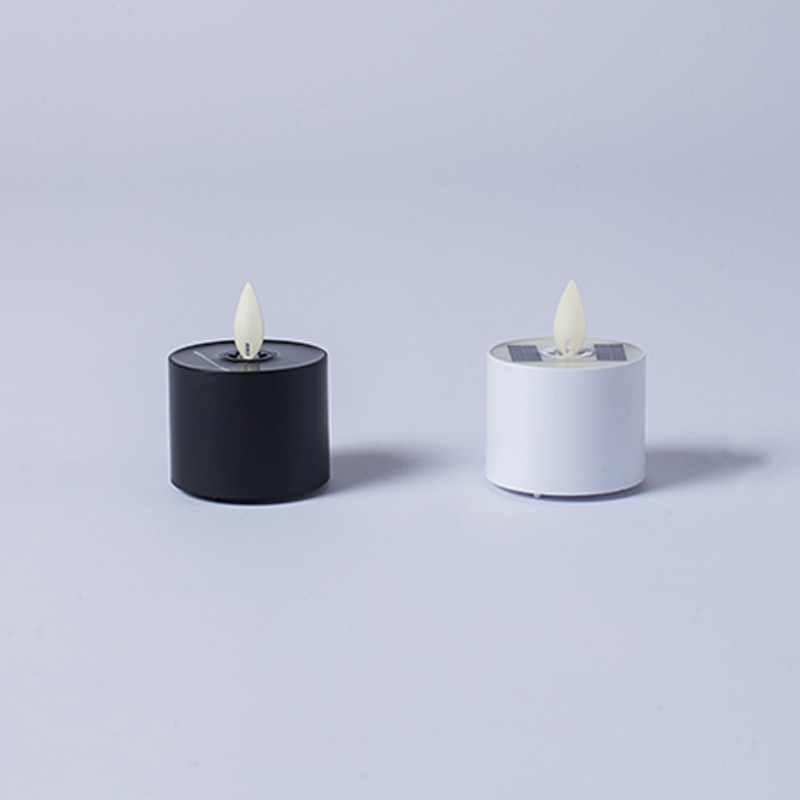
These charge during daylight hours and automatically activate at dusk. They typically feature a light sensor for automatic on/off control. Solar models are ideal for permanent garden installations where changing batteries regularly is impractical. Battery capacity and solar panel efficiency determine how many hours of light you get per charge — most deliver 6 to 10 hours per night after a full day of direct sun.
Lantern-Style LED Candles
These integrate the LED candle directly into a decorative lantern housing, usually made from metal, resin, or weather-resistant plastic. The lantern provides additional wind and rain protection and serves as a finished decorative piece. These are among the most popular products for front porches, garden paths, and deck railings.
Key Features That Separate Quality Outdoor LED Candles from Cheap Ones
Not all flameless LED candles are created equal, and the gap in quality between a $3 unit and a $25 unit is significant. Here is what to look at:
| Feature | Budget Range | Mid Range | Premium Range |
|---|---|---|---|
| IP Rating | None / IP20 | IP44 | IP65 |
| Flicker Quality | Repetitive, mechanical | Random flicker circuit | Microcontroller + moving element |
| Color Temperature | Cool white, unnatural | Warm white ~3000K | Amber ~2700K, multi-mode |
| Timer Function | No | 5h/10h preset | Fully programmable |
| Remote Control | No | IR remote included | RF remote, app control |
| Battery Life | 50–100 hours | 150–300 hours | 300–500+ hours |
| Material | Hard plastic | Wax-coated ABS | Real wax shell or resin |
The most commonly overlooked feature is the IP rating. Many products marketed as "outdoor LED candles" are only splash-resistant at best. If you are placing them in an exposed area where they will receive direct rainfall, insist on a minimum of IP44 certification. For fully exposed locations with no overhead cover, IP65 is the safer choice.
Why Outdoor LED Candles Outperform Real Candles in Exterior Spaces
The practical case for switching from real candles to flameless LED alternatives outdoors is substantial. These are not just safer — in most outdoor use cases, they are objectively more functional.
Wind Resistance
A real candle flame extinguishes in winds above approximately 5 mph. Even a gentle outdoor breeze makes maintaining real candles on a patio table a constant battle. Outdoor LED candles are completely unaffected by wind — the flicker effect is generated electronically, not by air movement.
Fire Safety
The U.S. National Fire Protection Association reports that candles cause approximately 7,400 home fires per year, with outdoor settings contributing to a meaningful portion of those. Decks, pergolas, and dry garden areas are particularly vulnerable. Flameless candles eliminate this risk entirely since there is no combustion involved.
Cost Over Time
A standard 3x6 inch pillar candle burns for approximately 60–80 hours and costs $8–$15. A comparable outdoor LED candle costs $15–$30 upfront but runs for 300–500 hours on one set of batteries costing roughly $2. Over a single season of evening use (say, 180 hours), the LED candle pays for itself and continues to be usable for years.
No Wax Mess or Smoke
Real candles drip wax onto surfaces, tablecloths, and holders. They also produce smoke and soot, which can stain nearby surfaces and aggravate respiratory sensitivities. LED candles produce no heat, no wax, and no fumes whatsoever.
Consistent Appearance
Real candles change in height and appearance as they burn, and can look messy after an hour of use. Outdoor LED candles maintain the same visual form throughout the entire evening and can be reused in the same condition indefinitely.
Best Outdoor Settings and Use Cases for Flameless LED Candles
Outdoor LED candles are versatile enough to suit a wide range of environments. Here are the most common — and most effective — applications:
- Patio and deck tables: Pillar or votive LED candles inside hurricane lanterns or glass holders create a restaurant-quality ambiance without any fire risk on a wooden deck surface.
- Garden pathways: Lantern-style flameless candles or solar LED candles spaced along a garden path provide soft directional lighting that guides guests without the harsh brightness of spotlights.
- Front porch and entry: Large pillar outdoor LED candles in floor lanterns on either side of a front door create a welcoming, warm entrance that operates automatically each evening.
- Outdoor weddings and events: Flameless tea lights and votives are now standard in event planning because they pass open-flame restrictions at most venues while delivering the candlelit aesthetic.
- Pool areas: IP65-rated outdoor LED candles can be placed at poolside without any risk from water splashing or children running nearby.
- Restaurant and bar terraces: Commercial establishments in many jurisdictions are prohibited from using real candles on outdoor terraces. Flameless LED candles are the compliant solution that preserves the dining atmosphere.
- Camping and glamping: Battery-powered outdoor LED candles provide safe ambient light inside tents or glamping setups without carbon monoxide risk or fire hazard.
Timer and Remote Control Functions: Practical Benefits Explained
One of the most underappreciated advantages of outdoor LED candles is built-in timer functionality. This is not a luxury feature — for most outdoor uses, it is genuinely practical.
A standard timer function allows you to set the candle to run for a fixed period — commonly 4, 6, or 8 hours — then automatically shut off. Once set, the candle remembers the same schedule every 24 hours. This means that if you activate your patio flameless candles at 6 PM on Monday with a 6-hour timer, they will automatically turn on at 6 PM and off at midnight every day thereafter without any further input from you.
For households running multiple candles across a patio or garden, RF remote control is considerably more useful than infrared, since IR requires line of sight. RF remotes can control candles through glass doors and around corners. Some premium models now support Bluetooth or Wi-Fi app control, allowing integration with home automation systems and scheduling via smartphone.
Brightness dimming is another remote-controlled feature found in better outdoor flameless candles. Being able to reduce brightness during an outdoor dinner for a more intimate atmosphere — without having to physically reach each candle — is a genuine usability improvement over fixed-brightness units.
How to Choose the Right Outdoor LED Candles for Your Space
The selection process should start with your specific environment, not with aesthetics. Work through these questions in order:
- How exposed is the location? A covered porch allows IP44. An open garden bed or poolside needs IP65.
- What size fits the space? A large outdoor dining table can handle 3x6 inch pillars. A small bistro table is better suited to votives or 2x4 inch pillars.
- How often will you manually manage them? If the answer is "rarely," prioritize timer function and long battery life over decorative detail.
- Is a permanent installation feasible? For fixed garden placements, solar-powered outdoor LED candles eliminate the need to replace batteries entirely.
- What is the visual context? Modern minimalist outdoor spaces suit clean cylindrical LED candles. Rustic or traditional gardens suit lantern-integrated models with aged-metal finishes.
- Do you need to control multiple units at once? If yes, invest in a set that includes a remote control and verify that one remote can control all units in the set simultaneously.
For most residential patios and gardens, a set of 3x6 inch IP44-rated pillar outdoor LED candles with a 6-hour timer and AA batteries hits the practical sweet spot of realism, durability, and convenience at a reasonable price point of $15–$25 per candle.
Maintenance, Battery Life, and Long-Term Care
Outdoor LED candles require minimal maintenance, but a few habits extend their lifespan significantly:
- Use lithium batteries in cold climates: Standard alkaline batteries lose up to 50% of their capacity in temperatures below 0°C (32°F). Lithium AA batteries maintain performance down to -40°C and are worth the additional cost if your outdoor space is used in winter.
- Remove batteries during extended storage: If you store outdoor LED candles for the off-season, always remove batteries. Alkaline cells can leak and corrode the battery contacts if left in an unused device for months.
- Wipe down the exterior regularly: Even weatherproof models accumulate dirt, pollen, and organic material on their surfaces over time. A damp cloth wipe-down every few weeks keeps both the appearance and the battery compartment seal in good condition.
- Check and reseal battery compartment gaskets: On IP65-rated models, the battery compartment has a rubber gasket that can dry out and crack over time. If you notice the gasket deteriorating, a small bead of silicone sealant can restore water resistance.
- Use the timer function to conserve battery life: Running outdoor LED candles 24/7 rather than using the timer is the single biggest cause of premature battery depletion. A 6-hour timer rather than continuous operation extends battery life by roughly 75%.
With proper care, a quality outdoor LED candle should last 5 to 10 years of regular seasonal use. The LED itself has a rated lifespan of 50,000 hours or more — far outlasting any battery or mechanical component in the unit.
Environmental Impact: Are Outdoor LED Candles the Greener Choice?
This is a legitimate question worth addressing directly. The environmental calculation involves comparing paraffin wax candle production and disposal against battery consumption from LED candles.
Paraffin wax is a petroleum byproduct. Manufacturing, shipping, and burning paraffin candles produces CO₂ emissions and releases trace amounts of benzene and toluene into the air. Soy and beeswax candles are more sustainable but significantly more expensive and still consumable.
Outdoor LED candles use batteries, which have their own manufacturing and disposal footprint. However, with a timer-optimized usage of 6 hours per day, a set of 3 AA batteries in a standard outdoor LED candle lasts approximately 250 days — nearly a full year of nightly use. That is one set of batteries replacing what would otherwise be 15 to 20 consumed paraffin candles of equivalent light output over the same period.
Using rechargeable NiMH batteries — which can be recharged 500–1,000 times — reduces the battery disposal impact to near zero over the product's lifespan. Solar-powered outdoor LED candles eliminate battery disposal entirely. On balance, LED candle technology is the more environmentally responsible choice for consistent outdoor use.
Common Questions About Outdoor LED Candles
Can outdoor LED candles be left out in the rain?
Only if they carry an IP44 or higher rating. IP44 means they can handle splashing water from all directions. IP65 means they can handle sustained water jets. Standard indoor LED candles or those without IP ratings should not be exposed to direct rain.
Do they work in freezing temperatures?
The LED and electronics function fine in freezing temperatures. The limiting factor is the battery. As noted above, lithium batteries are the reliable solution for sub-zero outdoor use. Most manufacturers specify an operating range of -10°C to 40°C for their outdoor models.
Are outdoor LED candles bright enough to be useful lighting?
They are ambient lighting, not task lighting. A single 3x6 inch outdoor pillar LED candle produces approximately 5–15 lumens — far below the 400–800 lumens of a standard household bulb. They are designed to create atmosphere, not illuminate a space for reading or activity. For practical outdoor lighting combined with ambiance, pair LED candles with string lights or low-voltage landscape lighting.
Can you use them inside hurricane lanterns or glass holders?
Yes, and this is actually a recommended practice. Placing an outdoor LED candle inside a hurricane lantern or tall glass cylinder adds visual depth to the flame effect, protects the candle from physical damage, and makes the overall display look more sophisticated and intentional.
How realistic does the flame effect actually look?
At normal conversational viewing distances — seated around a table, walking past a garden path — quality outdoor LED candles with a good flicker algorithm and warm color temperature are visually convincing. On close inspection or when viewed in isolation with full awareness, they are identifiable as artificial. In a social setting, the distinction becomes irrelevant because the visual effect serves the same atmospheric purpose as a real candle.