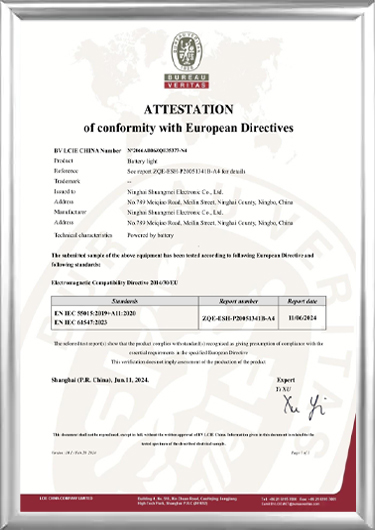
The contemporary shift toward enhanced home safety, convenience, and sophisticated aesthetics has placed Flameless Glass Candles at the forefront of modern decorative lighting. These devices transcend the limitations of traditional wax candles, offering a compelling blend of visual fidelity and practical, long-term functionality. The convergence of this product category with a robust, technologically capable manufacturing entity, such as Ninghai Shuangmei Electronic Co., Ltd., underscores a significant evolution in the production and market deployment of decorative electronics.
Understanding Flameless Glass Candles: Core Attributes and Operational Principles
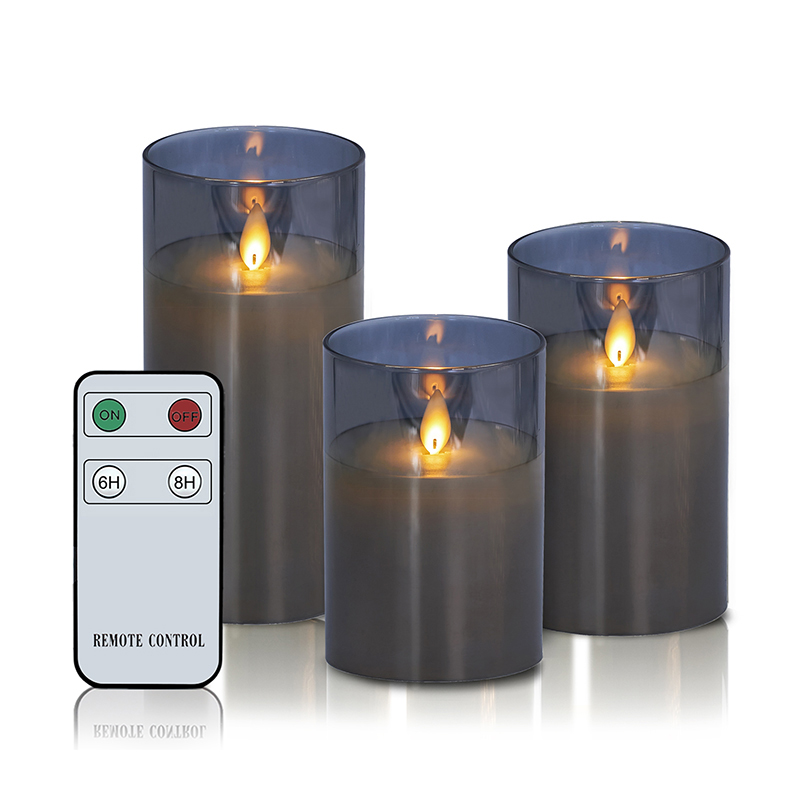
Flameless Glass Candles represent a sophisticated application of LED and battery technology encased in high-quality, often borosilicate, glass housing. The synergy between the light source, the electronic control circuitry, and the aesthetic casing dictates the product's ultimate appeal and operational longevity.
Key Technological and Design Components:
Simulated Flame Technology:
Unlike static LED lights, premium Flameless Glass Candles incorporate dynamic, movement-based light effects to meticulously mimic a real
wick's flicker and movement.
This simulation often relies on a small, electromagnetically driven component or an advanced LED matrix that modulates light intensity and color temperature in a non-repeating pattern, enhancing the realism. The goal is to replicate the stochastic, natural movement of a flame.
The Glass Housing as a Diffuser and Amplifier:
The glass shell serves a dual purpose: providing an elegant, familiar candle-like silhouette and acting as a critical light diffuser.
The material selection (transparency, tint, and finish) directly influences how the LED-generated light is scattered and perceived, softening the light source and distributing a warm, ambient glow.
The integration of electronics within a glass structure requires precise manufacturing tolerances to ensure product integrity and visual seamlessness.
Power Management and Circuitry:
These devices operate on low-voltage DC power, typically supplied by replaceable alkaline batteries or, increasingly, integrated rechargeable units.
The electronic control unit manages the flickering effect, implements timing functions (e.g., 4-hour or 8-hour timers), and ensures efficient power consumption to maximize battery life. This aspect is crucial for consumer satisfaction and long-term utility.
Safety and Maintenance Profile:
The absence of an open flame, heat generation, soot, and melting wax fundamentally defines the product's superior safety profile, making it suitable for environments where traditional candles pose a hazard (e.g., near curtains, in high-traffic areas, or around pets and children).
Maintenance is reduced to simple battery replacement or recharging, eliminating the need for wick trimming, wax residue cleaning, or fire-safety monitoring.
The Manufacturing Synergy: Ninghai Shuangmei Electronic Co., Ltd.
The successful realization of a high-quality Flameless Glass Candle portfolio relies heavily on the manufacturer's capacity for precision engineering, process control, and supply chain mastery. Ninghai Shuangmei Electronic Co., Ltd. provides the critical operational foundation necessary to scale and sustain the production of these technologically focused decorative items.
Scalability and Production Capacity:
The existence of multiple, advanced production lines signifies a robust operational infrastructure capable of handling high-volume demand. This scalability is essential for catering to global retail and wholesale markets that require consistent, large-batch deliveries.
The daily production metric indicates a well-optimized workflow, where component sourcing, assembly, quality control, and packaging are seamlessly integrated and executed across the factory floor.
R&D-Driven Innovation:
The emphasis on a strong research and development capability is paramount in a product category driven by visual realism and electronic features.
This capacity allows for the continuous refinement of the simulated flame mechanism (achieving superior flicker algorithms), the exploration of new power solutions (improving battery efficiency), and the integration of smart features (e.g., remote control, app connectivity) that keep the product line competitive and current.
Supply Chain Resilience and Control:
For an electronic product, managing the supply of critical components—specifically LEDs, microcontrollers, batteries, and the glass—is crucial. A steady and strong supply chain, as possessed by a modern manufacturer, ensures consistency in material quality and reliability of delivery timelines.
The ability to control the quality of both the delicate electronic components and the fragile glass housing is a hallmark of an integrated and professional manufacturing process.
Comparative Framework: Operational Specifications
| Operational Domain |
Key Manufacturing Focus (Ninghai Shuangmei Context) |
Core Consumer Performance Metric |
| Luminescence Quality |
Calibration of LED color temperature and intensity; precision in flicker algorithm implementation. |
Realism of the flame simulation; warmth and consistency of the ambient light. |
| Power Integrity |
Circuit design for minimal quiescent current draw; selection and integration of reliable power cells. |
Length of battery life (run time); reliability of scheduled timer functions. |
| Aesthetic Casing |
Sourcing and molding of high-grade, resilient glass; accurate dimensioning for component fit. |
Visual appeal and finish quality of the glass; durability and perceived value. |
| User Interface |
Design and placement of switches and remote sensor/receiver modules; logical timer programming. |
Ease of use; reliability of remote control function; intuitive timer setting. |
| Production Efficiency |
Optimization of multi-line assembly process; minimization of in-process defects (electronic and glass). |
Consistency of quality across high-volume production batches; adherence to delivery schedules. |
Frequently Asked Questions (FAQ) on Flameless Glass Candles
Q1: How is the realistic flame flicker effect generated in high-end models?
The most advanced realistic effects move beyond simple randomized LED dimming. They typically involve an intricate system combining an optimized light source with a mechanism that subtly moves, either a visible "wick" element or an internal reflective component. This motion is often governed by a microcontroller, utilizing non-repeating or complex algorithms to mirror the erratic, natural physics of an actual flame, resulting in the characteristic dancing light and shadow play.
Q2: What is the primary functional advantage of using a glass enclosure over other materials like plastic or wax?
The glass enclosure is selected for its superior optical clarity and aesthetic resemblance to traditional candle holders. Unlike plastic, high-quality glass offers a heavier, more premium feel and excellent thermal stability, ensuring the internal electronic components are shielded while the light is diffused in a clear, undistorted manner. Furthermore, the glass retains its appearance indefinitely, whereas wax coatings can degrade or collect dust over time.
Q3: Are Flameless Glass Candles typically rated for outdoor use, and what considerations are involved?
Standard models are generally designed for indoor domestic or decorative use. Rating a candle for outdoor use requires specific modifications, particularly enhancing the product's ingress protection (IP) rating. This involves creating fully sealed compartments for the battery and electronics to prevent moisture and dust penetration. Any manufacturer, such as Ninghai Shuangmei, must apply specialized sealing techniques and use weather-resistant materials to achieve genuine outdoor suitability.
Q4: How do the embedded timer functions work, and what is their practical purpose?
The internal timer, controlled by the electronic circuitry, allows the user to pre-set an operational period (commonly 4, 6, or 8 hours). Once activated, the candle will illuminate for the pre-set duration and then automatically power off. It will subsequently reactivate at the same time on the following day. This "set-it-and-forget-it" functionality enhances convenience, conserves battery life, and provides consistent ambiance without manual intervention.
Q5: What is the role of R&D in differentiating one Flameless Glass Candle from another?
Research and development is the key differentiator. A strong R&D team focuses on improving the three core pillars: Realism (developing more convincing flicker technology), Efficiency (optimizing the electronic circuit for longer battery life), and Features (integrating smart home capabilities, remote controls, or sophisticated color-changing options). A manufacturer with robust R&D, like Ninghai Shuangmei Electronics, can continuously launch superior and feature-rich iterations, maintaining a competitive edge.


 English
 Español