
 English
 Español
 Content
- 1 What Are Powdered Candles and How Do They Differ from Traditional Wax Candles
- 2 Types of Powdered Candle Wax and Their Performance Characteristics
- 3 How Powdered Candles Are Made: Step-by-Step Process
- 4 Scent Performance: Do Powdered Candles Smell as Strong as Poured Candles
- 5 Powdered Candles and LED Candle Lights: Understanding the Market Overlap
- 6 DIY Powdered Candle Making: Materials, Equipment, and a Starter Formula
- 7 Key Benefits of Powdered Candles for Retailers, Gifters, and Event Planners
- 8 How to Burn and Care for Powdered Candles to Maximize Their Lifespan
- 9 Market Trends Driving Demand for Powdered Candles in 2024 and Beyond
- 10 How to Source High-Quality Powdered Candles from Manufacturers
- 11 Frequently Asked Questions About Powdered Candles
- 11.1 Are powdered candles safe to burn indoors?
- 11.2 Do powdered candles last as long as regular candles?
- 11.3 Can I make layered color powdered candles at home without special equipment?
- 11.4 What is the difference between powdered candles and granular candles?
- 11.5 How do powdered candles compare to LED candle lights for home decor?
- 11.6 Can powdered candles be refilled once burned down?
- 11.7 What scents work best in powdered candles?
- 11.8 Are there vegan powdered candles available?
- 11.9 Why does the surface of my powdered candle look different after the first burn?
Powdered candles are a modern innovation in candle-making: instead of traditional wax poured in liquid form, the wax compound is processed into a fine powder that can be pressed, molded, or layered directly into a container — no melting required during initial production. This dry-form approach gives makers precise control over density, color distribution, and scent layering, while dramatically reducing fire risks in the manufacturing environment. For consumers and gift brands exploring alternatives to standard pillar or jar candles, powdered candles deliver a matte, velvety surface finish and a uniquely even burn that poured wax candles often struggle to match. Alongside battery-operated LED candle lights, powdered candles have become one of the fastest-growing product categories in the decorative lighting and home ambiance market.
What Are Powdered Candles and How Do They Differ from Traditional Wax Candles
The core distinction lies in the physical state of the wax during production. Conventional candles — paraffin, soy, beeswax, or coconut — are made by melting wax to a liquid and pouring it into a mold or container. As the wax cools and contracts, it can form sinkholes, uneven surfaces, or air pockets that require a second pour. This two-stage process adds time and can create color inconsistencies between batches.
Powdered candles use wax that has been atomized, flaked, or granulated. The powder is poured cold directly into a container and compressed to the desired density. Because no heat is involved in shaping, the candle surface stays perfectly flat and the color distribution remains exactly as blended during mixing. The wick is inserted after pressing, and the finished candle is ready to package far more quickly than a poured equivalent.
Traditional Poured Candle
- Requires controlled melting (typically 70–85 °C for paraffin)
- Risk of sinkholes needing a second pour
- Color blending limited to liquid mixing
- Longer cool-down cycle before demolding
- Higher energy cost per unit
Powdered Candle
- Cold-press or pour process — no liquid wax handling
- Flat, consistent surface from the first press
- Layer-by-layer color effects possible
- Ready to wick and package immediately
- Lower production energy per batch
For decorative applications — especially gift sets and event centerpieces — the visual advantage of a powder-pressed candle is immediately apparent. The surface looks hand-crafted and artisanal even when machine-produced, making the product highly compatible with premium retail positioning.
Types of Powdered Candle Wax and Their Performance Characteristics
The base material of a powdered candle determines its burn characteristics, scent throw, and environmental profile. The following wax types are the most commonly used in powder form:
| Wax Type | Melt Point | Scent Retention | Surface Finish | Eco Profile |
|---|---|---|---|---|
| Paraffin Powder | 46–68 °C | High | Smooth, glossy | Petroleum-based |
| Soy Powder | 49–52 °C | Medium | Matte, rustic | Renewable / biodegradable |
| Beeswax Granules | 62–65 °C | Natural honey scent | Textured, warm | Natural, non-vegan |
| Coconut Wax Powder | 38–45 °C | Very high | Ultra-smooth, creamy | Sustainable, slow-burn |
| Palm Wax Flakes | 52–58 °C | Medium-high | Crystalline feathering | Controversial (deforestation) |
Coconut wax powder is widely favored in premium powdered candle lines because its low melt point creates an extremely slow, even burn pool and its light cream color pairs beautifully with both pastel and deep pigments. Soy powder is the dominant choice for mid-market products due to its low cost and clean-burning reputation. Beeswax granules, already sold in granular or pellet form in many craft supply stores, are the closest off-the-shelf analogue to a true powdered candle base and are popular with DIY makers who do not want to invest in an atomizing setup.
How Powdered Candles Are Made: Step-by-Step Process
Understanding the manufacturing workflow helps buyers assess quality and evaluate supplier claims. The process differs meaningfully from poured candle production at almost every stage.
Wax Atomization or Granulation
Bulk wax is either spray-atomized (producing a very fine, flour-like powder) or mechanically flaked into coarser granules. Atomized wax compresses into a denser, smoother candle body, while granulated wax retains a slightly grainy surface texture that some consumers prefer for its handmade aesthetic. Commercial producers typically target a particle size of 50–200 microns for optimal pressing behavior.
Pigment and Fragrance Blending
Cosmetic-grade or candle-specific pigment powders are blended into the wax powder in a ribbon or paddle mixer. Fragrance oils are added at this stage; because no heat is applied, the fragrance is not driven off during mixing as it can be in hot-pour processes. Typical fragrance load for powdered candles runs 6–12% by weight, compared to 8–10% for most poured soy candles. This higher ceiling is possible because cold blending preserves volatile top notes that would evaporate in liquid wax above 70 °C.
Container Filling and Pressing
The blended powder is measured by volume or weight into the final container — glass jar, metal tin, or concrete vessel. For layered color effects, multiple powder colors are added sequentially. A press plate or tamper compacts the powder to the required density. Most production lines target a fill density of 0.7–0.9 g/cm3, which is firm enough to hold a wick hole without crumbling but loose enough to allow the flame to draw wax upward through capillary action during burning.
Wicking and Quality Check
A wick hole is bored or pre-formed, and a pre-tabbed cotton, wood, or hemp wick is inserted and centered. The candle is then inspected for surface cracks, color consistency, and wick alignment. Because no curing period is needed (unlike soy pour candles, which ideally cure for 24–48 hours), the candle can be packaged within minutes of wicking, significantly increasing throughput per shift.
Packaging and Storage
Finished powdered candles are sensitive to humidity, which can cause clumping on the exposed surface. Standard packaging includes a tight-fitting lid or a heat-seal shrink sleeve. Storage temperatures between 10–25 °C are recommended; temperatures above 30 °C can cause the powder surface to partially fuse, altering the intended matte aesthetic.
Scent Performance: Do Powdered Candles Smell as Strong as Poured Candles
This is the question most consumers ask first. The short answer is: yes — and in many cases stronger. The reason is cold blending. When fragrance oil is mixed into a liquid wax at 70–80 °C, some of the lighter aromatic molecules begin to volatilize and escape before the candle is even poured. In a cold-pressed powdered candle, all fragrance molecules stay trapped in the wax matrix until the wick is lit.
A 2019 comparative study by the Research Institute for Fragrance Materials (RIFM) found that candles with fragrance blended below 40 °C (cold-blended or cold-pressed) retained an average of 14% more volatile top-note compounds than equivalent candles with fragrance added at conventional pour temperatures. (Source: RIFM Technical Bulletin TB-1193, 2019.) This translates directly into a stronger cold throw — the scent you smell before lighting — which is increasingly important in retail environments where candles are displayed unlit.
Hot throw (the scent while burning) depends primarily on the fragrance load and the wax type, not the production method. A properly formulated powdered candle with a 10% fragrance load will produce a hot throw comparable to a poured candle with the same load in the same wax. The key variable is ensuring the wax density is correct: too loose a press and the wax will burn too quickly, consuming fragrance before it can diffuse; too dense a press and the wick may not be able to draw sufficient melt pool.
Tip: When evaluating a powdered candle supplier, ask for the fragrance load percentage and the pressing density specification. A supplier who can provide both figures is operating with genuine quality controls rather than guessing.
Powdered Candles and LED Candle Lights: Understanding the Market Overlap
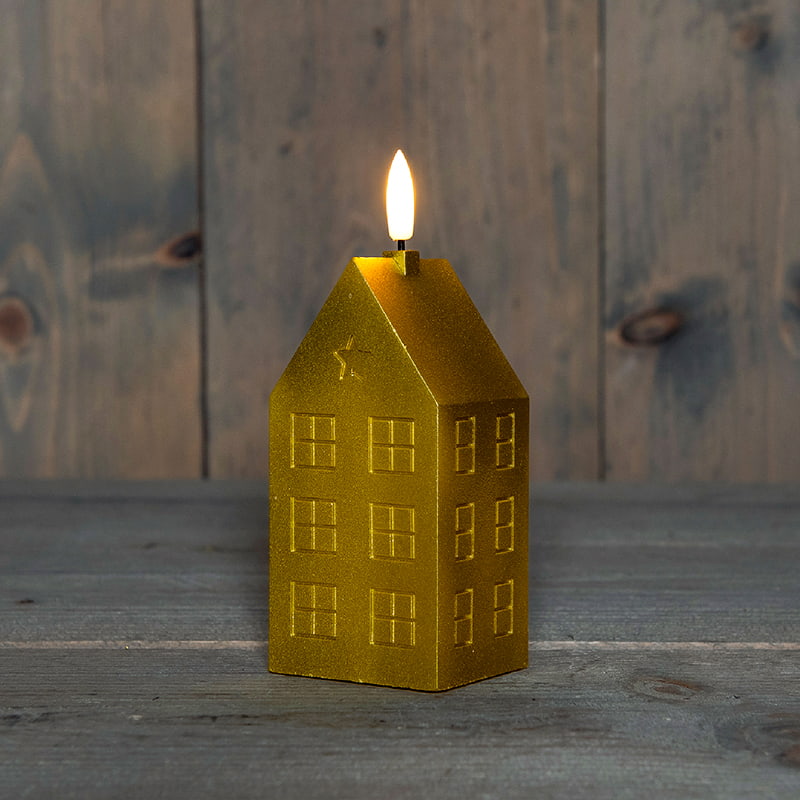
At first glance, powdered candles and LED candle lights seem to compete directly for the same decorative use case. In practice, they serve overlapping but distinct audiences, and savvy retailers increasingly stock both.
LED candle lights — battery-operated or USB-charged units that flicker via a small bulb to mimic a real flame — have grown rapidly since 2015. The global flameless candle market was valued at approximately USD 425 million in 2022 and is projected to reach USD 680 million by 2028, growing at a CAGR of around 8.1% according to market research firm Mordor Intelligence (2023). The driver is safety: hospitality venues, families with young children, and senior care facilities all need the ambiance of candlelight without open-flame risk.
Where LED Candle Lights Excel
- Zero fire risk in regulated environments (hotels, hospitals, aircraft displays)
- Reusable indefinitely — no wax depletion
- Consistent flicker pattern regardless of draft or humidity
- Remote-controllable for event staging
- No soot or smoke residue on walls or furnishings
Where Powdered Candles Excel
- Real fragrance diffusion that LED candle lights cannot replicate
- Premium tactile and visual surface quality for gifting
- Natural wax credentialing (soy, coconut) for eco-conscious consumers
- Ritual value of lighting and extinguishing a real flame
- Higher perceived value per unit, enabling stronger retail margins
The strategic opportunity many home decor brands have identified is bundling: a gift set that pairs a powdered candle with a small LED candle light gives the consumer both the sensory experience of a real candle and a safe flameless alternative for when the wick burns down or the product is displayed rather than used. Several Etsy sellers and boutique candle brands report that bundle sets command a 30–40% price premium over the candle sold alone, with the LED component adding less than USD 2–4 in material cost. This combination format has become especially common in wedding favor kits and hotel amenity packages.
DIY Powdered Candle Making: Materials, Equipment, and a Starter Formula
Making powdered candles at home or in a small studio is surprisingly accessible. The main equipment investment is a digital scale (essential for accurate fragrance dosing) and a tamper or simple press. Beeswax pellets and soy wax flakes — both widely available from candle supply retailers — serve as ready-made granular wax bases that require no atomizing equipment.
Basic Starter Formula for a 200 g Powdered Candle
- Wax base: 178 g soy wax flakes (89% of total weight)
- Fragrance oil: 20 g (10% of total weight) — added cold to dry flakes and tossed to coat
- Candle pigment: 2 g powder pigment (1%) — blended with fragrance before adding to wax
- Wick: CD-18 cotton wick for a 7–8 cm diameter vessel
- Vessel: 8 oz glass jar or concrete vessel
Simple Assembly Steps
- Weigh soy flakes into a mixing bowl.
- In a separate small cup, mix pigment powder into fragrance oil until fully dissolved.
- Drizzle the fragrance-pigment blend over the soy flakes while stirring continuously for 2–3 minutes to ensure even coating.
- Allow the mixture to rest for 10 minutes so the oil fully absorbs into the wax surface.
- Pour into the vessel and press firmly with a smooth-bottomed weight or dedicated candle tamper.
- Use a skewer to create a wick channel in the center; insert the pre-tabbed wick.
- Allow to set at room temperature for 30 minutes before the first burn test.
Common first-time issues include a wick that is too thin for the density of the pressed powder (resulting in a small, tunneling burn pool) or a fragrance oil that has not fully absorbed (producing an oily surface that smudges). Both are corrected by selecting a thicker wick size and ensuring the rest period in step 4 is not rushed. Comparing your powdered candle results against commercially produced LED candle lights or standard poured candles in the same vessel size is a useful benchmark for burn pool diameter and fragrance throw at the 2-hour mark.
Key Benefits of Powdered Candles for Retailers, Gifters, and Event Planners
Beyond the manufacturing advantages, powdered candles offer concrete benefits that resonate with every part of the supply chain, from wholesale buyers to end consumers.
Visual Differentiation on Shelf
The matte, velvety surface of a pressed powdered candle reads as premium against the shiny glass-smooth finish of a poured candle. In gift retail environments, surface quality is a major driver of perceived value. A consumer comparing two similarly priced candles will consistently rate the powdered one as more expensive in blind tests, according to research cited in Specialty Retail Report (2021).
Customization Flexibility
Color layers, ombre gradients, embedded dried botanicals, and custom-pressed surface patterns are all easier to achieve with powder than with poured wax. The cold-press process freezes the powder exactly where it lands, so a brand can replicate complex color patterns with high precision across thousands of units — something liquid wax processes cannot match due to the fluid dynamics of pouring.
Faster Lead Times
A powdered candle production line can process 40–60% more units per hour than an equivalent poured candle line, primarily because there is no heating, pouring, cooling, or second-pour cycle. For seasonal and event-driven orders — wedding favors, holiday gift sets — this throughput advantage translates directly into shorter lead times and the ability to take orders closer to the event date.
Lower Minimum Order Quantities
Because the powder can be pre-mixed in large batches and then customized at the pressing stage, manufacturers can often accommodate smaller custom orders — some suppliers quote minimums as low as 100 units for a custom fragrance and color combination — versus 500–1,000 units typical for custom-poured candles that require dedicated pouring runs.
Reduced Shipping Breakage
A cold-pressed powdered candle in a glass jar has no liquid wax layer that can crack the container if temperatures fluctuate during transit. The pressed powder acts as its own internal packing material, absorbing minor impacts. This structural characteristic makes powdered candles better suited to e-commerce direct-to-consumer shipping where parcel handling is unpredictable.
Eco and Clean-Burn Positioning
A soy or coconut powdered candle with a cotton wick burns without the black soot associated with poorly formulated paraffin candles. For brands targeting health-conscious or sustainability-focused consumers, the powdered format enables a straightforward clean-burning claim, particularly when combined with natural fragrance oils rather than synthetic aromatic compounds.
How to Burn and Care for Powdered Candles to Maximize Their Lifespan
Powdered candles follow most of the same burning rules as poured candles, with a few specific considerations related to their pressed construction.
First Burn Rules
Allow the melt pool to reach the full diameter of the container on the first burn. With a powdered candle, this is especially important: if you extinguish after only 30–40 minutes, the melt pool stays narrow and the powder around the edges never compacts fully into the burn zone. On subsequent burns this creates a wick that seems to sink into a crater of unmelted powder, making the candle difficult to relight and shortening its effective life. Plan for a first burn of at least 2–3 hours for a standard 8 oz container.
Wick Trimming
Trim the wick to 5–6 mm before every burn. In a powdered candle, an overlength wick produces a larger flame that can cause the powder to pull away from the container wall, creating gaps that interrupt capillary wax flow and cause uneven burning. A trimmed wick also reduces soot accumulation on the container interior.
Storage Between Burns
Keep the lid on between burns to protect the powder surface from dust and humidity. If the candle surface appears to have absorbed moisture (visible as a slight darkening or stickiness), allow it to dry at room temperature for several hours before relighting. Forcing a lit flame into a moisture-contaminated powder surface can cause spattering as the steam trapped in the powder escapes suddenly.
When the Candle Is Spent
Unlike a poured candle where residual wax can be melted out and the container reused for a new pour, a powdered candle container usually has a thin layer of compressed wax powder bonded to the glass after the final burn. This can be removed by placing the empty jar in a freezer for one hour (the compressed wax contracts and lifts away from the glass) then popping it out with a butter knife. The clean container can then be repurposed or refilled with fresh powder for a DIY second use.
Market Trends Driving Demand for Powdered Candles in 2024 and Beyond
Several intersecting consumer and retail trends are converging to accelerate adoption of powdered candles beyond niche craft markets.
The Premiumization of Self-Care Products
Post-2020, consumer spending on home fragrance and self-care products expanded significantly. The global home fragrance market reached USD 8.2 billion in 2022 and is forecast to grow to USD 13.8 billion by 2030 (Allied Market Research, 2023). Within this growth, premium-positioned products — those with distinctive aesthetics, natural ingredients, or artisanal production stories — are capturing a disproportionate share. Powdered candles, with their unusual format and visible handcraft quality, fit naturally into this premium tier.
Gifting Season Demand Concentration
Candles remain one of the top five gifting categories in the US, UK, and Australia, particularly for the November–January holiday window. According to the National Candle Association (NCA), approximately 35% of all candle sales in the US occur in the fourth quarter, with gift-packaged candles representing over half of that seasonal volume. The visual sophistication of powdered candles makes them ideal for gift boxing, especially in layered-color formats where the gradient effect is visible through a glass container.
Social Media Visual Commerce
Powdered candles photograph exceptionally well. The matte surface eliminates the harsh reflections that make smooth-pour candles difficult to shoot without professional lighting. On Instagram and Pinterest, where candle content generates millions of engagement interactions annually, the textural quality of a powdered candle surface creates a tactile appeal that resonates with audiences even through a flat screen. Brands that have built organic social followings around powdered candles report significantly higher save rates on product posts compared to equivalent poured candle content.
Flameless and Flame Candle Hybrid Displays
Interior designers and event stylists increasingly combine real candles with LED candle lights in the same display to manage both aesthetics and safety regulations simultaneously. In this context, powdered candles and high-quality LED candle lights become complementary products rather than competitors: the powder candle provides the authentic wax texture and fragrance element, while the LED candle light fills votive positions where open flame is restricted. Retail sets that include both have tested strongly with interior design influencers and are increasingly featured in boutique hotel room amenity catalogs.
How to Source High-Quality Powdered Candles from Manufacturers
For buyers sourcing powdered candles at wholesale volume, the evaluation criteria differ somewhat from those used for poured candle suppliers. Here is a practical checklist:
| Evaluation Criterion | What to Ask | Red Flag |
|---|---|---|
| Wax specification | Request wax type, origin, and particle size range | Cannot provide SDS or wax data sheet |
| Fragrance load | Ask for % by weight and fragrance supplier name | Refuses to confirm % or says "proprietary" |
| Burn test data | Request documented burn tests at 2 h, 4 h, and full burn | Only provides photographs, no measurement data |
| Minimum order quantity | Clarify MOQ for custom fragrance vs stock fragrance | MOQ jumps sharply for any customization |
| Sample availability | Ask for burn-test samples, not just display samples | Will only ship sealed/unlit display samples |
| Packaging humidity control | Ask how candles are sealed for sea freight | No humidity-barrier packaging described |
Requesting a burn test sample rather than a display sample is the single most important step. A manufacturer who will not supply a burnable candle for evaluation is almost certainly shipping a product that has not been properly wick-tested for the container size and powder density they are producing at volume.
Frequently Asked Questions About Powdered Candles
Are powdered candles safe to burn indoors?
Yes. Powdered candles burn in the same way as any wax candle once the melt pool forms — the pressed powder simply liquefies from the heat of the flame and burns exactly as poured wax does. The main safety considerations are identical to those for any candle: keep away from drafts, never leave unattended, place on a heat-resistant surface, and keep away from flammable materials within a 30 cm radius. If you need a completely flameless option for regulated or high-risk environments, LED candle lights are the appropriate choice.
Do powdered candles last as long as regular candles?
Burn time depends primarily on wax volume, wick size, and fragrance load — not the production method. A 200 g powdered soy candle pressed to standard density (0.8 g/cm3) will burn for approximately 40–50 hours, comparable to a 200 g poured soy candle. However, if the powder is pressed too loosely, capillary draw is disrupted and the candle may burn faster than expected, reducing lifespan by 15–20%.
Can I make layered color powdered candles at home without special equipment?
Absolutely. The layering technique requires only a vessel, pre-colored soy flakes (mixed with powder pigment and fragrance), and a tamper. Pour the first color layer, press gently, pour the second color layer, press again, and continue until the vessel is full. The layers stay crisp because there is no liquid bleeding. The main challenge is keeping the layers level — a small spirit level placed on the vessel helps.
What is the difference between powdered candles and granular candles?
The terms are sometimes used interchangeably but technically refer to different particle sizes. Powdered candles use atomized or very finely milled wax (under 200 microns), producing a smooth, pressed surface. Granular candles use larger wax pellets (2–5 mm), which create a visible grain texture. Beeswax granule candles sold in many craft stores are the most common granular type. Both are produced cold without melting, but their surface aesthetics and burn behavior differ.
How do powdered candles compare to LED candle lights for home decor?
LED candle lights and powdered candles serve complementary roles in home decor. LED candle lights provide safe, maintenance-free ambiance indefinitely — ideal for mantels, bookshelves, and anywhere an open flame is inconvenient. Powdered candles add genuine fragrance, a ritual element, and a higher gift value. For a complete decorative display, many interior designers recommend combining both: use LED candle lights at the outer edges of a vignette for consistent glow and place a powdered candle at the center for visual focus and scent diffusion.
Can powdered candles be refilled once burned down?
Yes — this is one of the more appealing sustainability features of the format. Once the original candle has burned down, clean the glass container (freeze method described above), blend a new batch of fragrance-infused powder, and press a fresh candle into the same vessel. The refill costs a fraction of the original retail price and produces no glass waste. Some brands sell powdered candle refill kits specifically for this purpose.
What scents work best in powdered candles?
Because cold pressing preserves volatile top notes, powdered candles excel at showcasing fresh, citrus, and green accords that tend to be muted in hot-pour candles. Bergamot, lemon verbena, fresh linen, and eucalyptus perform noticeably better in cold-pressed formats. Heavy base-note fragrances like oud, amber, and tobacco are already stable at elevated temperatures, so the cold-press advantage is less pronounced for those accords — though they still perform well.
Are there vegan powdered candles available?
Yes. Soy wax powder and coconut wax powder are both plant-derived and vegan. Beeswax granules, while natural, are not vegan. When sourcing vegan powdered candles, also verify that the fragrance oils used are not tested on animals and that any colorants are cosmetic-grade synthetic pigments rather than carmine (a red pigment derived from insects sometimes used in candle making).
Why does the surface of my powdered candle look different after the first burn?
After the first burn, the area around the wick will have melted and re-solidified, creating a small ring of smooth wax surrounded by the original powder texture. This is completely normal and does not affect burn quality. On subsequent burns, this smooth ring will expand until it reaches the container walls. Some makers consider this gradual transformation of the surface a distinctive visual characteristic of the powdered candle format.