
 English
 Español
 Content
- 1 Why LED Tea Lights Are the Smarter Choice for Every Use Case
- 2 What LED Tea Lights Are and How They Compare to Traditional Tea Lights
- 3 Core Specifications to Check Before Ordering LED Tea Lights
- 4 Power Source Options: Battery, Rechargeable, and Solar Tea Lights
- 5 Practical Applications: Where LED Tea Lights Deliver the Most Value
- 6 Quality Checks Every Bulk Buyer Should Run on LED Tea Light Samples
- 7 Common Mistakes When Buying LED Tea Lights in Bulk
- 8 Frequently Asked Questions About LED Tea Lights
- 8.1 How long do LED tea lights stay lit on one set of batteries?
- 8.2 Are LED tea lights safe to leave on all night?
- 8.3 What color temperature should I choose to imitate real candlelight?
- 8.4 Can LED tea lights be used outdoors?
- 8.5 Will LED tea lights fit in my existing tea light holders?
- 8.6 What is the difference between a standard LED tea light and a 3D wick model?
- 9 Final Thoughts on Sourcing LED Tea Lights
Why LED Tea Lights Are the Smarter Choice for Every Use Case
The scenario is familiar: a restaurant manager replaces burned-out tea lights across forty tables every single evening, an event planner watches melted wax stain a white tablecloth minutes before the ceremony begins, and a homeowner worries about an open flame left near a curtain while guests are still arriving. Traditional tea lights create a warm atmosphere, but they also bring fire risk, soot, short burn times, and repeat purchase costs that never stop.
LED tea lights eliminate all of those problems at once. They deliver the same soft, flickering glow as a conventional tea light while running for dozens or even hundreds of hours on a single set of batteries. There is no open flame, no melted wax, no smoke residue, and no need to touch a hot surface when clearing tables. For anyone buying in bulk, the direct financial impact is equally clear: fewer replacements, less labor, no damage to furniture or linens, and no safety incidents at venues with children, pets, or large crowds.
This guide explains what actually matters when sourcing LED tea lights, starting with the headline conclusion: the best LED tea light for your budget is the one that matches the real operating conditions you face, not the cheapest unit in a catalog. The sections below cover brightness, color temperature, battery type, real-wax construction, flicker realism, power source choices, quality checks, and the most common purchasing mistakes.
What LED Tea Lights Are and How They Compare to Traditional Tea Lights
An LED tea light is a compact flameless candle, usually 38 to 44 mm in diameter and 12 to 25 mm high, that uses a small light-emitting diode to reproduce the glow of a traditional tea light. Higher-quality models add an imitation 3D wick that lights up like a real burning wick, plus a randomized flicker effect that avoids the flat, repetitive blinking of older electronic candles.
The easiest way to understand the value of LED tea lights is to put them side by side with the paraffin version. The table below summarizes the differences that affect day-to-day unit economics.
| Parameter | Paraffin tea light | LED tea light |
|---|---|---|
| Runtime | 3 to 6 hours | 48 to 120 hours, depending on battery |
| Surface heat | Flame exceeds 200 degrees Celsius | Stays cool in normal operation |
| Smoke and residue | Soot, melted wax, wick debris | None |
| Color consistency | Varies batch to batch | Fixed color temperature |
| Maintenance | Daily replacement and cleaning | Battery change every few months |
| Safety profile | Open flame, burn risk, fire hazard | No flame, safe for unattended use |
From a practical standpoint, a single LED tea light often outperforms an entire box of paraffin tea lights before it ever needs a new battery. That is why venues, retailers, and event companies have steadily moved in this direction. We have explained in detail why electronic candles are a safer option for festive atmospheres, and the same logic applies to everyday tabletop use.
Core Specifications to Check Before Ordering LED Tea Lights
Not all LED tea lights are equal. Two units that look identical in a product photo can behave completely differently in a dark dining room. The following specifications separate a convincing candle effect from a cheap flashlight look.
Brightness and Color Temperature
Brightness for a tea light should sit in the range of roughly 3 to 10 lumens. A unit brighter than that starts to read as a small flashlight rather than a candle; anything dimmer disappears entirely on a large table. Color temperature matters even more. A true candle glow sits between 2200 K and 2700 K, which produces a warm amber tone. At 3000 K the light starts to look yellow-white and clinical, while cool white LEDs above 4000 K destroy the entire candle illusion.
Flicker Realism and 3D Wick Effect
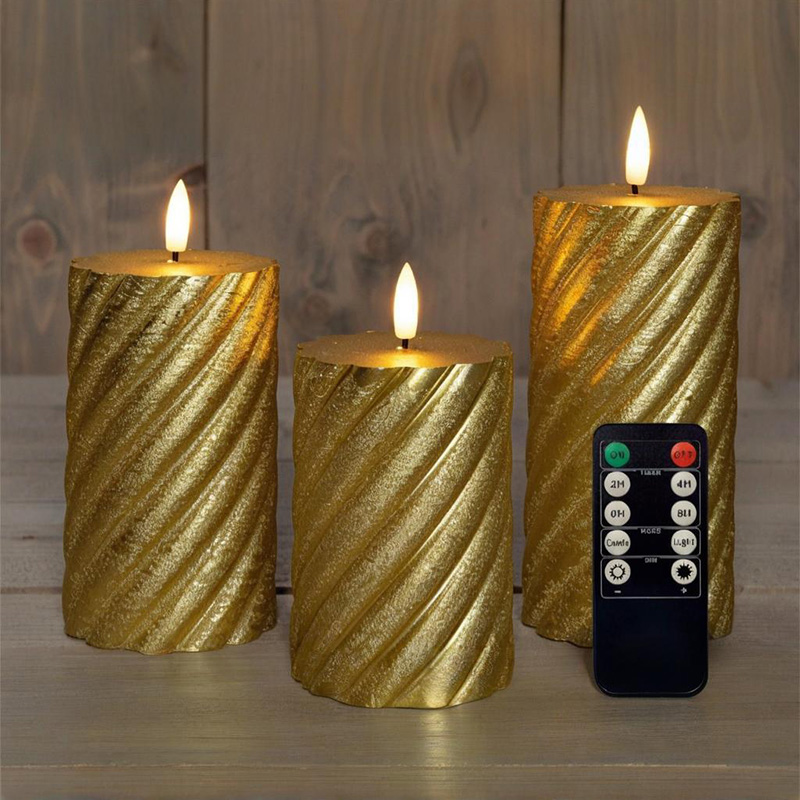
The cheapest LED tea lights simply turn on and stay at a constant brightness. They look flat, and most customers notice immediately. Good flicker simulation uses randomized intensity changes that mimic the natural turbulence of a real flame, rather than a fixed on-off blink every second. The most lifelike models add a 3D wick: a translucent wick that lights up progressively to imitate the charred, glowing wick of a burning candle. For close-range table settings, this detail is the single biggest difference between a passable product and a remarkable one. A set such as golden flameless tealight candles with 3D wicks is a practical example of how that effect looks in a finished product.
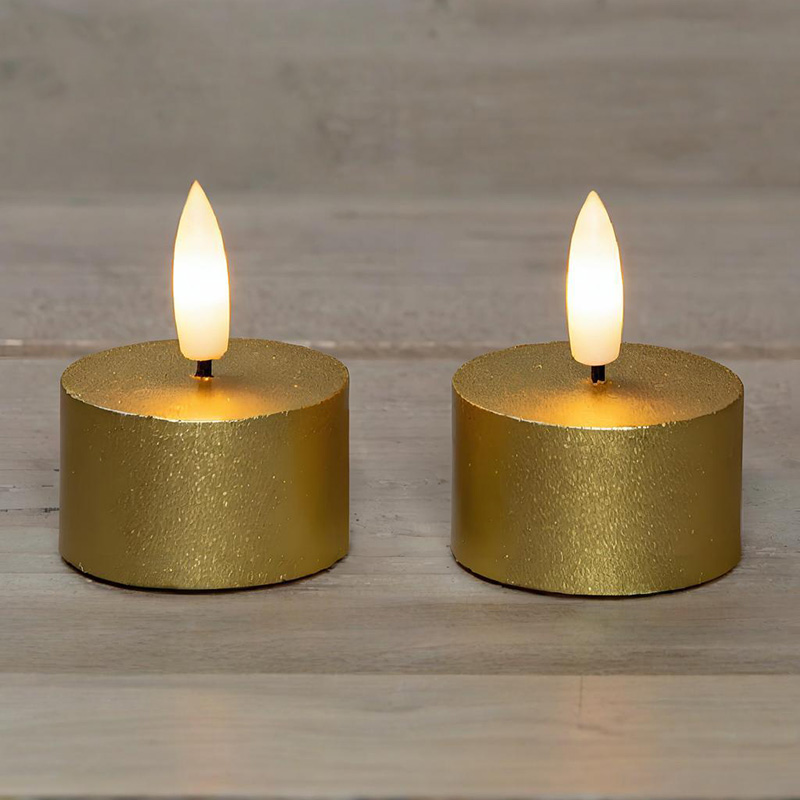 Wholesale Led Tea Lights With Remote Suppliers, FactoryNinghai Shuangmei Electronic Co.,Ltd is China led tea lights with timer suppliers and led tea candles factory, We specialize in wholesale...View Product →
Body Material and Build Quality
Body construction affects both appearance and durability. Plastic shells are the most common because they are cheap, but they can look glossy and artificial, and thin edges may crack during shipping or handling. Real-wax coated shells feel closer to a genuine candle, and matte finishes hide fingerprints better in hospitality settings.
- Check the shell thickness. Thin walls show the LED as a bright hotspot instead of an even glow.
- Inspect the seam between the body and the battery cover. Gaps collect dust and make the unit look cheap.
- Confirm the battery cover stays in place during a simple drop test from waist height onto a hard floor.
Water Resistance for Outdoor Placement
Standard battery tea lights are for dry indoor use. If the candle will sit on a patio table, a garden path, or near a pool, the housing needs an appropriate level of moisture protection. Solar LED tea lights designed for outdoor placement normally use sealed housings and built-in sensors to turn on automatically at dusk, which removes the manual switch problem for exterior lighting.
Power Source Options: Battery, Rechargeable, and Solar Tea Lights
Power source determines runtime, operating cost, and how much labor your team spends maintaining the candles. There are four main configurations in the market, and each fits a different operating pattern.
| Power type | Typical runtime | Best suited for | Main consideration |
|---|---|---|---|
| CR2032 button cell | 48 to 120 hours | Single-use decor, giveaways | Lowest cost, but battery replacement and recycling add upkeep |
| AA battery | 100 to 300 hours | Bright rooms, longer events | Slightly larger base, but much brighter output |
| Rechargeable | 12 to 40 hours per charge | Venues, rentals, nightly reuse | Higher upfront price, lower long-term cost |
| Solar | 8 to 12 hours per charge | Patios, gardens, outdoor tables | Needs direct sunlight during the day |
For a restaurant or event venue that reuses the same candles every night, rechargeable units reduce the recurring cost of button cells significantly. For outdoor seasonal decor, solar-powered LED flameless tealight candles eliminate battery replacement entirely as long as they receive enough daylight. For corporate users in hospitality, inductive rechargeable flameless candles in white offer a cleaner charging workflow than individually removing and replacing batteries.
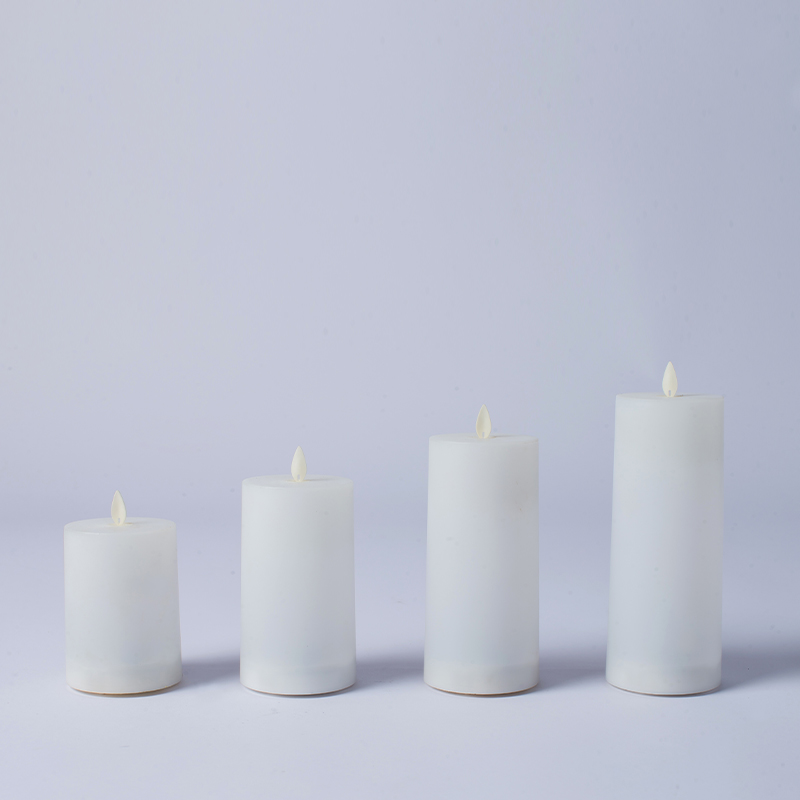
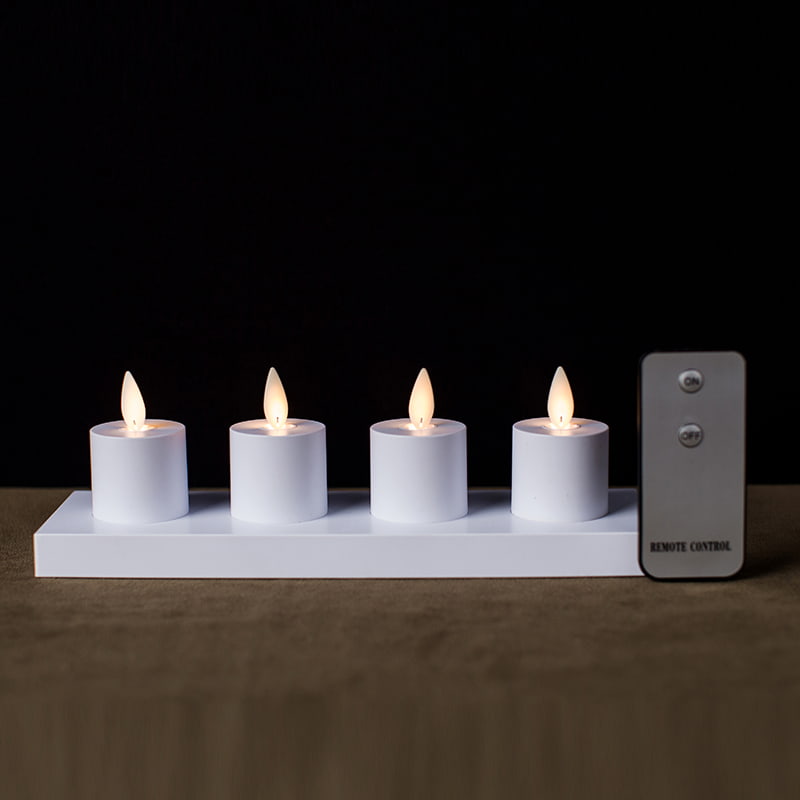 4 Pack White Inductive Rechargeable Flameless Candles Suppliers, Company - NinghNinghai Shuangmei Electronic Co.,Ltd is China 4 Pack White Inductive Rechargeable Flameless Candles suppliers and wholesale company.Shuan...View Product →
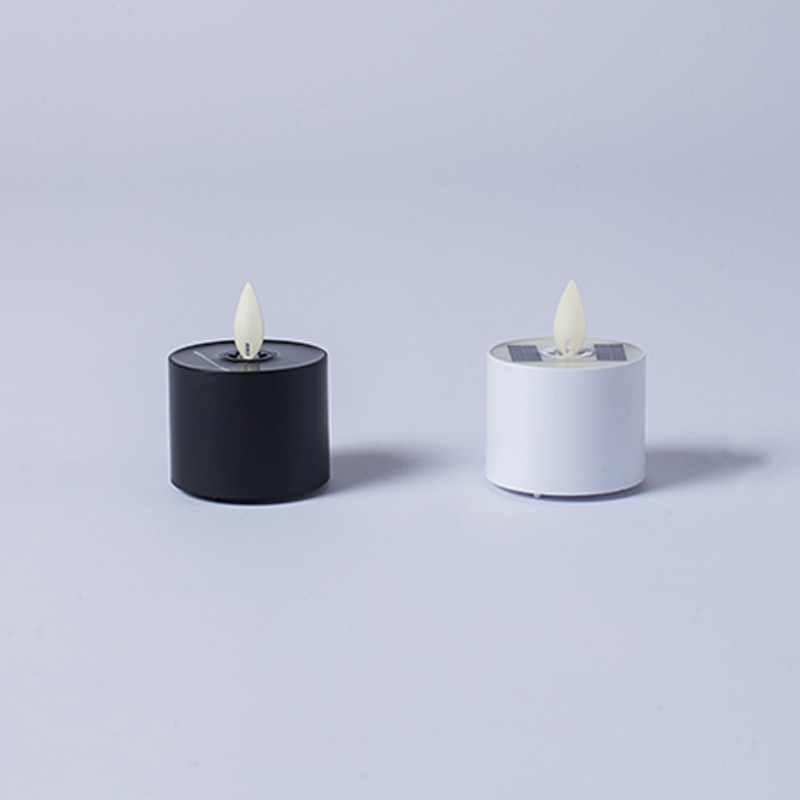
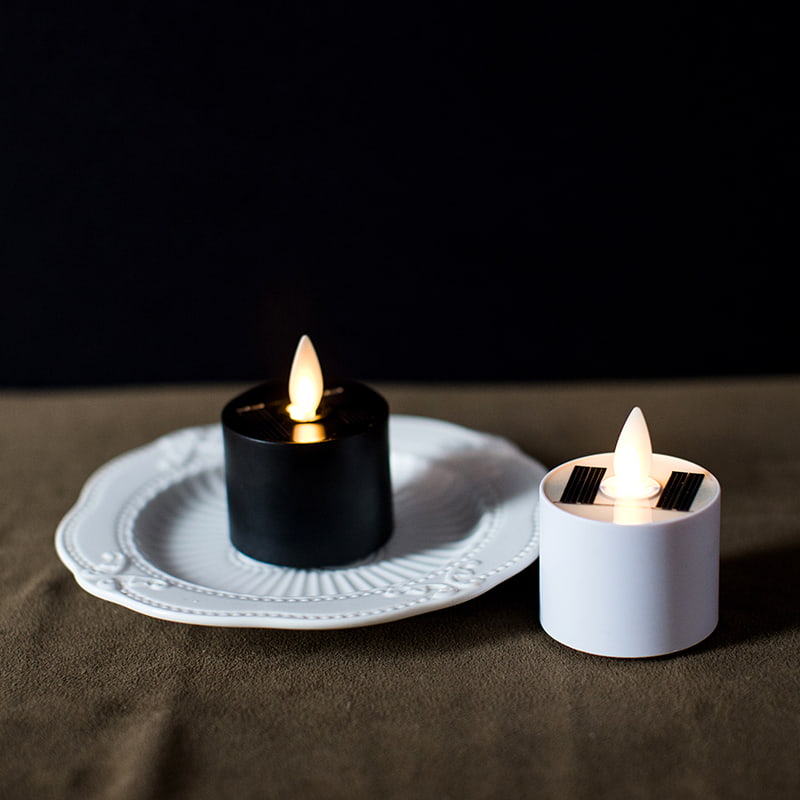 Solar LED Flameless Tealight Candles Suppliers, Company - Ninghai Shuangmei ElecNinghai Shuangmei Electronic Co.,Ltd is China Solar LED Flameless Tealight Candles suppliers and wholesale company.Shuangmei’s solar teal...View Product →
The practical conclusion is simple: the cheapest power source per hour is not always the cheapest per year. A venue running one hundred tea lights for ten hours a night will go through thousands of button cells each year. Rechargeable or solar powered units shift that cost into the equipment price and remove most of the maintenance labor.
Practical Applications: Where LED Tea Lights Deliver the Most Value
LED tea lights are not limited to one type of business. The products earn their place in any environment where real candles are inconvenient, risky, or simply too expensive to maintain.
- Restaurants and cafés: candles stay lit through the entire dinner service, never burn out mid-shift, and require no open-flame supervision.
- Hotels and banquet halls: consistent light across every table creates a uniform look, and housekeeping avoids scraping wax off glassware and linens.
- Weddings and events: no burned dresses, no fire safety restrictions at indoor venues, and the candles can be packed away and reused at the next event.
- Retail displays and showrooms: presentations stay unchanged for weeks at a time, and lights can cycle on a timer instead of relying on staff to relight.
- Home décor and centerpieces: families can place tea lights on shelves, mantels, and near curtains without worrying about children or pets tipping them over.
- Outdoor patios and gardens: solar-powered units switch on at dusk automatically and survive dew and light rain when properly sealed.
If you are evaluating a large-scale switch from traditional candles, it is worth reviewing the broader operational advantages of electronic candles before you set your product specification.
Quality Checks Every Bulk Buyer Should Run on LED Tea Light Samples
Bulk purchasing changes the risk picture. One defective battery compartment in a gift bag or a single misaligned wick in a hotel room creates a negative impression out of proportion to the unit price. The following checks should be performed on pre-production samples before any container is loaded.
Pre-Production Sample Checklist
- Color consistency: place 10 to 20 units side by side in a dark room and confirm every unit shares the same color temperature. Mixed batches from different LED suppliers are a common issue.
- Brightness uniformity: check that no unit is noticeably dimmer or brighter than its neighbor on the same table.
- Flicker behavior: watch each unit for five minutes. The flicker should be irregular and organic, not a synchronized blink across multiple units.
- Battery compartment: open and close the cover twenty times, then drop the unit from waist height. Covers that pop open will fail in transit.
- Heat behavior: run the unit inside a closed glass holder for six hours. The surface should remain cool enough to touch comfortably.
- Wick alignment: the 3D wick should sit centered and straight; a leaning wick looks defective at close range.
Shortcuts Often Found In Low-Cost Products
- Older LED batches that have drifted away from the specified color temperature, producing a green or pink tint.
- Button cells with lower capacity than the package labels claim, cutting runtime by 30 to 50 percent.
- Thin plastic shells that create a bright hotspot directly above the LED instead of an even diffused glow.
- A fixed blink timer that makes every candle in the room pulse in unison, destroying the realistic effect.
Trial Orders and Scaling
A small trial order is the cheapest insurance policy for a first-time supplier relationship. A quantity in the 500-piece range allows you to test color consistency, packaging quality, and runtime with actual users before committing to a larger volume. It also shows whether the manufacturer can hold tolerances when moving from samples to production run. After the trial batch performs well, scaling to a full order becomes a much safer decision. Related products follow the same logic; buyers who source larger statement pieces can apply the same checks described in our complete buyer guide for flameless pillar candles.
Common Mistakes When Buying LED Tea Lights in Bulk
Avoiding these seven mistakes saves more money than any discount a supplier can offer.
- Choosing by price alone. The cheapest unit often has the lowest brightness, shortest runtime, and worst color consistency. Across a one-year contract, a 20 percent higher unit price is usually far smaller than the labor cost of replacing dead candles all season.
- Ignoring the battery replacement workflow. If your venue uses hundreds of units, ask who changes the batteries and how often. A rechargeable system may cost more upfront but eliminates thousands of button cell changes per year.
- Mixing color temperatures. Adding a second purchase later from a different batch can create an uneven look on the same table. Specify the color temperature in writing and verify samples from every new batch.
- Forgetting about enclosed holders. Tight glass vessels reduce airflow and can make an LED unit run warmer than expected. Test the candle inside the actual holder you plan to use.
- Skipping the remote-control question. Large installations need a way to turn everything off at closing time. Remotes and timers are inexpensive when ordered from the start but difficult to retrofit later.
- Underestimating packaging strength. A candle that arrives with a cracked shell is a total loss. Check the inner tray design and carton density before approving production packaging.
- Assuming outdoor and indoor units are interchangeable. Standard indoor tea lights left in the rain will fail quickly. Choose sealed or solar-powered versions for exterior placements.
Frequently Asked Questions About LED Tea Lights
How long do LED tea lights stay lit on one set of batteries?
Runtime depends on the power source. CR2032 button cell units typically last 48 to 120 hours, AA-powered models reach 100 to 300 hours, rechargeable units run 12 to 40 hours per charge, and solar tea lights provide roughly 8 to 12 hours of light after a full day of sun exposure.
Are LED tea lights safe to leave on all night?
Yes, under normal conditions. Because there is no open flame and the surface stays cool, LED tea lights are designed for unattended use. The main exceptions are wet environments, damaged battery compartments, or being placed inside fully sealed containers for long periods where heat cannot escape.
What color temperature should I choose to imitate real candlelight?
Warm white between 2200 K and 2700 K is the range that most closely matches a paraffin candle. Combine it with a randomized flicker and a 3D wick for the most convincing effect at short viewing distance.
Can LED tea lights be used outdoors?
Yes, but only if the housing is sealed for outdoor use. Solar tea lights with waterproof enclosures are the most common choice for patios and gardens. Standard battery units without moisture protection should stay indoors or under a covered area.
Will LED tea lights fit in my existing tea light holders?
Most LED tea lights follow the traditional dimensions of roughly 38 to 40 mm diameter and 12 to 20 mm height, so they fit standard holders. Measure the inside diameter of your holder before ordering, especially for decorative holders with narrow lips or deep wells.
What is the difference between a standard LED tea light and a 3D wick model?
A standard model has a flat top with an LED visible at the center, which can look like a small glowing disc. A 3D wick model uses a translucent wick that lights up progressively, creating the illusion that the wick itself is burning. For close-up settings such as wedding tables and restaurant centerpieces, the difference is immediately noticeable.
Final Thoughts on Sourcing LED Tea Lights
The LED tea light market rewards buyers who look beyond the unit price. Define your operating conditions first: how many hours will the candles run each day, how many units are in use, who will maintain them, and whether any of them sit outdoors. Then translate those conditions into a specification covering brightness, color temperature, flicker quality, battery type, and body material.
Working directly with a manufacturer that can produce samples, run trial orders, and hold consistent tolerances reduces most of the risk in this category. A modest trial batch confirms the product in real conditions before you scale up, and a clear specification protects every future order from drifting quality. With the right product, LED tea lights stop being a recurring expense and become a one-time purchase that keeps delivering atmosphere for years.