
 English
 Español
 Content
- 1 Votive vs. Tealight vs. Pillar vs. Taper: Which Format Fits Which Setting
- 2 The Specifications That Separate a Quality LED Votive from a Disposable One
- 3 Battery and Power Options: Runtime Is a Cost Decision, Not a Convenience One
- 4 Flicker Quality: The Most Underrated Criterion in the Buying Process
- 5 Materials and Finishes: Plastic, Real Wax, and Glass Votive Options
- 6 Application Scenarios: Where LED Votive Candles Deliver the Highest Return
- 7 Sourcing Checklist Before You Commit to a Bulk LED Votive Order
- 8 Frequently Asked Questions About LED Votive Candles
- 8.1 How long do LED votive candles last on a set of batteries?
- 8.2 Do LED votive candles generate any heat?
- 8.3 Can LED votive candles be left on overnight?
- 8.4 What color temperature looks most like a real votive flame?
- 8.5 Are LED votive candles suitable for outdoor use?
- 8.6 What is the standard size of an LED votive candle for holders?
- 9 Final Recommendation Before You Place Your Order
The direct answer is simple: an LED votive candle is the smallest, most reliable flameless lighting unit you can deploy in bulk today. Most units measure 38 mm in diameter and 40 to 50 mm tall, run on two CR2032 button cells, and produce 1 to 4 lumens of warm light in the 2700K to 3000K range. A well-made unit runs continuously for 80 to 120 hours at standard brightness, which translates to roughly 10 to 15 full eight-hour shifts in a restaurant before a battery change is needed.
In practical terms, an LED votive candle removes three operational headaches that real wax candles create: open flames near linens, wax dripping onto holders, and staff time spent replacing melted candles between seatings. It also removes the per-event replacement cost entirely. A wax votive burns for about 12 to 15 hours and then is gone. An LED version can be reused for hundreds of hours, and the flickering flame effect that buyers once accepted as a compromise is now difficult to distinguish from real candlelight at conversational distance.
If you are deciding whether to switch a venue, restaurant, or retail range from wax to LED votive, the decision is less about visual quality and more about logistics. The full list of practical advantages of electronic candles goes well beyond safety, but for bulk buyers the top three are consistent presentation across all tables, zero melt-down mid-service, and a predictable cost per usable hour that drops with every event.
Votive vs. Tealight vs. Pillar vs. Taper: Which Format Fits Which Setting
Buyers often use the words votive and tealight interchangeably, but they are different formats with different holder requirements. A traditional wax votive is designed to be placed inside a small glass or ceramic votive holder because the wax liquefies completely during burning. A tealight, by contrast, is self-contained in a thin metal cup and can sit directly on any flat surface. In LED versions, the practical difference matters more than the melting behavior:
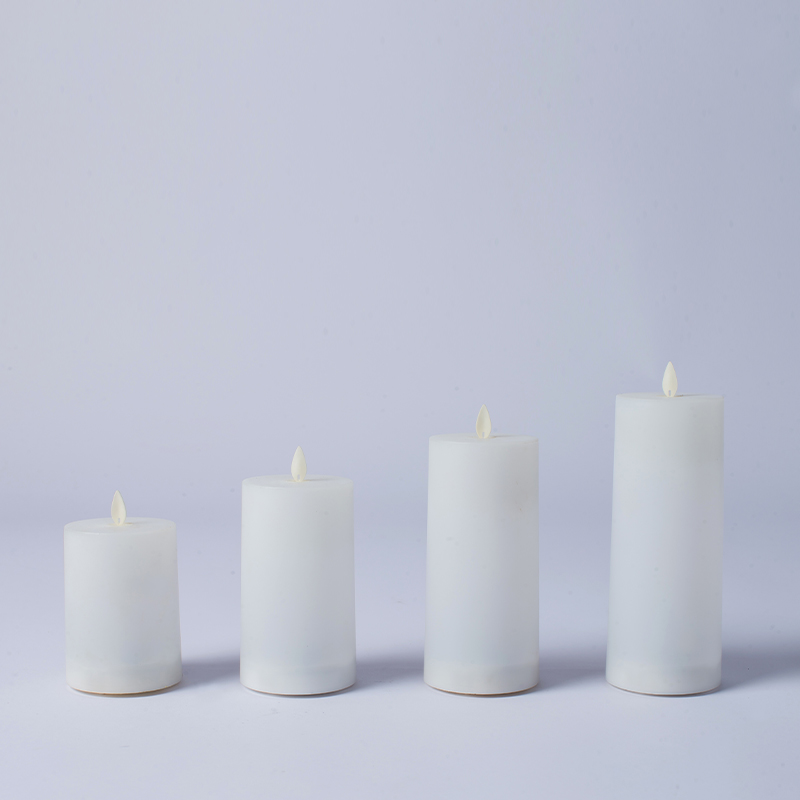
- LED votive: cylindrical, 38–40 mm diameter, 40–50 mm tall. Designed to fit standard votive holders and to look like a real wax pillar from the top-down view.
- LED tealight: short and flat, 38–44 mm diameter, only 12–18 mm tall. Best for floating in water bowls, lanterns, and tight rows along bar counters.
- LED pillar: 75 mm or wider, 100–200 mm tall. A statement piece for centerpieces, mantels, and aisle markers, not a per-table accent.
- LED taper: 20–24 mm diameter, 200–300 mm tall. Requires a candlestick holder and works for formal tables, chandeliers, or ceremony aisles.
When to choose a votive over a tealight: if your holders have a deeper well, if you want more physical presence on the table, or if your decor style uses frosted or colored glass holders, the votive format looks less like a disposable gadget and more like a real candle. For high-density installations such as a 50-candle bar display or a walkway lined with luminaries, tealights deliver the same glow at a lower per-unit cost. For the larger pillar format used in lobbies and centerpieces, a full buyer knowledge guide for flameless pillar candles covers the specification differences in detail.
The Specifications That Separate a Quality LED Votive from a Disposable One
The price difference between a $0.25 LED votive and a $2.00 LED votive is rarely visible in product photos. It shows up in runtime, flicker realism, color consistency, and battery compartment reliability. These are the parameters to write into your specification sheet before you contact a supplier:
| Parameter | Typical Range | Why It Matters |
|---|---|---|
| Diameter | 38–40 mm | Must sit snugly in standard glass or ceramic votive holders without rocking. |
| Height | 38–50 mm | A taller silhouette reads as more premium; shorter versions disappear behind taper candles. |
| Color temperature | 2700K–3000K | 2700K is the closest match to a real flame; 3000K looks slightly whiter and cooler. |
| Lumen output | 1–4 lm | The human eye perceives candlelight as warm and soft; more than 5 lm starts to look like a flashlight. |
| Battery type | 2 × CR2032, 2 × AAA | Determines replacement cost, runtime, and whether the unit fits in narrow holders. |
| Continuous runtime | 80–120 hrs (CR2032) | On an 8-hour daily service cycle, 80 hours means a battery change every 10 days. |
| Flicker pattern | Random 2.5–4.5 Hz | A fixed on/off blink at 1 Hz looks mechanical; natural flicker has varying intervals. |
| Shell material | HIPS, ABS, real wax | ABS resists heat and impact; real wax gives a matte, authentic texture. |
Two less obvious specifications deserve equal attention. First, the width of the battery compartment opening: if the compartment is less than 12 mm wide, staff will struggle to replace cells during busy service periods. Second, the contact pressure of the battery terminals: weak springs cause intermittent flicker that is indistinguishable from a failing unit. Both issues are easy to verify in a sample test and very difficult to fix after a large batch arrives.
Battery and Power Options: Runtime Is a Cost Decision, Not a Convenience One
For a 100-candle installation, every hour of runtime difference changes your annual battery bill by a meaningful amount. Let us walk through the math with a typical commercial scenario. Assume 100 LED votive candles, each used 8 hours per day, 30 days per month. At 80 hours of battery life, each candle needs a battery change every 10 days, which is 3 sets per candle per month, or 300 battery replacements across the installation. If a CR2032 pair costs roughly $0.35 in bulk, that is $105 per month just in coin cells. Increase the runtime to 200 hours, and the monthly battery cost drops to about $42. Over one year, the difference is nearly $760 per 100 candles.
The four power architectures currently available in LED votive candles each have different operational profiles:
- CR2032 coin cell (2 × 3V, 220–240 mAh): the standard for slim and tealight-style votives. Lightweight, cheap to replace, and widely available. Realistic runtime is 80–150 hours depending on brightness and flicker duty cycle.
- AAA batteries (2 × 1.5V): longer runtime, usually 300–500 hours, but adds 15–20 grams of weight and 8–10 mm to the candle body. Best for larger votive formats in glass holders where weight is not a concern.
- Rechargeable lithium with induction cradle: zero ongoing battery cost, but the candle body is heavier and the cradle adds a fixed cost per unit. Worth considering for a permanent installation where candles are rarely moved.
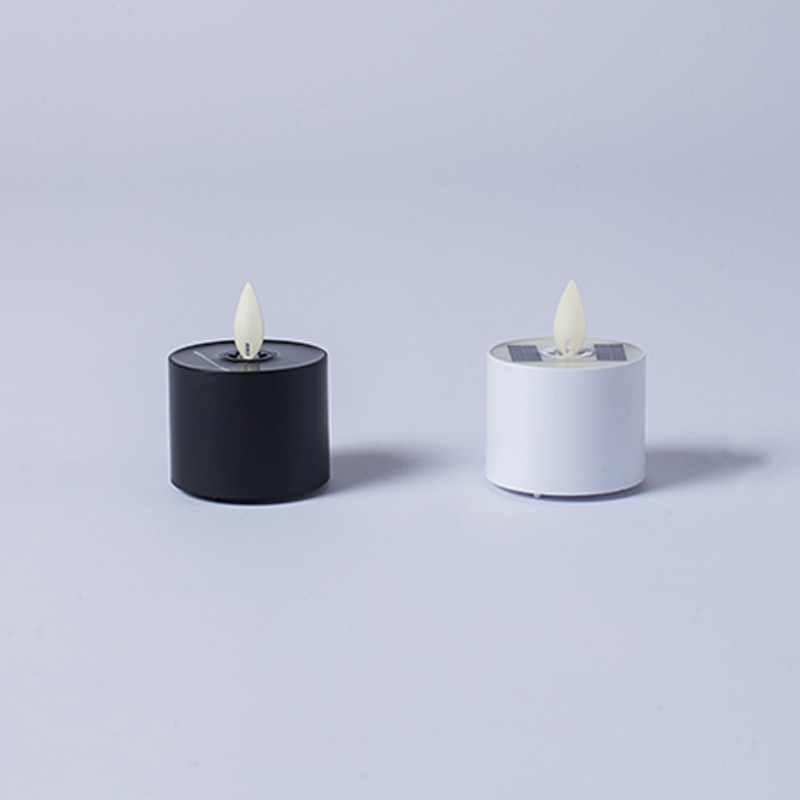
- Solar cell with internal NiMH cell: mainly for outdoor patios, garden venues, and cemetery lighting. Sunlight charges the cell during the day; the candle turns on automatically at dusk.
For an outdoor restaurant or an event lawn, the solar-powered LED flameless tealight candles eliminate battery replacement entirely and behave like self-maintaining decor. The trade-off is behavior: in cloudy weather or shaded seating, the built-in NiMH cell may not reach full charge, so the candle can dim earlier in the evening. Buyers who choose solar for commercial use should position them in direct sun for at least 6 hours a day, or keep a stock of CR2032 units as a backup for covered areas.
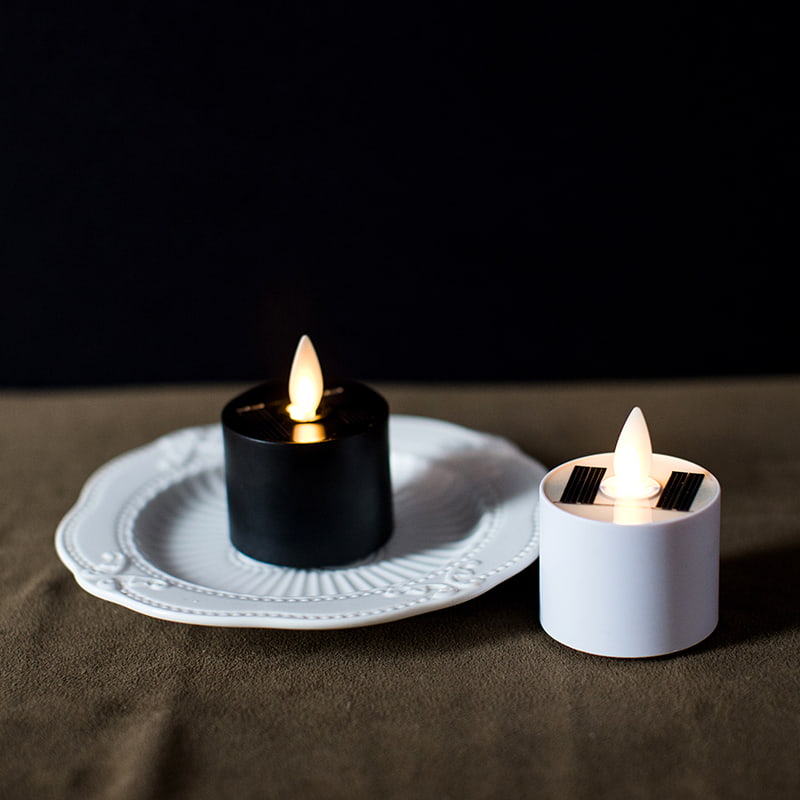 Solar LED Flameless Tealight Candles Suppliers, Company - Ninghai Shuangmei ElecNinghai Shuangmei Electronic Co.,Ltd is China Solar LED Flameless Tealight Candles suppliers and wholesale company.Shuangmei’s solar teal...View Product →
Flicker Quality: The Most Underrated Criterion in the Buying Process
A static LED candle with no flicker can pass in a bright room, but fails in exactly the situations where votives are used: low-light dinners, cocktail hours, and quiet ambient corners. Real candle flames flicker at irregular intervals of roughly 2.5 to 4.5 Hz, with occasional larger jumps when a draft passes or the wick releases a pocket of vapor. Cheap LED candles use a fixed timer that switches the LED on and off at a constant 1 Hz, which the human eye recognizes as an artificial blink even when the difference is hard to articulate.
The current generation of LED votive candles improves on this with a microcontroller that varies the pulse-width modulation of the LED at random intervals, sometimes skipping a beat and sometimes holding a steady glow for two or three seconds. In a side-by-side comparison, the difference is striking: the random pattern feels like a living flame, the fixed pattern feels like a blinking light.
There is a reliable way to test flicker quality before committing to a bulk order. Place the sample in a dim room, film it with a modern phone at 60 fps, then play the video back at normal speed. If the flame pattern looks mechanical or repeats itself every few seconds, the candle is using a simple on/off timer. If the glow shifts smoothly and the pattern never visibly repeats, the unit uses a randomized flicker algorithm. Also check the settling time after the flame is first turned on: a good unit reaches full flicker activity within a second, while a weaker unit takes several seconds to stabilize.
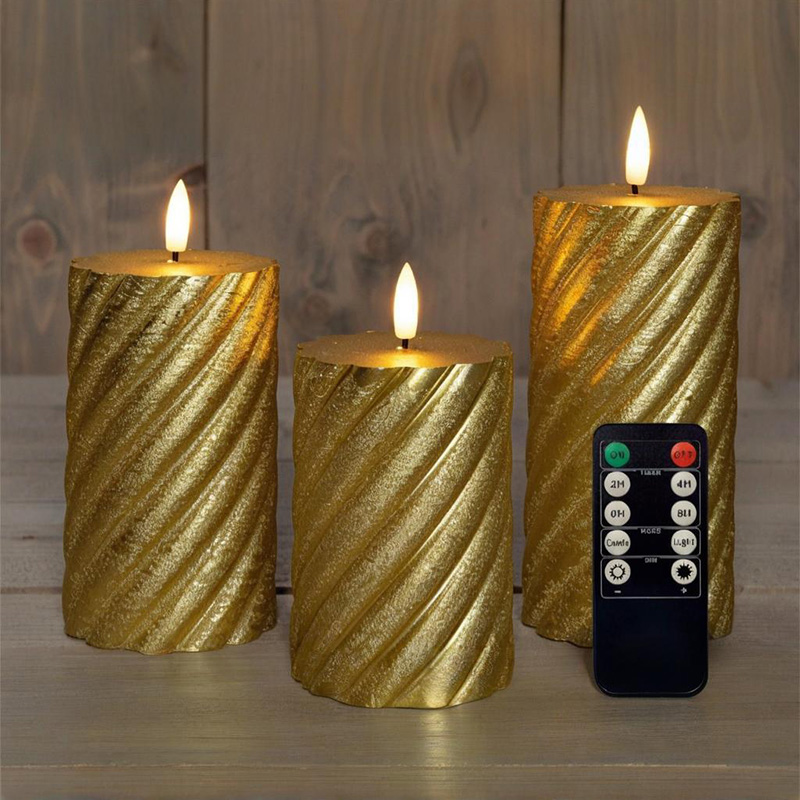
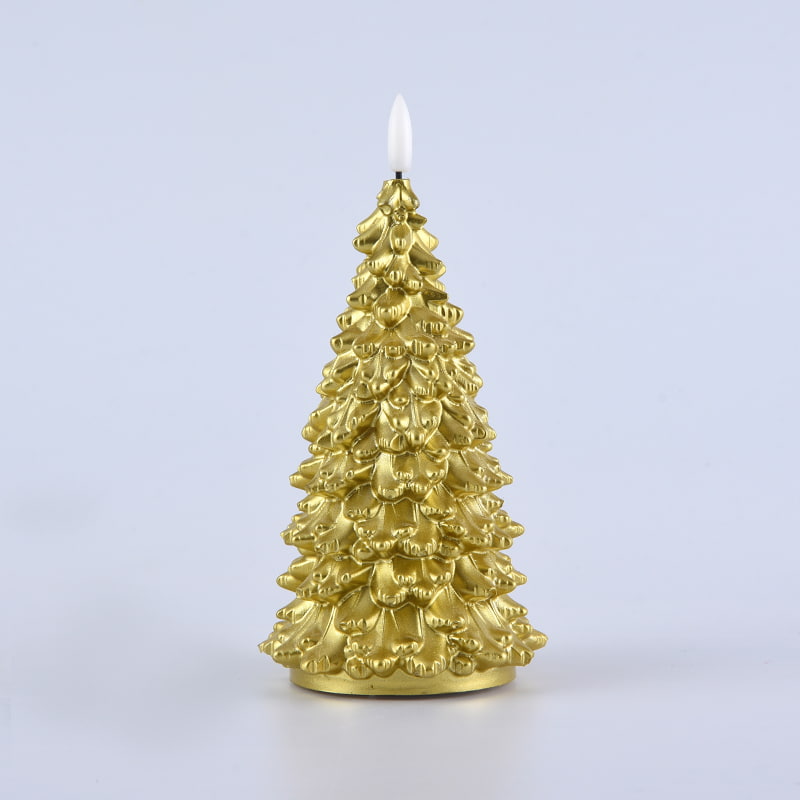
Realism is also a function of the wick and flame shape. The most convincing votive units use a 3D molded wick that projects above the shell, so the light source sits at the top of the wick just as it does in a real candle. For close-range installations where guests can inspect the candle, the set of two golden flameless tealight candles with a 3D wick is the style most often specified by event suppliers because the wick detail survives close inspection.
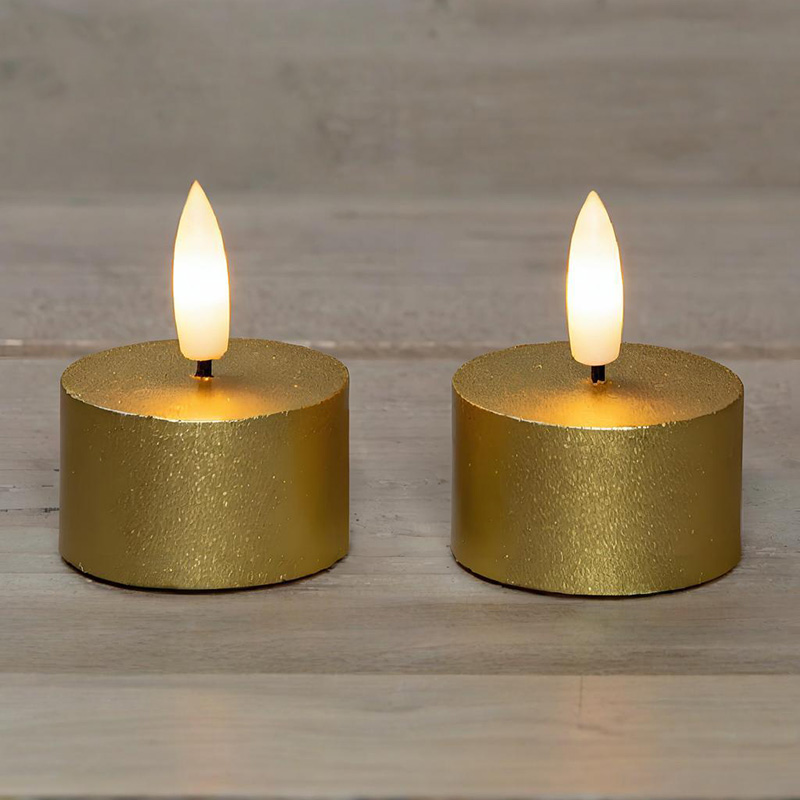 Wholesale Led Tea Lights With Remote Suppliers, FactoryNinghai Shuangmei Electronic Co.,Ltd is China led tea lights with timer suppliers and led tea candles factory, We specialize in wholesale...View Product →
Materials and Finishes: Plastic, Real Wax, and Glass Votive Options
The shell material determines the first impression a guest has when handling the candle, and it also drives most of the unit-price difference. Buyers typically choose from three construction approaches:
High-Impact Polystyrene and ABS Plastic
The most common and the most economical shell. Injection-molded plastic gives uniform dimensions, a smooth finish, and low weight. The main risk is a glossy surface that reflects light and reveals the product as plastic. Quality suppliers add a matte texture and a slight taper to the candle wall, mimicking the cast look of real wax. Plastic should be the default choice for high-volume installations where 500 to 10,000 units are needed and the candle is almost always inside a holder.
Real Wax Coating or Full Wax Body
A genuine paraffin or soy wax layer wrapped around the electronic core gives the exact tactile feel of a conventional candle: slightly soft, matte, and cool to the touch. Because real wax carries the flame color naturally, this construction is the strongest visual match to a wax candle. The trade-off is fragility; wax scratches and chips during shipping, and the material expands or contracts with temperature. Buyers shipping real-wax LED votives internationally must plan for protective inner packaging and a tolerance for minor surface marks that do not affect function.
Glass Container with an Internal LED
Glass votive candles combine the LED module with a fully transparent or frosted glass shell. This is the format preferred by hotels and wedding venues because the glass holder is already part of the design and the candle unit itself never needs to be seen. Glass adds weight and fragility, but in a permanent venue setting, the extra cost is offset by years of reuse. For buyers who operate venues with existing glass holders, the three-pack of gray flameless glass candles with remote is worth evaluating because the remote control eliminates the need to reach into every holder to switch units off.
 3 Pack Gray Flameless Glass Candles with Remote Suppliers, Company - Ninghai ShuNinghai Shuangmei Electronic Co.,Ltd is China 3 Pack Gray Flameless Glass Candles with Remote suppliers and wholesale company.With elegan...View Product →
A separate checklist for glass versions: confirm the glass thickness at the rim, check that the LED module sits flush with the glass bottom rather than wobbling, and confirm the switch is accessible without removing the module from the glass. One additional source of variation is the set of practical requirements buyers should check before ordering flameless glass candles, particularly in venues where the glass shell is washed repeatedly.
Application Scenarios: Where LED Votive Candles Deliver the Highest Return
The LED votive is not a universal product; its economics change dramatically by use case. These are the four scenarios where it generates the clearest return on investment:
Restaurants and Full-Service Cafés
A table of four usually carries two or three votives. A 60-table restaurant therefore runs 150 to 180 votives per evening. With wax, that is 150 to 180 candles consumed every night, plus staff time to scrape and reset holders. With LED, the same set of 180 units runs for months. The key decision factor is runtime uniformity: all candles in a venue should use the same battery batch and brightness mode, otherwise some tables will dim faster than others.
Hotels, Spas, and Lobby Areas
Lobbies and spa lounges use votives as decorative accents on reception counters, side tables, and shelf displays. Because these candles are often placed in inaccessible corners, remote-controlled units reduce the labor burden of switching each candle off at night. The glass-format votives are preferred here because they look intentional against stone and wood finishes.
Event and Wedding Rental Companies
Rental companies are the most demanding buyers because their candles are packed, transported, and installed across dozens of venues every month. In this market, the failure mode is mechanical more than electronic: cracked shells, loose battery compartments, and lost lids. A rugged ABS shell with a screw-lock battery door is more important than the most realistic flicker pattern.
Home Decor Retail and E-commerce
Retail buyers should focus on packaging and visual appeal rather than operational runtime. Consumers rarely run a votive for more than 4 hours a night, so a 60-hour runtime is more than sufficient. The differentiators for retail are holder compatibility, battery replacement ease, and the availability of a dimming or timer function. The products that sell best are those that look attractive on a shelf with the light off, since in-store the candle is rarely displayed switched on.
Sourcing Checklist Before You Commit to a Bulk LED Votive Order
Bulk ordering changes the risk profile of an LED votive purchase. In a retail pack, a bad unit is a return. In a 2,000-unit venue order, a bad unit is a visible gap on a table. Working through this checklist before signing off on a production run will prevent those gaps:
- Request 10 sample units, not one. A single sample can be a golden unit that passed extra QC. Ten units reveal batch consistency in brightness, color, and flicker pattern.
- Run a 72-hour continuous test. Put the samples on a shelf at the highest brightness setting and check them at 24-hour intervals. Any unit that dims noticeably or stops flickering within that window will fail in real service.
- Verify the color temperature with a light meter reading, not a photo. A photo white-balances automatically and hides color mismatches. A reading between 2700K and 2900K is the safest range for candle-replacement use.
- Test the candle in the exact holder you intend to use. A 0.5 mm diameter difference can create a rattling fit or a stuck unit. Bring your own votive holder to the sample evaluation.
- Check the battery compartment for corrosion risk. Some compartments place both cells in direct contact with the shell wall; if the shell is not sealed, humidity can cause discharge within weeks.
- Confirm the battery type and brand for the production run. A switch from a branded cell to a no-name cell can cut runtime by half without any visible change to the candle.
- Agree on dimensional tolerances in writing. A good supplier holds diameter to plus or minus 1 mm and height to plus or minus 2 mm across the entire production batch.
- Negotiate a small pre-production batch. A 100-unit run is enough to confirm production quality before committing to the full order, and it gives you a reference batch for comparing the final delivery.
Frequently Asked Questions About LED Votive Candles
How long do LED votive candles last on a set of batteries?
Most commercial-grade LED votive candles run for 80 to 120 hours continuously on two CR2032 batteries at standard brightness. Higher-quality units with efficient pulses or dim modes reach 200 hours or more. If the candle is used 8 hours a day, a battery change is needed every 10 to 25 days. Runtime should always be verified by an independent test, as the nominal figure quoted by some suppliers is based on the lowest brightness setting rather than the one buyers actually use.
Do LED votive candles generate any heat?
No. The LED element and the battery system in a well-designed votive stay below 40 degrees Celsius on the outer shell, which is barely warm to the touch and completely safe around curtains, paper, wood, and fabrics. The absence of heat is one of the main reasons hotels and museums specify LED votives for displays where a wax candle would be prohibited.
Can LED votive candles be left on overnight?
They can, and this is a genuine operational advantage over wax. There is no flame, no smoke, and no meltdown if the candle is forgotten. The only consideration is battery life: leaving a votive on 24 hours a day will consume a set of batteries in roughly 4 to 5 days. For continuous overnight operation, choose a model with a 4-hour or 8-hour timer that switches the candle off automatically, which will extend battery life to several weeks.
What color temperature looks most like a real votive flame?
A real candle flame has a warm core of roughly 1700K to 1900K and a brighter outer zone that measures around 2700K. Most LED votive candles are tuned to 2700K to 3000K, which is the compromise between the warm orange of the flame core and the whiter glow of the flame edge. 2700K is the safest choice for most settings; 3000K works for spaces with cooler ambient lighting, and anything above 3200K will look clearly artificial.
Are LED votive candles suitable for outdoor use?
Standard CR2032 votives are not weatherproof and should be kept under cover. For patios, garden tables, and open-air events, choose a solar-powered model with an internal NiMH cell and a sealed battery compartment, or a weather-resistant unit with an IP44 rating. Even with a sealed shell, direct rain and pool splash-back can damage the switch mechanism, so outdoor installation should always include some form of overhead cover.
What is the standard size of an LED votive candle for holders?
The industry-standard votive diameter is 38 to 40 mm with a height of 40 to 50 mm, matching the dimensions of standard glass and ceramic votive holders. Some suppliers also produce a slim votive at 30 mm diameter for narrow holders and a large votive at 50 mm for centerpiece use. Always confirm the holder opening diameter before ordering; a candle that is 2 mm oversize can be impossible to insert without damaging the battery compartment.
Final Recommendation Before You Place Your Order
The LED votive candle market has matured to the point where the technology is no longer the variable; the variable is the discipline of specification and inspection. A buyer who locks down the four core parameters — runtime, flicker pattern, color temperature, and dimensional tolerance — and verifies them with a 10-unit sample test will get a consistent product whether ordering 500 or 50,000 units. A buyer who skips the sample test is essentially betting the venue's atmosphere on product photos and a specification sheet that may describe the component, not the shipped unit.
Work with a factory that manufactures the candles in-house rather than reselling imported blanks, because in-house production gives you direct control over battery selection, shell material, and flicker algorithm. Ask the supplier for the data behind their runtime claim, request a sample set that matches your installation conditions, and insist on a pre-production batch. These three steps cost a few days of additional lead time and a small sample investment, and they eliminate the most common causes of bulk candle failure: inconsistent batteries, oversized shells, and flicker patterns that look like blinking lights instead of candle flames.