
 English
 Español
Content
- 1 Settle the Power Architecture Before You Compare Prices
- 2 The Flame Is a Specification, Not a Styling Detail
- 3 Shell Material and Surface Finish Decide Perceived Value
- 4 Remotes, Timers, and Range: The Details That Generate Returns
- 5 A Specification Sheet You Can Paste Into a Purchase Order
- 6 Sampling, Minimums, and the Real Lead-Time Clock
- 7 Build the Seasonal Calendar Backward From the Shelf Date
- 8 Field Failures Worth Designing Out Early
- 9 Frequently Asked Questions About LED Candle Lights
- 9.1 What are the best LED candle lights for a restaurant or hotel table?
- 9.2 How long do LED candle lights actually run on batteries?
- 9.3 Do 3D wick candles look convincing from a normal viewing distance?
- 9.4 Can LED candle lights be used outdoors?
- 9.5 What is a typical minimum order for a private label program?
- 9.6 How should LED candle lights be tested before shipment?
- 9.7 Can the flicker rate or brightness be customized?
- 10 Where to Start With Your Next Candle Program
Switch on a sample set of LED candle lights, walk two meters back, and look again. That distance decides most purchases. Up close, nearly every flameless candle looks acceptable. At two meters, a flat single-chip flame, a glossy plastic body, or a cool white glow gives the product away in under a second, and the buyer who opened the carton is the one who hears about it.
LED candle lights are not one product. They are a family of battery, rechargeable, and solar powered decorative lighting products built around three subsystems: the power architecture, the flame module, and the outer shell. Sellers who treat them as a single line item usually discover the difference after the container has shipped, when flicker drivers fail in the field, glass arrives chipped, or a remote turns on every candle in the room at once.
The three specifications that determine whether an LED candle program succeeds are power architecture, flame realism measured at two meters, and shell material. Everything else, including packaging, remotes, timers, and seasonal themes, sits on top of those three decisions. This guide works through each one in the order that matters for a purchase order, then covers sampling, lead times, the seasonal buying calendar, and the field failures that show up most often in retail returns.
It is written for importers, private label owners, hospitality supply buyers, and product managers who need to write a specification sheet that a factory can quote against without three rounds of clarification.
Settle the Power Architecture Before You Compare Prices
Ask for the power architecture before you ask for a quotation. Two candles that look identical on a catalog page can differ by a factor of three in runtime and by roughly a quarter to a third in landed cost depending on whether they take two AA cells, a rechargeable pack, a coin cell, or a solar panel with a storage cell.
An alkaline AA cell holds roughly 2,000 to 2,800 mAh. A flameless candle driver with an active flicker circuit usually draws 15 to 25 mA, which puts continuous runtime in the 80 to 140 hour range for a two-cell product. Add a six-hours-on, eighteen-hours-off timer and the same set runs for several weeks on one battery change. AAA cells, at roughly 1,000 to 1,200 mAh, halve that number. Tealights driven by a single CR2032 at 200 to 240 mAh typically deliver 40 to 70 hours because the LED current is deliberately lower.
Rechargeable models change the cost conversation. An inductive candle with a 300 to 500 mAh cell needs four to six hours on its charging base for 20 to 40 hours of light, and the better cells hold up for several hundred cycles. For restaurant tables, hotel lobbies, showrooms, and rental décor, that removes the single most common complaint about flameless candles: somebody has to remember to buy batteries.
Solar candles live or die on their panel, not their battery. A typical 2V, 60 to 100 mA panel needs six to eight hours of direct sunlight for a full charge and returns eight to twelve hours of light. On a north-facing windowsill, under a porch roof, or through tinted glass, output drops sharply, and in winter it can fall by half or worse. Solar units belong in open garden, patio, and path positions, and they should be quoted with a water resistance rating appropriate to that exposure.
A practical rule for channel fit: battery models with a timer suit retail multipacks, rechargeable models suit hospitality and event supply, solar models suit outdoor and semi-outdoor positions with reliable sun, and coin cell tealights suit high-count decorative filler packs.
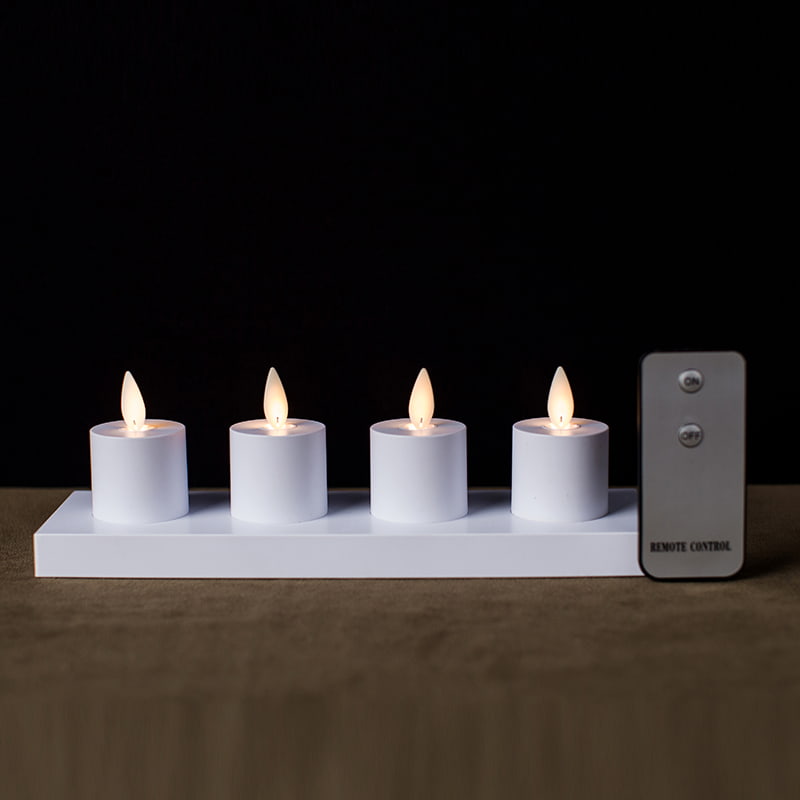 4 Pack White Inductive Rechargeable Flameless CandlesShuangmei’s inductive rechargeable candles are made of plastic and crafted with our patented moving flame. With the charging station, these candles can be normally use...View Product →
The Flame Is a Specification, Not a Styling Detail
The flame module is where buyers get surprised. A single LED chip under a translucent flame cap produces a bright dot with a soft halo, and it reads as an indicator light rather than a flame. A 3D wick module shapes the light source so the glow bends through a molded wick and concentrates at the tip, which creates the depth that makes a candle convincing from across a room.
Three numbers in this module deserve to be written into the purchase order.
- Color temperature. A real paraffin flame sits around 1,800 to 2,000 K. Candles specified at 2,700 K and above look like small light bulbs, especially next to warm wood, linen, or brick.
- Flicker behavior. Random flicker in roughly the 3 to 8 Hz band looks natural. Fixed patterns produce a metronome effect, and when six candles sit on one table they visibly pulse in unison, which is the fastest way to make a display feel artificial.
- Wick geometry and tolerance. Wick height of roughly 8 to 12 mm works for most pillar diameters, and the tip should sit centered within about 1 mm. A tilted or off-center wick casts an uneven shadow across the shell.
Ask for ten pieces pulled at random rather than a hand-built golden sample, and check them against a single lit reference unit at two meters in a room without overhead light. Ten units is enough to reveal drift in wick molding and in LED binning, both of which show up as visible differences between candles in the same pack.
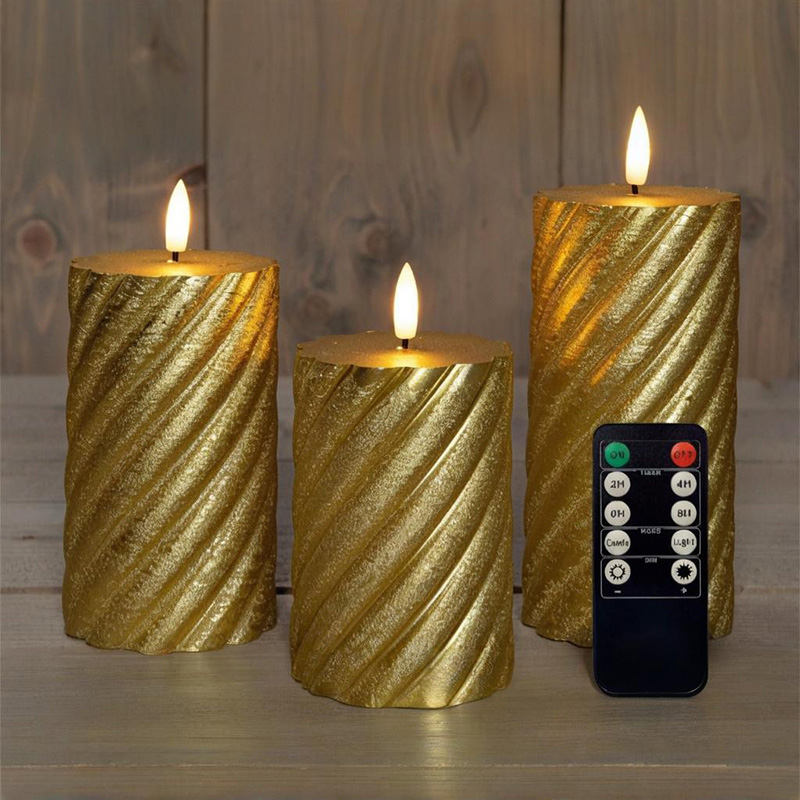 Set of 3 Golden Spiral LED Pillar CandlesOur 3 pack golden spiral pillar candles are a good select for your home decoration or holiday display. Designed with glowing golden spiral texture and our signature mo...View Product →
Shell Material and Surface Finish Decide Perceived Value
Two candles can share the same driver board but feel entirely different in the hand. A real wax shell over a plastic inner core uses a 2 to 4 mm wax wall, and a 3 x 6 inch pillar built that way usually lands between 300 and 450 g. A full plastic shell of the same dimensions typically weighs 150 to 220 g. That weight difference is not cosmetic: it changes how the product feels on a shelf, and it also changes container freight cost by a measurable margin at carton level.
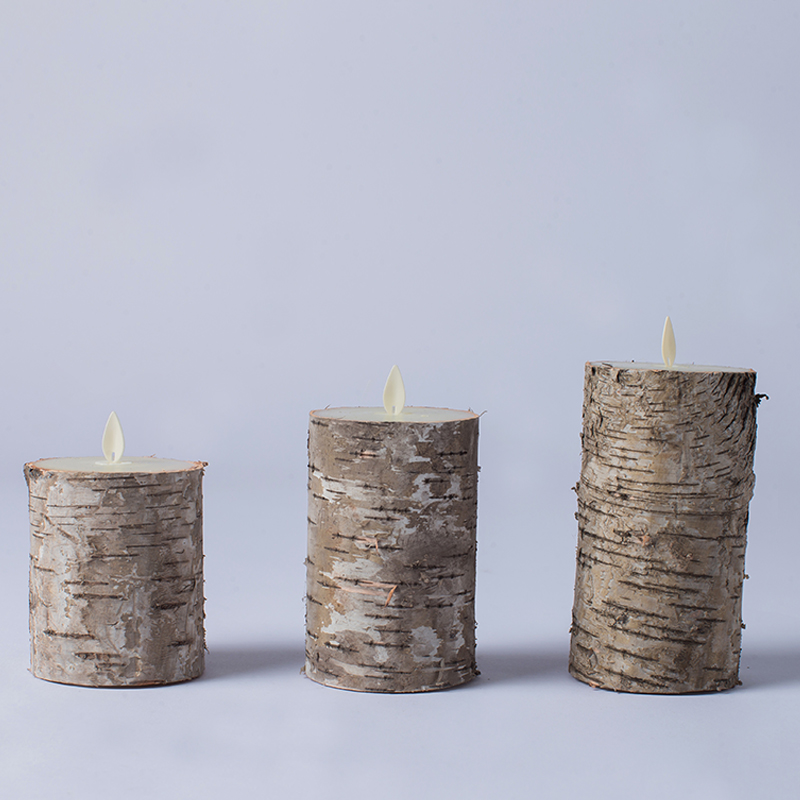
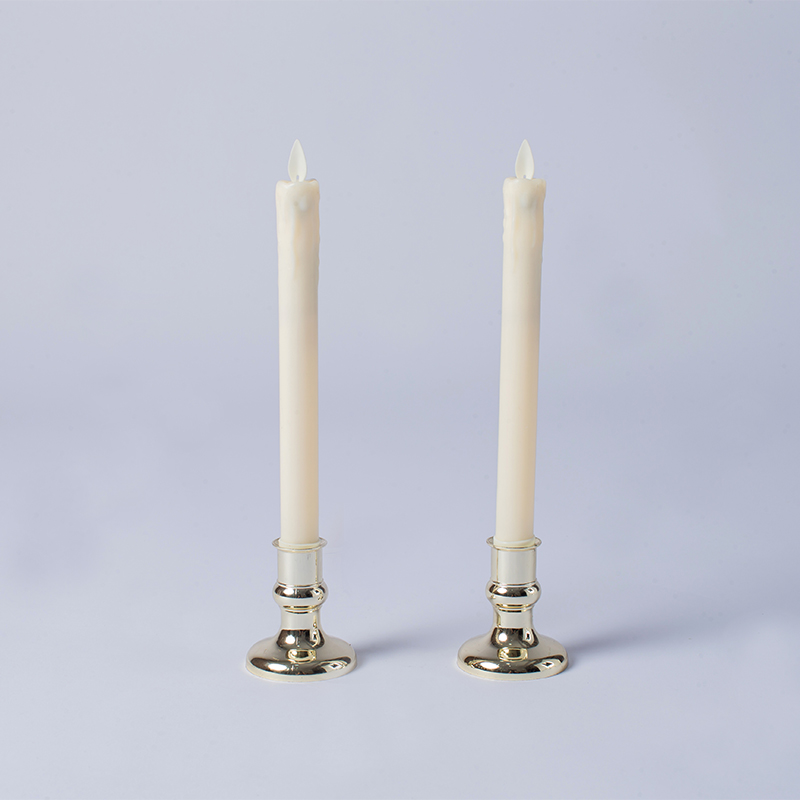
Finish options follow the shell decision. Smooth ivory is the volume seller for wedding and hospitality work. Rustic birch bark texture hides fingerprints and sells well in cabin and autumn assortments. Dripping wax tapers reproduce the run-off of a burned candle, and spiral ribbing adds shadow lines that photograph well. Glass vessels are a separate category altogether, usually 4 to 6 mm soda-lime or borosilicate, and they change the packaging requirement because glass chips at the rim and base unless the carton uses foam or molded pulp dividers rather than a simple sleeve.
Color consistency is the quiet risk in this category. Ivory drifts toward yellow across production batches, and "red" can mean anything from deep burgundy to bright scarlet. Pin the color with a physical master sample retained by both sides, and state how many units may be visually checked against it before shipment. Buyers who skip this step often find that a restock of the same SKU no longer matches the first container, which breaks multi-pack displays and shelf blocks.
For a deeper walk-through of body styles, sizing, and finish options across this product family, the flameless pillar candles buyer guide breaks the category down by application rather than by catalog number.
Remotes, Timers, and Range: The Details That Generate Returns
Controls look simple on a spec sheet and cause most of the after-sales friction. Infrared remotes need a clear line of sight and typically reach 3 to 5 m indoors. Put a candle inside a glass hurricane, behind a shelf lip, or across a room divider and the remote stops working, which the end user reads as a defective product. Radio frequency remotes at 433 MHz pass through obstacles, but they add cost and introduce a second problem: matching.
If every set leaves the factory on the same code, one remote turns on every candle in the room. In a restaurant with twenty tables, that is a real operational annoyance. Confirm whether remotes are matched per set, and if not, ask what the pairing procedure is and how it is explained on the insert card.
Timers are the more valuable feature for retail. Most use a six-hours-on, eighteen-hours-off cycle, though five and nineteen appears as well. Two checks matter: the timer should survive a battery change without drifting, and the chip should hold time reasonably across a season. A timer that loses several minutes a week will have candles turning on in daylight by month three.
If the product is going outside, decide the exposure level before quoting. Indoor-only units running at an ordinary protection level will fog at the switch, corrode battery contacts, and fail within a season. Specify a splash-resistant rating at minimum for anything that will sit on a patio table or a garden path, and pay particular attention to the panel seal on solar models, because water ingress at the panel is the most common outdoor failure point.
A Specification Sheet You Can Paste Into a Purchase Order
The fastest way to shorten a quotation cycle is to send the factory a table with the parameters already locked. The version below covers the fields that actually change cost and quality in LED candle lights.
| Specification | Value to Specify | Why It Matters | How to Verify |
|---|---|---|---|
| Flame type | 3D wick or single chip, stated per SKU | Drives the visual verdict at two meters | Ten-unit visual check, dark room |
| Color temperature | 1,800 to 2,200 K warm amber | Cool output reads as a bulb, not a flame | Side-by-side comparison against reference |
| Battery configuration | Cell size, count, and chemistry | Sets runtime, weight, and unit cost | Open a unit and inspect the holder |
| Runtime | Measured continuous hours, not catalog claim | Prevents reviews that say "died in a week" | 48 to 72 hour burn-in log |
| Timer cycle | Six hours on, eighteen hours off | Governs battery life in real use | Full-cycle test after battery swap |
| Remote type and range | Infrared or radio frequency, stated range | Determines whether control works in a room | Test with and without obstruction |
| Shell material | Wax wall thickness in mm or plastic grade | Perceived value and freight weight | Weight a fixed-size unit |
| Color control | Retained master sample per color | Keeps restocks shelf-compatible | Random pull against master |
| Water resistance | Indoor or splash-resistant by position | Decides whether the product lasts a season | Seal inspection at switch and panel |
| Pack and carton | Units per pack and per master carton | Affects retail price point and freight | Carton drop and stack check |
Sampling, Minimums, and the Real Lead-Time Clock
Sample lead time for an existing tooling set usually runs seven to fourteen days. A new shell, a new wick mold, or a custom remote pushes that to twenty to thirty days because the mold has to be cut and tested. Production after sample approval, typically twenty-five to thirty-five days depending on pack complexity and whether the candles carry printed inserts, remotes, or gift boxes.
Two things are worth knowing before the schedule is fixed. First, ask for a pre-production sample built on the actual line rather than a hand-assembled golden sample. Hand samples hide assembly issues that appear the moment the product runs at rate. Second, plan around the Lunar New Year shutdown, when factories in Zhejiang and the surrounding provinces close for two to four weeks. Production that must ship before the holiday has to be finished before the break starts, not scheduled to end during it.
For qualification, run a burn-in of 48 to 72 hours on at least 20 units or five percent of the order, whichever is greater, and log every failure. A burn-in catches weak driver capacitors, contacts with poor spring tension, and poorly seated wick modules, three defects that almost never appear during a five-minute visual check. Smaller trial orders of a few hundred pieces are common in this category and are a sensible way to test a new SKU before committing to a full container.
Cost structure is also worth understanding, because it explains why quotations diverge. The bill of materials for a flameless candle is roughly the LED and flicker driver, the PCB, the battery contacts and holder, the shell or glass vessel, the remote where included, and the retail packaging. Packaging alone can account for around eight to fifteen percent of the unit price once a printed box, insert card, and foam are added, which is why compressing the pack from four pieces to three sometimes saves more than negotiating the candle itself.
Build the Seasonal Calendar Backward From the Shelf Date
Seasonal programs are scheduled backward from the date product has to be on the shelf, not forward from the order date. A Christmas assortment that reaches retail on the first of November needs production finished by late September and container booking arranged in August. Work backward from there and most buyers find the sampling window closes in June.
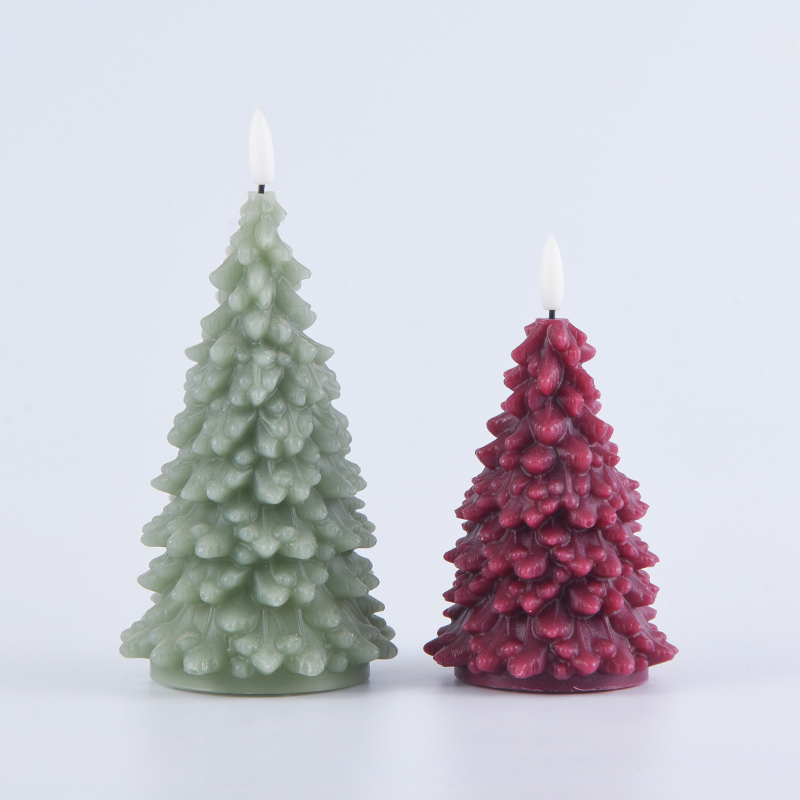
- Christmas and winter: tree-shaped, spiral, red and white, and glitter finishes. Ship July to September.
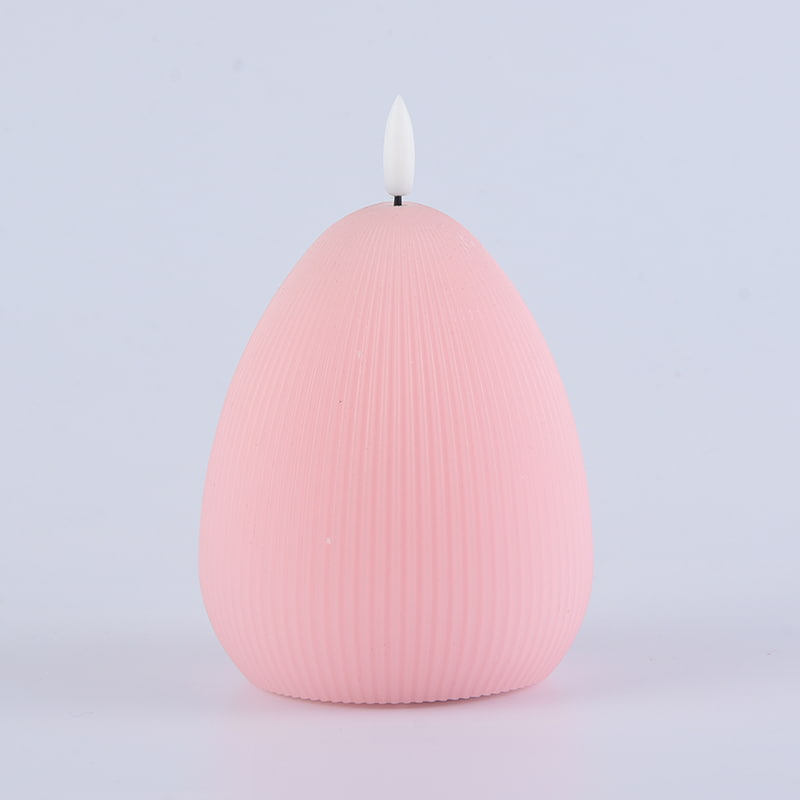
- Easter and spring: egg-shaped pieces with timers and pastel shells. Ship January to February.
- Valentine's Day: deep red pillars, tapers, and tea lights. Ship December to January.
- Autumn and Halloween: amber, orange, and birch bark textures. Ship July to August.
- Wedding and hospitality: ivory pillars, glass vessels, and rechargeable sets, ordered year-round with the steadiest demand.
Seasonal buyers should also check how their product behaves in a crowded, decorated room. Mixing dozens of lit candles, garlands, and paper décor changes the safety and practicality profile of a display compared with a single candle on a table, and the notes on electronic candles in festive displays cover how buyers typically think about placement, heat, and cable-free operation during peak season.
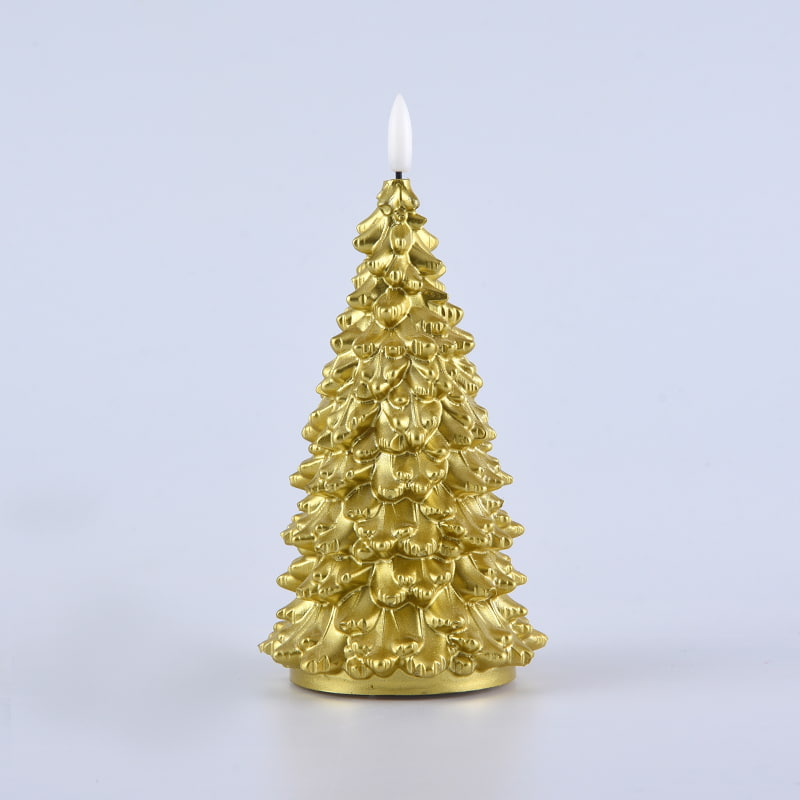 Glitter Christmas Tree Holiday LED CandlesTransform your space into a winter wonderland with our LED Christmas tree candle. Featuring a golden glittered finish and a warm, flameless glow, they deliver all the ...View Product →
Field Failures Worth Designing Out Early
Most returns in this category trace back to a small set of predictable causes. Each one can be addressed at the specification stage for far less than the cost of handling the return.
- Flicker stops after a week or two. Weak driver capacitors or an under-rated resistor. Fix with a burn-in requirement and a stated component grade.
- Green corrosion on battery contacts. Humidity during shipping or storage. Fix with contact plating and a desiccant pack in the master carton.
- White haze on wax shells. Temperature swings in transit cause bloom. Fix by specifying a wax blend with a higher oil content and avoiding long exposure to cold during shipping.
- Flattened or oval pillars. Wax shells stored on their side deform over time. Fix by requiring upright palletizing and vertical orientation in the inner pack.
- One remote controls every candle on the table. Shared codes across sets. Fix by confirming per-set matching or supplying a matching procedure.
- Chips and cracks at the rim of glass vessels. Insufficient cushioning in the inner pack. Fix with foam or molded pulp rather than a paper sleeve alone.
- Solar candles dim by mid-season. Panel seal failure or shadowed installation. Fix with a splash-resistant seal at the panel and clear installation guidance on the insert card.
Inspection discipline matters more than any single component choice. Multiple checks from raw material to packed carton, applied consistently, is what keeps a second and third order shipping at the same quality level as the first sample.
Frequently Asked Questions About LED Candle Lights
What are the best LED candle lights for a restaurant or hotel table?
Rechargeable models with an inductive base are the usual answer. They remove battery changes from staff routines, survive years of nightly use, and can be dropped onto a charging tray at the end of service. Ivory real-wax pillars at around 3 x 4 to 3 x 6 inches read best under warm dining light.
How long do LED candle lights actually run on batteries?
Two AA cells at 2,000 to 2,800 mAh typically deliver 80 to 140 continuous hours at 15 to 25 mA draw. With a six-hours-on timer, that stretches to several weeks of nightly use. Coin cell tea lights usually return 40 to 70 hours.
Do 3D wick candles look convincing from a normal viewing distance?
Yes, which is why the module exists. From roughly two meters in low ambient light, the shaped wick creates depth and a soft halo that a flat chip does not. Up close, the difference is still visible, so display positioning matters.
Can LED candle lights be used outdoors?
Only if the unit is specified for outdoor exposure. Indoor candles fog at the switch and corrode at the contacts within a season. Solar models with a splash-resistant seal are built for garden and patio positions and need six to eight hours of direct sun for a full charge.
What is a typical minimum order for a private label program?
Small trial runs of a few hundred pieces are common for testing a new shape or finish, while full private label programs with custom packaging generally scale into the thousands. A trial order is the cheapest way to validate flame quality, color, and pack durability before committing to a container.
How should LED candle lights be tested before shipment?
Run a 48 to 72 hour continuous burn-in on at least 20 units or five percent of the order, verify the timer cycle after a battery change, test the remote with and without an obstruction, check wick centering on a random pull, and compare shell color against the retained master sample.
Can the flicker rate or brightness be customized?
Flicker behavior is controlled by the driver and firmware, and brightness by the LED bin and drive current, so both can be adjusted during development. Random flicker in the 3 to 8 Hz range is the setting most buyers land on because it avoids the synchronized pulsing seen in fixed-pattern products.
Where to Start With Your Next Candle Program
Write the power architecture, flame module, and shell specification first, then send that sheet out for quotation. Buyers who lock those three items before sampling spend fewer rounds on revisions and get comparable quotes they can actually evaluate side by side.
If you are sourcing flameless LED candle lights at volume and want a partner who can support trial quantities alongside container-scale production, the team behind our flameless LED candle production works across pillar, taper, glass, rechargeable, solar, and holiday formats, with tooling that spans wax shells, 3D wick modules, timers, remotes, and printed packaging. Bring a specification sheet, or bring a photo of the product you want to match, and the rest can be worked out in samples.