
 English
 Español
Content
- 1 The Direct Answer: How Many Hours Do LED Tea Lights Actually Run?
- 2 Why the LED Bulb and the Battery Tell Two Different Stories
- 3 How Battery Choice Changes Runtime
- 4 Five Factors That Drain LED Tea Lights Faster Than Rated
- 5 How to Make a Set of Batteries Last Longer
- 6 Rechargeable and Solar Options Change the Economics
- 7 When to Replace LED Tea Lights Instead of Refitting Batteries
- 8 Frequently Asked Questions
- 8.1 How long do LED tea lights last on a single set of batteries?
- 8.2 Do LED tea lights use a lot of electricity?
- 8.3 Is it safe to leave LED tea lights on overnight?
- 8.4 How long do remote-controlled LED tea lights last?
- 8.5 Do solar tea lights last as long as battery tea lights?
- 8.6 What is the total lifespan of an LED tea light?
LED tea lights typically stay lit for 20 to 50 hours on one fresh set of batteries. That direct answer covers most button-cell-powered tea lights sold today. If you run a tea light for four hours every evening, a 40-hour runtime gives you roughly ten evenings of use before the batteries need replacing. The wider number range comes from differences in battery capacity, LED brightness, flicker simulation circuitry, and standby drain from remote-control receivers. This guide breaks down the numbers by battery type, explains why the LED chip itself can last 100,000 hours, and helps you estimate real-world runtime for your own setting.
The Direct Answer: How Many Hours Do LED Tea Lights Actually Run?
For the majority of flameless tea lights, 20 to 50 hours of continuous light per battery set is the realistic range. A basic tea light with a single CR2032 button cell typically lands at 25 to 40 hours. Premium tea lights paired with higher-capacity lithium cells have measured close to 100 hours in independent user tests. Buyers on a widely referenced Reddit thread reported roughly 40 hours with a standard CR2032 and up to about 100 hours with a premium lithium battery of the same size.
The table below summarizes typical continuous runtime values across the most common battery configurations. These are always-on figures. If your tea light has an integrated timer that runs a 4-hour or 6-hour window each evening, divide the continuous runtime by the timer length to estimate how many nights you get per battery set.
| Battery configuration | Typical continuous runtime | Practical service at 4 hours per night |
|---|---|---|
| Single CR2032 button cell | 20 to 40 hours | 5 to 10 evenings |
| Premium lithium CR2032 | 60 to 100 hours | 15 to 25 evenings |
| Double button cell configuration | 40 to 60 hours | 10 to 15 evenings |
| Two AA alkaline batteries | 60 to 100 hours | 15 to 25 evenings |
| Two AAA alkaline batteries | 30 to 60 hours | 7 to 15 evenings |
| Built-in rechargeable Li-ion pack | 10 to 20 hours per charge | 2 to 5 evenings per charge |
| Solar panel with NiMH cell | 6 to 12 hours per full charge | Daily evening use if fully charged |
Keep in mind that runtime claims from manufacturers are measured with fresh batteries and a fully assembled circuit. The actual number in your living room will vary based on temperature, LED driver efficiency, and how often you switch brightness modes.
Why the LED Bulb and the Battery Tell Two Different Stories
Here is the detail that surprises many first-time buyers. The LED chip inside a typical tea light carries a rated life of roughly 100,000 hours of active illumination. That figure comes from LED component datasheets and is consistently cited by flameless candle manufacturers in their product documentation.
One hundred thousand hours equals more than 11 years of continuous, round-the-clock burning. In practical terms, you will almost never exhaust the LED itself. The battery is the real limiting factor. The total usable lifespan of an LED tea light therefore becomes a question of how many times you can replace or recharge the battery before the housing, switch contacts, or battery compartment degradation make further use impractical.
For anyone managing a restaurant, hotel lobby, event venue, or retail display, this distinction matters when planning budgets. Replacing cheap tea lights after every big event costs more over a year than investing in units with efficient drivers and larger battery compartments.
One design worth noting in this context is the set of two golden flameless tealight candles, which pairs a 3D wick structure with an efficient LED board to keep current draw low while preserving a realistic flame appearance.
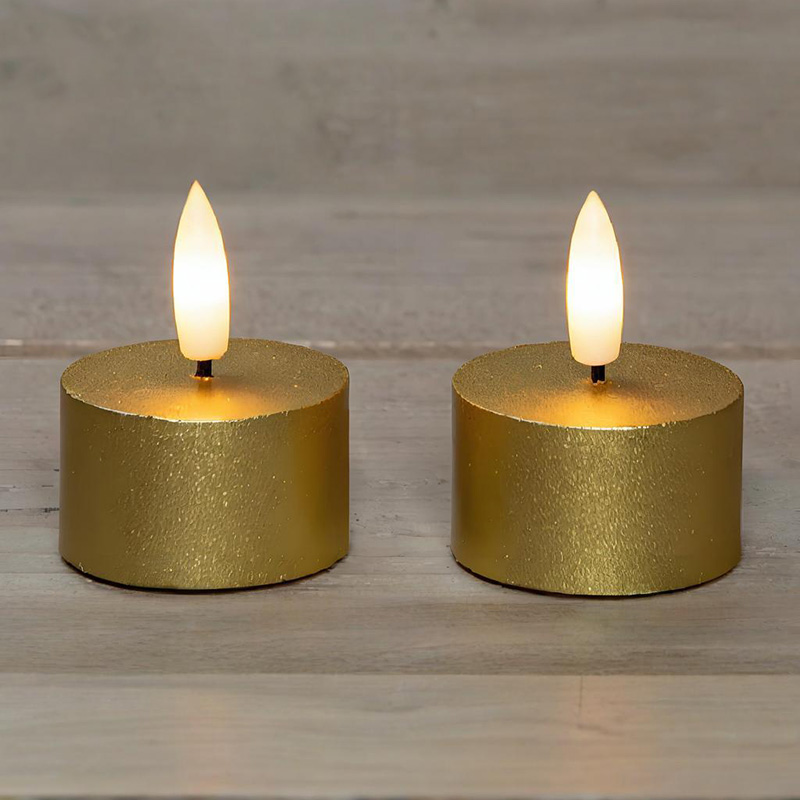 Set of 2 Golden Flameless Tealight Candles with 3D WickThese golden tealights feature a 3D wick and efficient LED board for realistic flame look while keeping power draw low, making them a thoughtful choice for prolonged use.View Product →
How Battery Choice Changes Runtime
Not all LED tea lights rely on the same battery chemistry or cell size. Some use a single CR2032 button cell, others stack two button cells for higher capacity, and many larger tea light formats run on AA or AAA alkaline cells. These differences create meaningful runtime gaps between models that look nearly identical on the outside.
| Battery type | Nominal voltage | Typical capacity | Impact on tea light runtime |
|---|---|---|---|
| CR2032 | 3 V | 220 to 240 mAh | Standard for slim tea lights; 20 to 40 hours |
| CR2450 | 3 V | 550 to 620 mAh | Doubles runtime but requires thicker housing |
| AA alkaline | 1.5 V (two used) | 1800 to 2800 mAh | Best for large tea light bodies; 60 to 100 hours |
| AAA alkaline | 1.5 V (two used) | 800 to 1200 mAh | Balance of size and runtime; 30 to 60 hours |
| Li-ion rechargeable | 3.7 V | 300 to 3500 mAh | Rechargeable designs; 10 to 20 hours per charge |
| NiMH rechargeable | 1.2 V | 600 to 2300 mAh | Used in solar and trickle-charge tea lights |
The practical takeaway is simple. A tea light with a dim 5 mm LED and no flicker circuitry can run for more than 100 hours on good-quality batteries. A model with a bright warm-white LED, flame-flicker simulation, and an infrared receiver for remote control will drain a button cell in 15 to 30 hours. When you compare products, look at the current draw in milliamps rather than relying on package photos.
Five Factors That Drain LED Tea Lights Faster Than Rated
Manufacturer runtime figures assume ideal conditions. The following factors regularly shorten battery service in daily use.
- Flicker simulation circuitry - The fake flame effect pulses the LED at varying intensity, and some circuits keep a control chip in active mode at all times, adding 0.5 to 2 mA of continuous drain.
- Remote control standby - An infrared receiver waiting for a signal draws a small but constant current. A tea light left in remote mode can lose 10 to 15 percent of its rated battery life even while idle.
- High brightness modes - A tea light running at maximum LED current uses two to three times more power than the same unit in a dim evening mode.
- Cold outdoor temperatures - Alkaline button cells lose up to half of their usable capacity near freezing. Outdoor tea lights in winter will always show shorter runtime than indoor units.
- Off-brand batteries - Non-brand button cells can deliver as little as 50 percent of their labeled capacity. The same tea light may run twice as long with a name-brand lithium CR2032.
How to Make a Set of Batteries Last Longer
With a few deliberate habits, you can stretch the runtime of a standard LED tea light meaningfully beyond the typical 20 to 50 hours.
- Choose high-capacity lithium button cells for models that use CR2032 or CR2450. A premium lithium cell often delivers 60 to 100 hours where a standard cell gives only 30.
- Disable remote control standby when you do not need it. If the tea light has a physical switch that cuts power to the receiver, use that switch for long periods of non-use.
- Keep tea lights at room temperature wherever possible. Indoor placement extends both battery capacity and the life of the plastic housing.
- Remove batteries between long periods of non-use to prevent contact corrosion and electrolyte leakage.
- Use timer modes instead of continuous-on operation. A tea light set to run 4 hours per night will give you five times more calendar days of service than one left running around the clock.
- Buy from manufacturers with documented driver circuits. An efficiently designed LED driver extends battery life more consistently than any battery brand swap.
Rechargeable and Solar Options Change the Economics
If you use LED tea lights daily for months at a time, the cost of replacing button cells adds up quickly. A rechargeable tea light with a built-in lithium battery typically runs 10 to 20 hours per charge and survives several hundred charge cycles. The upfront price is higher, but the per-use cost drops far below disposable-battery models within the first two months.
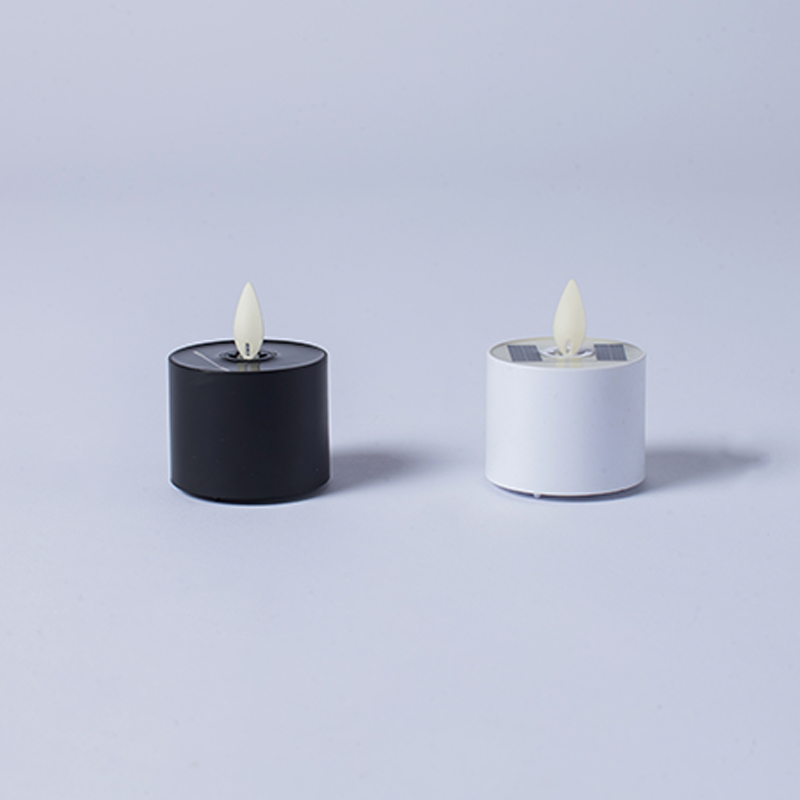
Solar tea lights fill a different role entirely. They charge during daylight and switch on automatically for 6 to 12 hours after sunset. A solar-powered LED tealight is especially practical for patios, garden tables, and other outdoor areas where replacing button cells is inconvenient.
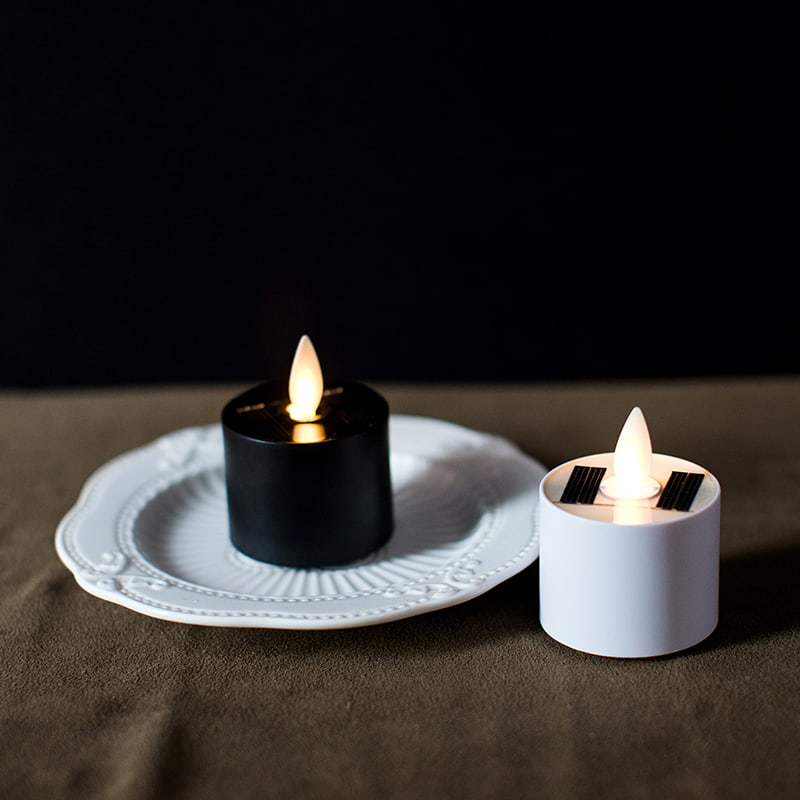 Solar LED Flameless Tealight Candles with Moving FlameThese solar-powered tealights charge by daylight and operate for 6 to 12 hours after sunset, offering a practical lighting solution for patios and outdoor areas.View Product →
For a broader overview of why electronic candles have become a staple in households and hospitality settings, this review of the advantages of electronic candles covers safety, smoke-free operation, and reusable convenience in greater depth.
When to Replace LED Tea Lights Instead of Refitting Batteries
LED tea lights are inexpensive enough that many users simply replace the whole unit when performance drops. Knowing the warning signs helps you avoid keeping a candle that is no longer reliable.
- The LED has visibly dimmed even with fresh batteries. This usually indicates degraded contacts or a failing driver component.
- The flicker effect has become erratic or the light stutters instead of producing a smooth simulated flame motion.
- White corrosion or rust appears around the battery contacts because leaked electrolyte has started eating the metal.
- The housing has cracked, especially around the lens or switch, allowing moisture to reach the circuit board.
- A solar unit no longer holds a charge overnight even after a full day of direct sunlight, which signals a worn NiMH battery rather than a failed LED.
Most quality tea lights survive two to three years of regular evening use. Units exposed to outdoor humidity or handled roughly may need replacement sooner. When you buy in bulk for resale or venue use, keep a small stock of spare units on hand so you can swap out failing lights without waiting for a new shipment.
Frequently Asked Questions
How long do LED tea lights last on a single set of batteries?
Most LED tea lights run 20 to 50 hours on one set of batteries. Single-CR2032 units typically stay in the 25 to 40 hour range, while AA-powered models can reach 60 to 100 hours. Premium lithium button cells push the range upward toward 100 hours.
Do LED tea lights use a lot of electricity?
No. A typical LED tea light draws between 0.05 and 0.5 watts. Running one for 4 hours every day for a year consumes roughly 0.1 to 0.7 kilowatt-hours. At average residential electricity rates, that costs well under one US dollar per candle per year.
Is it safe to leave LED tea lights on overnight?
Yes. LED tea lights produce almost no heat, require no oxygen for combustion, and cannot ignite nearby fabric or paper. Running one overnight is far safer than leaving a wax candle burning. Still, you should use reputable units with enclosed battery compartments to minimize any risk of battery leakage.
How long do remote-controlled LED tea lights last?
Remote-controlled units typically run 15 to 30 hours on a single CR2032 cell because the infrared receiver remains in standby mode and draws continuous current. Disabling the remote function with a physical switch, when available, restores the normal 25 to 40 hour range.
Do solar tea lights last as long as battery tea lights?
On a per-night basis, solar tea lights run 6 to 12 hours after a full day of direct sunlight. That is enough for typical evening use. Their lifetime depends on the rechargeable NiMH cell, which usually degrades after 300 to 500 charge cycles or about two to three outdoor seasons.
What is the total lifespan of an LED tea light?
The LED chip alone is rated for approximately 100,000 hours of active operation. In practice, the whole unit lasts two to five years depending on battery replacement frequency, switch wear, and exposure to moisture. The battery compartment and switch almost always fail before the LED does.