
 English
 Español
Content
At a weekend dinner in a rented event space, a guest reached over to extinguish a pillar candle and stopped. There was no flame, no heat, only an amber glow rising from a wax column. "Fake?" she asked. The host nodded. What she was looking at was a 3D-wick LED candle housed in a true wax shell — and at arm's length, it passed for real.
Here is the conclusion most buyers reach after handling modern flameless candles: yes, fake candles can absolutely look real, provided you know which features deliver the illusion. The moment you understand the mechanics — the wick construction, the flicker module, the wax shell, the silhouette — you can confidently select units that read as genuine from two feet away, in daylight, and on camera.
This guide breaks down what makes fake candles look real, how to separate convincing models from obvious props, and where to use them without sacrificing safety or aesthetics.
What Makes Fake Candles Look Real
A realistic flameless candle is not one feature but five working together. Remove any one, and the illusion weakens. Buyers evaluating fake candles that look real should check each of the following.
3D Wick Construction
Instead of a flat LED disc with a printed flame, a believable fake has a solid wick-shaped piece of resin or plastic standing above the light source. The LED shines upward into the base of this wick, producing a bright orange-hot core and a dark, charred-looking tip. This arrangement replicates the most recognizable part of a real candle: the glowing wick itself. Standard flat-top LED candles cannot reproduce this effect, which is why they look like cheap electronics from any angle closer than three meters.
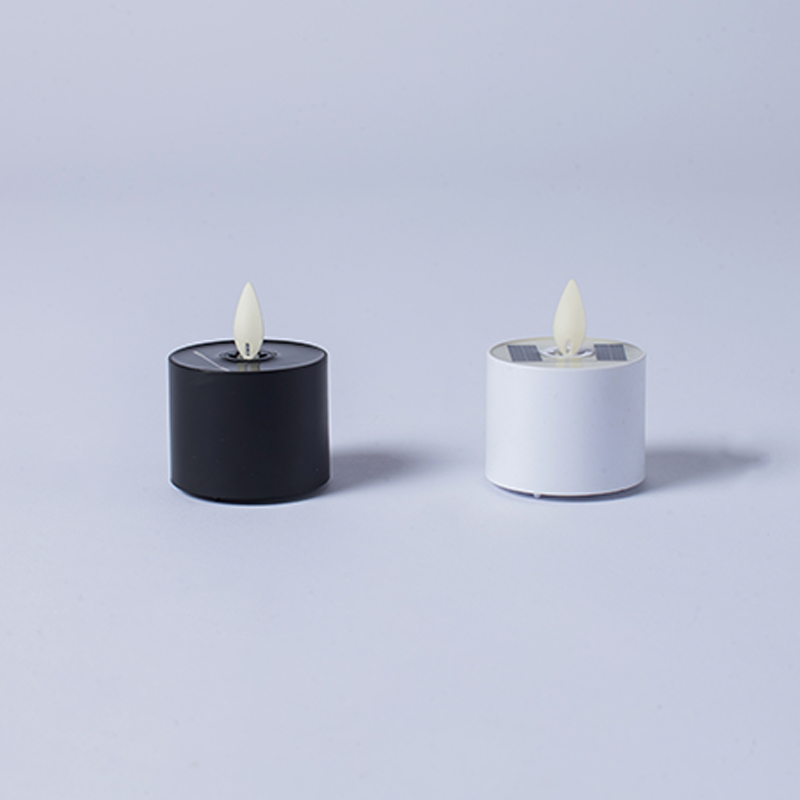
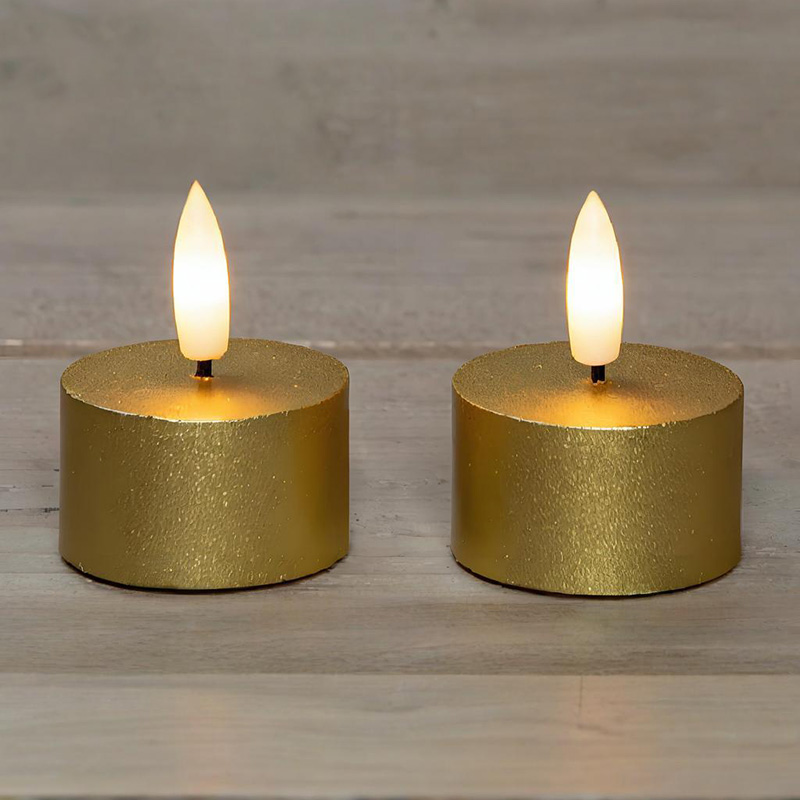 Set of 2 Golden Flameless Tealight Candles with TimerThese golden tealights use a wick-shaped core to mimic a glowing wick, addressing the flat-LED flaw described above. With a built-in timer and safe flameless design, they suit decorative displays or everyday use.View Product →
Warm, Realistic Color Temperature
Real candlelight sits in the 1850 K to 2200 K range, with a slightly orange shift near the base of the flame. High-end flameless candles are tuned to approximately 2700 K — brighter than a true flame but still unmistakably warm, without the blue-white cast of low-cost electronics. The LED emitter also matters: multi-chip LEDs mix warm and amber light to create depth across the translucent wax, while single-chip designs produce a flat, evenly lit disc that gives the candle away instantly.
Flicker That Mimics Combustion
A candle flame is never still; it shimmers, pulses, and reacts to air currents at roughly 1 to 8 Hz with irregular amplitude. Realistic fake candles embed a tiny microcontroller that randomly adjusts LED brightness in short bursts, creating the same restless dance as burning wax. Static-glow "flicker" models — where the light simply blinks on and off at a fixed interval — are the easiest fake candles to spot. When testing a candle, watch the flame pattern for at least 30 seconds. A convincing unit never repeats the same sequence twice.
Genuine Wax Shells
The shell cannot be plastic painted to look waxy. The best realistic fake candles use a genuine paraffin or soy wax casing with the same surface condensation, molded seams, and slight translucency as a traditional candle. When you pick it up, it should feel cool, dense, and slightly tacky to the touch — exactly like a real pillar. Wax shells also transmit LED light internally, producing a soft glow through the body of the candle rather than just at the top, which mirrors how actual burning wax behaves.
Accurate Proportions and Silhouette
Standard physical dimensions matter more than most buyers expect. A tealight should measure approximately 38 mm in diameter and 15 mm in height. A pillar candle should fall between 75 mm and 100 mm in diameter with a flat, slightly recessed top rim. Taper candles should taper from roughly 20 mm at the base to 12 mm at the top, with the flame positioned proportionally to the diameter. When a flameless candle uses incorrect proportions, the eye registers the mismatch even before the brain identifies why. Manufacturers with long production history, such as Ninghai Shuangmei Electronic, have refined these dimensions across their catalog to match traditional candle standards.
The Technology Behind the Illusion
The jump from obvious prop to convincing fake candle came from three technical improvements: optical path design, flicker control, and material engineering.
Optical path. In a 3D wick candle, the LED sits in a recessed cavity below the wick. A clear acrylic light guide directs the beam upward; the wick intercepts part of the light, scattering it through its translucent resin body. The bottom half of the wick glows bright amber, while the tip stays dark — the same gradient that appears on a real burning wick. The surrounding wax shell receives secondary illumination from below, creating a warm halo at the base of the flame cavity.
Flicker control. The flicker chip stores a pseudo-random sequence of brightness values rather than a simple sine wave. It also adds micro-variation to the interval between pulses, which is what makes the flame feel alive. Better units adjust the flicker frequency based on the ambient battery voltage, so the candle looks equally natural when the battery is fresh and when it is near the end of its life.
Material engineering. Real wax flameless candles are cast in actual paraffin using steel molds that replicate the slight shrinkage, edge rounding, and surface sheen of traditional dipped or poured candles. Because wax expands and contracts with temperature, manufacturers who specialize in candle production, including producers with over a decade in the segment, add a micro-crystallization step to prevent surface cracking in shipping containers. This is why wax-shell LED candles from a dedicated candle factory feel more substantial than general-purpose electronics.
Power delivery also affects realism. Battery-powered units with an infrared remote allow glow adjustment on site, which is critical for photo shoots and event lighting where the ambient light changes throughout the day. Inductive rechargeable models eliminate the battery door on the bottom of the candle, preserving the seamless wax base that fake candles need to look real from above. Solar-powered models add a dusk sensor that turns the flame on automatically, maintaining the illusion of candles left burning all night.
Comparing Realistic Flameless Candle Styles
Different settings call for different silhouettes. Some styles achieve a higher realism score because their shape closely matches a well-known candle archetype. The table below compares the most common flameless candle formats based on the realism characteristics and typical use cases.
| Style | Realism Cues | Best Use | Power Options |
|---|---|---|---|
| 3D Wick Tealights | Resin 3D wick, random flicker, 2700 K warm glow | Tablescape accents, centerpieces, multiples | 2 x AAA battery, 500+ hours |
| Real Wax Pillar | Genuine wax shell, hand-poured texture, full-body glow | Mantels, dining table centerpieces, layered decor | Battery or rechargeable, 400+ hours |
| Glass Flameless Candles | Glass container reflection, realistic flame, remote control | Restaurant tables, shelf styling, bright interiors | Battery with remote, 200+ hours |
| Dripping Wax Taper | Slim silhouette, molded dripping wax, 3D wick | Candelabras, formal events, window display | Battery, 300+ hours |
| Solar Candles | Dusk-activated, weather-resistant wax-look shell | Patio, garden, outdoor walkways | Solar panel, 6–8 hours per night |
The pattern is clear: styles that combine a genuine wax shell with a 3D wick score highest on the realism scale. The remaining differences come down to power and placement.
How to Choose Fake Candles That Look Real
Use these six criteria whenever you evaluate a flameless candle for a project, product line, or event. Each one eliminates a class of lookalikes that fails at a specific distance or lighting condition.
- Verify the wick is three-dimensional. Inspect the candle at an angle. If the wick has height and casts a tiny shadow when the LED is on, it is a true 3D wick. Flat printed wicks fail this test instantly.
- Observe the flicker for one full minute. Count the bright pulses. A natural flicker should vary in amplitude and timing; repetitive patterns of exactly three pulses per second indicate a low-cost timer.
- Scratch a hidden spot on the shell. Real wax leaves a fine white mark; painted plastic does not. This quick field test is commonly used by buyers who examine samples at trade shows.
- Hold the candle up to daylight. The flame should be clearly visible in bright ambient light. Many cheap models wash out in daylight and only look convincing after dark.
- Compare the scale to a matching real candle. Place the LED version next to a conventional candle of the same type. Differences in diameter, height, and flame size become obvious side by side.
- Evaluate the battery access. A realistic candle die-cast with a hidden battery compartment on the bottom preserves the seamless wax base, whereas visible plastic seams or a battery-door outline will reveal the illusion from below.
For wholesale and import purchasing, always request a pre-production sample that you can physically test. Manufacturers with established flameless candle lines, such as the pillar candle collections documented in this complete pillar candle knowledge guide, normally provide 500-piece trial orders so buyers can validate the market before committing to a full container.
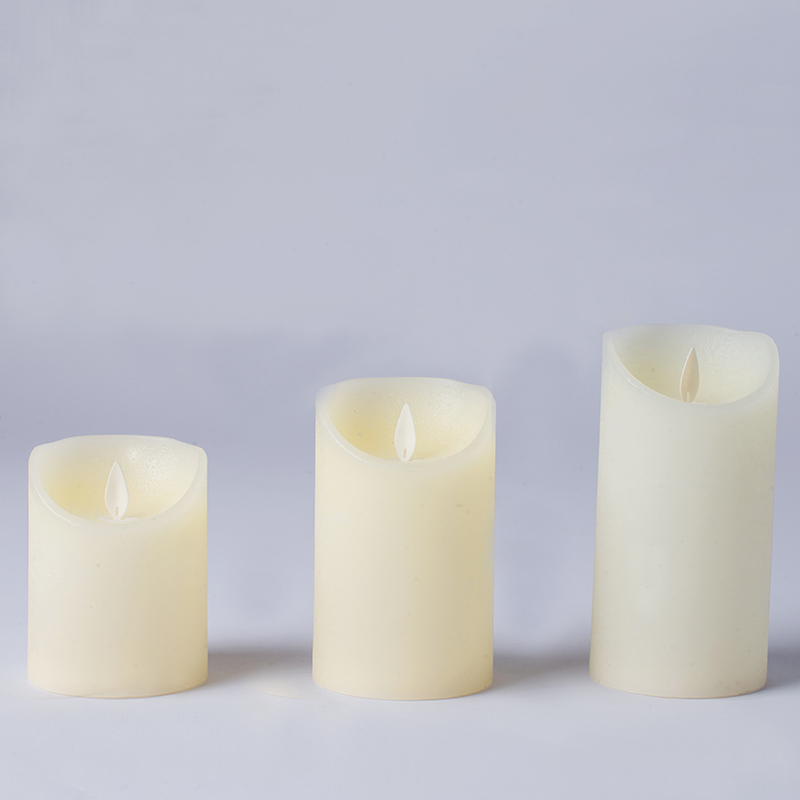
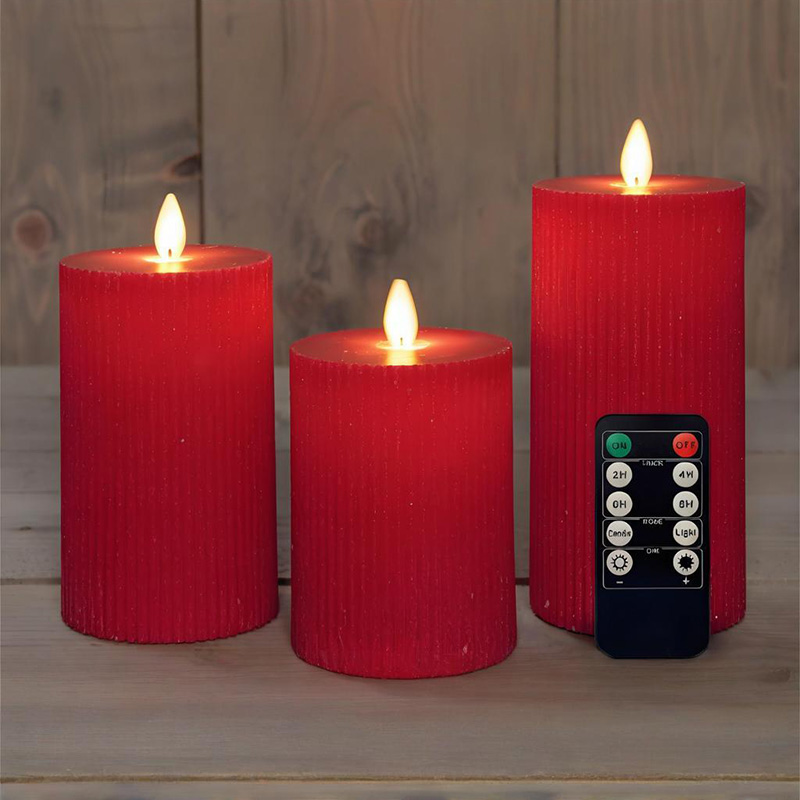
 Set of 3 Ivory Real Wax Flameless Pillar CandlesThese real-wax-coated pillars offer varying heights and lifelike flicker, fitting the wholesale sampling context. Remote convenience and classic ivory tones make them practical for mantels or commercial settings.View Product →
Where Realistic Fake Candles Perform Best
Fake candles that look real are no longer confined to living room shelves. They have become a standard fixture across commercial and residential spaces, primarily because they deliver the visual impact of candlelight without the operational constraints of an open flame.
Weddings and Event Production
Event venues often prohibit open flames in marquee tents, on draped tables, and near ceiling installations. Realistic LED candles remove that restriction. Photography teams also prefer them because the flicker can be synchronized across a table row, and the color temperature remains stable throughout a twelve-hour event — real candles shift color as they burn.
Restaurants, Hotels, and Rental Properties
Hospitality operators buy realistic fake candles in bulk for two reasons: labor cost and liability. Waitstaff do not need to relight candles before every seating, and there is no risk of guests knocking a live flame onto linens. Remote-controlled glass candles are particularly popular in upscale dining rooms because staff can dim the entire table row from a single handheld remote during course changes.
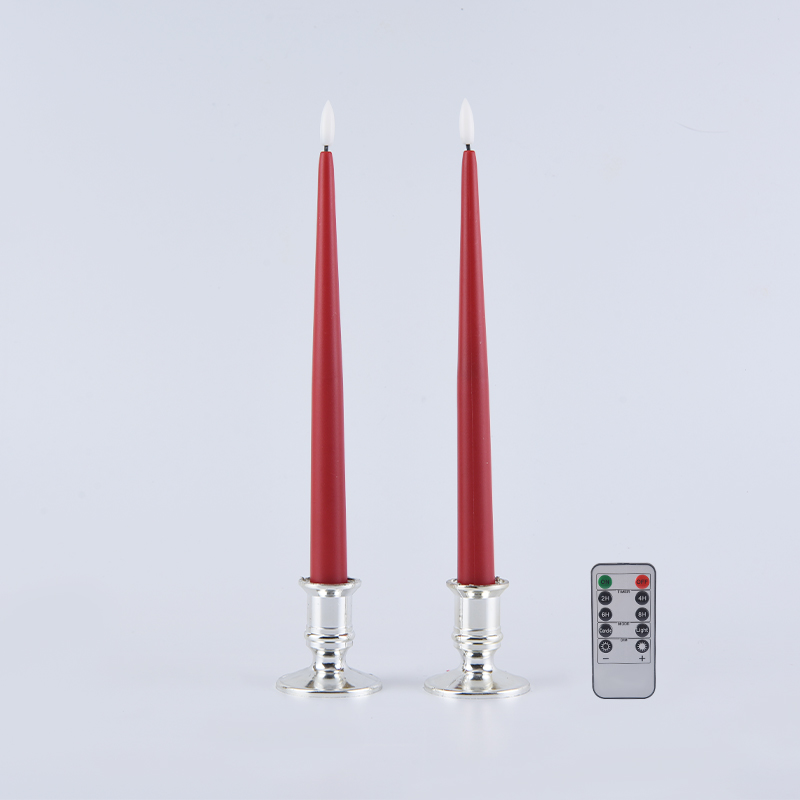
 2 Pack Dripping Wax Flameless Taper Candles with Moving FlameWith a dripping-wax finish and signature moving flame, these tapers deliver realistic candlelight while staying cool and safe. Remote and timer features suit hospitality use where supervision and relighting are impractical.View Product →
Homes with Children and Pets
Families use flameless candles on mantels, holiday tables, and bedroom shelves without the constant supervision that real candles demand. The surface of a quality LED candle stays cool to the touch even after eight continuous hours.
Outdoor and Semi-Exposed Spaces
Solar-powered flameless candles in glass or wax-finish housings are designed for patios, balconies, garden tables, and walkway markers. They switch on automatically when daylight fades and operate for six to eight hours per night, which aligns with typical summer evening entertainment patterns. The solar panel detaches via a short cable, allowing the candle to be placed in shaded spots while the panel sits in direct sun.
Safety and Practical Benefits
The shift toward realistic electric candles is not just about appearance. It is driven by measurable operational improvements that matter to both home users and purchasing managers.
- Zero fire risk from unattended operation. Open flames cause approximately 8,000 home fires per year in the United States according to the National Fire Protection Association; flameless units remove the ignition source entirely. They also make discharge, curtains, table linens, and flower arrangements safe to place within centimeters of the flame.
- No soot, smoke, or wax runoff. Venues protect ceiling fabrics, upholstery, and HVAC filters when they switch to LED candles. Table linens come back cleaner, and banquet staff spend less time scraping wax off candle holders.
- Extended runtime with consistent appearance. A typical flameless pillar candle runs 400 to 500 hours on a set of batteries, whereas a real candle burns down and changes silhouette in four to six hours. This consistency is the main reason stylists choose fake candles for multi-day film and photo shoots.
- Controlled brightness and color. Remote and rechargeable models let users dim the flame or switch between steady glow and flicker modes, adapting the same candle from a quiet dinner to a festive celebration. The heat-free light also prevents melting issues with nearby plastic elements.
The operational logic is summarized in a technical comparison of electronic candles and traditional wax lighting: electronic candles reduce fire hazards while creating a festive atmosphere. For commercial buyers, this combination translates directly into lower insurance premiums, simplified venue negotiations, and fewer staffing constraints during events.
Frequently Asked Questions
Can fake candles really pass for real in photographs?
Yes, when the candle uses a 3D wick and a warm color temperature around 2700 K. In fact, many wedding photographers prefer flameless candles because the flame does not blow out in the wind and the light remains consistent across repeated shots. The one caveat is close-up macro photography: a 3D wick still lacks the distinct blue base zone of a combustion flame, so images shot within a few centimeters may reveal the difference.
How long do realistic flameless candles last?
Runtime depends on power source and brightness setting. Battery-powered tealights typically run 500 hours on two AAA batteries; pillar candles run 400 to 500 hours at medium brightness. Rechargeable models provide 8 to 12 hours per charge with a 3- to 4-hour charging cycle. Solar models store enough daytime charge for 6 to 8 hours per night. The LED emitter itself typically lasts more than 50,000 hours, so the limiting factor is always the battery, not the light source.
Do high-quality fake candles flicker like real flame?
Premium models do. They use microcontroller-driven flicker that produces random, irregular pulse patterns between 1 and 8 Hz. Lower-priced alternatives often use a simple oscillator that blinks at a fixed rate — these are the models consumers describe as looking "artificial." Always test the flicker for 30 to 60 seconds and look for variation in both timing and intensity.
Are flameless candles safe around children and pets?
Yes. The outer shell remains cool to the touch because the LED generates negligible heat and the battery compartment is sealed inside a wax or plastic housing. There is no open flame, no hot wax, and no toxic smoke. The only hazard is the small battery compartment, so models with a screw-secured lid are recommended for households with very young children.
Can I use realistic fake candles outdoors?
You need a model rated for outdoor use, such as solar-powered flameless candles with a weather-sealed LED module and UV-resistant wax coating. Standard indoor models are not designed for direct rain exposure or freezing temperatures. For covered patios and balconies where the candle is protected from moisture, most battery-powered units work fine.
Do these candles look realistic when switched off?
This is where real wax shells win. A genuine paraffin shell with an embedded dark wick looks like a candle that was recently extinguished; the wick tip is slightly blackened and the surface carries the natural marks of molded wax. Plastic-shell models have a hollow, lightweight feel and visible seam lines when off. If your application includes daylight hours, real wax construction is the more convincing choice.
What is the difference between 3D wick and standard flameless candles?
A standard flameless candle lights a flat LED at the top of a plastic or wax body, producing a steady or simply blinking glow. A 3D wick candle adds a resin wick that projects above the LED, intercepting the beam and creating a glowing base with a dark tip — the same visual signature as a burning cotton wick. The 3D version passes the close-inspection test; the standard version only works from a distance.