
 English
 Español
 Content
- 1 What Makes LED Candles a Smart Decorating Choice Right Now
- 2 How to Choose Realistic LED Candles That Do Not Look Fake
- 3 Living Room Displays: Mantels, Shelves, and Sideboards
- 4 Dining Table Centerpieces That Serve Both Everyday Dinners and Holiday Parties
- 5 Bedroom and Bathroom Ambiance with Flameless Candles
- 6 Outdoor and Patio Decorating with Solar LED Candles
- 7 Seasonal and Holiday Styling: Changing the Mood in Minutes
- 8 Battery Life, Remote Controls, and Timers: What to Verify Before You Buy
- 9 Six Common Mistakes People Make When Decorating with LED Candles
- 10 Frequently Asked Questions About Decorating with LED Candles
At six thirty on an October evening, the living room settles into a warm amber glow. Three ivory pillar candles on the mantel seem to sway in a draft that no one can feel. A glass votive flickers near the window, and two slim tapers frame a stack of books on the sideboard. It looks like a staged candlelight scene, except that no real flame has been lit anywhere. Every light source in this room is an LED flameless candle, and together they create the kind of atmosphere that interior magazines spend entire photo spreads trying to capture.
Here is the conclusion to keep in mind while you read the rest of this guide: LED candles have outgrown their role as a stand-in for real wax. They are a design material with their own advantages, constraints, and styling techniques. When you decorate with them well, the objective is not to duplicate a traditional taper or pillar perfectly, but to use them for what they do best: providing warm, safe, long-running light in places where a wick and flame would never make practical sense.
What Makes LED Candles a Smart Decorating Choice Right Now
LED flameless candles win over traditional candles on the practical metrics that matter most for daily decoration. They run cool to the touch, produce no smoke and no soot, and never create an open-flame hazard. Because of that, you can place them near curtains, inside bookshelves packed with paper volumes, or in a bedroom where someone might fall asleep before turning them off. The visual quality of modern LED candles also improved dramatically in the last five years. Advanced flicker engines reproduce the irregular motion of a real flame instead of switching abruptly between two brightness levels.
Beyond safety, LED candles offer placement freedom that wax candles cannot match. You can put a remote-controlled candle on top of a tall cabinet without needing a ladder every night. You can arrange twenty tealight-size candles on a window ledge and turn them all off with one button while sitting on the sofa. Solar-powered models eliminate batteries entirely and work on balconies, porches, and garden tables where you would never leave a burning wick unattended. For renters and anyone who dislikes scraping wax drips off furniture, the absence of cleanup alone justifies the switch.
| Factor | Traditional Wax Candle | LED Flameless Candle |
|---|---|---|
| Open flame | Yes | No |
| Surface heat | Hot enough to melt wax | Stays cool to the touch |
| Smoke and soot | Visible on glass and walls | None |
| Runtime per set | 2 to 4 hours per wick | 50 to 500 hours per battery set |
| Timer and remote | Not available | Built into many models |
| Placement near fabric | High risk | Generally safe |
| Weather resistance | Poor outdoors | Solar models withstand light weather |
That combination of control, clean operation, and visual warmth explains why LED candles are no longer confined to seasonal displays. They are now a year-round layer in interior lighting plans, used the same way designers use sconces, table lamps, or picture lights: to create pools of warm light and vertical interest in a room.
How to Choose Realistic LED Candles That Do Not Look Fake
Realism comes down to four elements: the outer shell, the wick construction, the flicker behavior, and the color temperature. A candle that gets all four right can fool most guests up close. A candle that misses two of them will look like a plastic flashlight with a yellow sticker, regardless of how much it costs.
The best shells are made from a genuine wax blend or a textured wax-feel material, so the surface reflects light the way real wax does. Models with a 3D wick, a molded plastic wick that sits above the flame lens, have visible depth; flat painted wicks look obviously fake. The flame itself should flicker irregularly. Good LED candles use randomized flicker patterns that mimic a wax candle's sensitivity to airflow, while cheap ones blink or strobe at a fixed rate.
Color temperature is the detail most people overlook. A warm white LED at roughly 2700K matches candlelight; anything rated 4000K or higher appears clinical and cold. Pay extra attention to the shade of the shell as well. Ivory and cream shells read as wax, while glossy white or neon-tinted shells will not, no matter how organic the flicker is.
| Feature | Entry-Level Candle | Premium Candle |
|---|---|---|
| Shell material | Smooth plastic or painted finish | Real wax, textured coating, or wax blend |
| Wick design | Printed or recessed single-color wick | 3D molded wick visible above the flame |
| Flicker quality | Fixed on and off at one or two levels | Randomized, flame-like light fluctuation |
| Color temperature | Cool white or mixed white | Warm white around 2700K targeted |
| Remote and timer | Rare in this class | Frequently included and syncable |
For a deeper look at the safety and practical benefits behind this product category, read our detailed overview of the advantages of electronic candles. It explains why more restaurants, hotels, and event planners have shifted their ambient lighting to LED-based systems in the past several years.
Living Room Displays: Mantels, Shelves, and Sideboards
The living room is where LED candles deliver the most value, because that is where you want soft, human-scale light during the evening. The idea is to treat each candle like a small sculpture: choose proportions that fit the piece of furniture, vary the heights, and leave enough negative space for the glow to matter.
The Mantel Formula
On a typical 54-inch mantel, a lineup of five to seven pillar candles works best when the tallest candle does not exceed two-thirds of the space between the shelf surface and the ceiling. Center the display around an oversized pillar, then step down toward the edges with progressively shorter candles. If your mantel has a mirror or artwork above it, cluster a few smaller glass candles in front of the lower corners to add depth rather than block the center image.
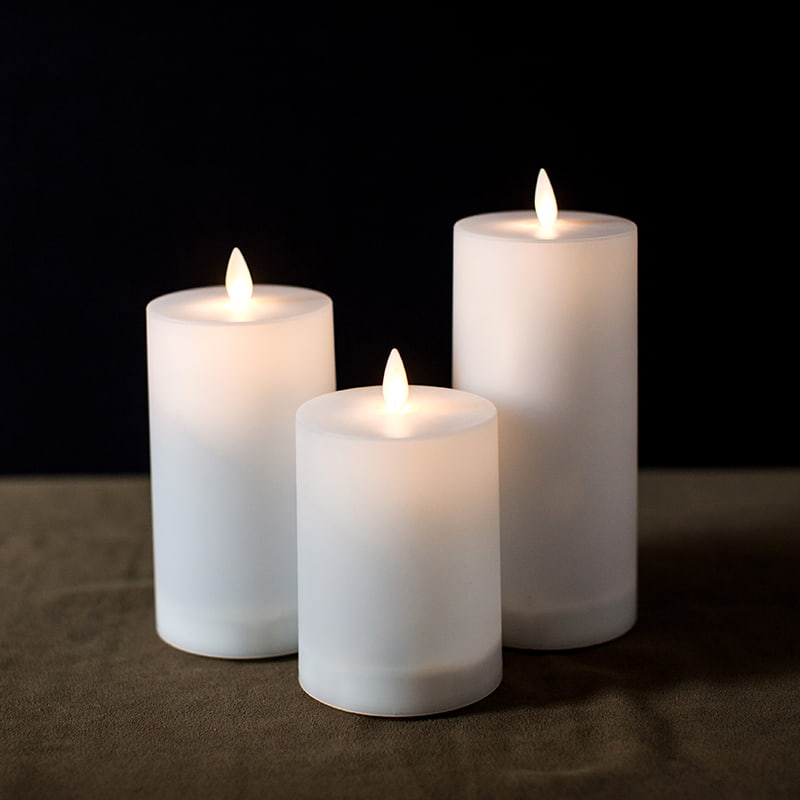
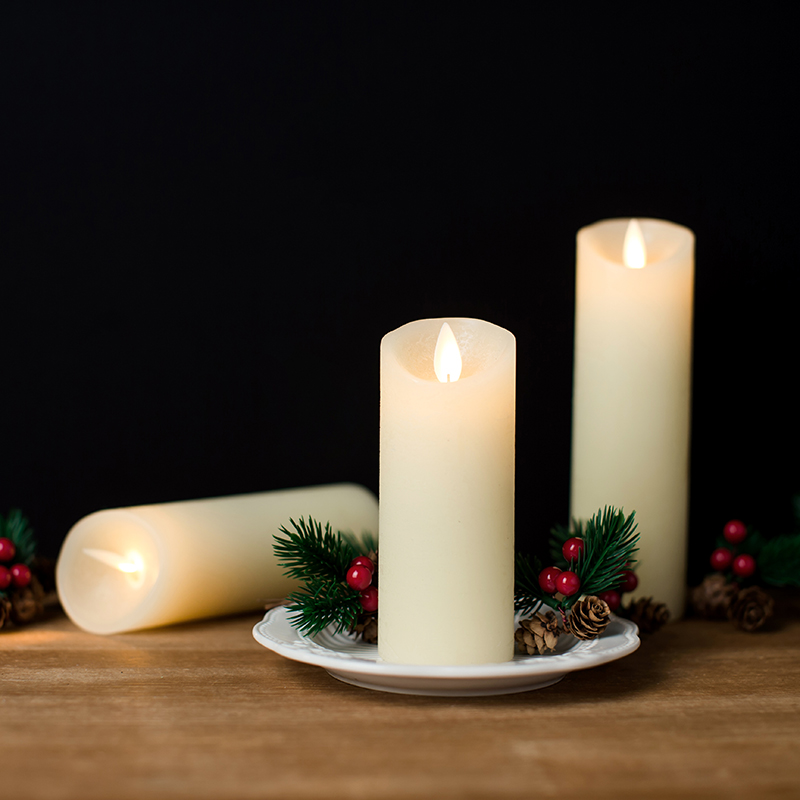 3-Pack Ivory Flameless Pillar Candles with Remote ControlThese realistic wax pillars feature a patented moving flame and remote control, ideal for the mantel arrangement described. Their safe, heat-free design lets you layer heights without risk, making them a practical choice for atmospheric centerpieces.View Product →
- Choose candles with heights between 6 and 14 inches.
- Use three, five, or seven candles, never an even number.
- Place the tallest candle slightly off-center for a more natural rhythm.
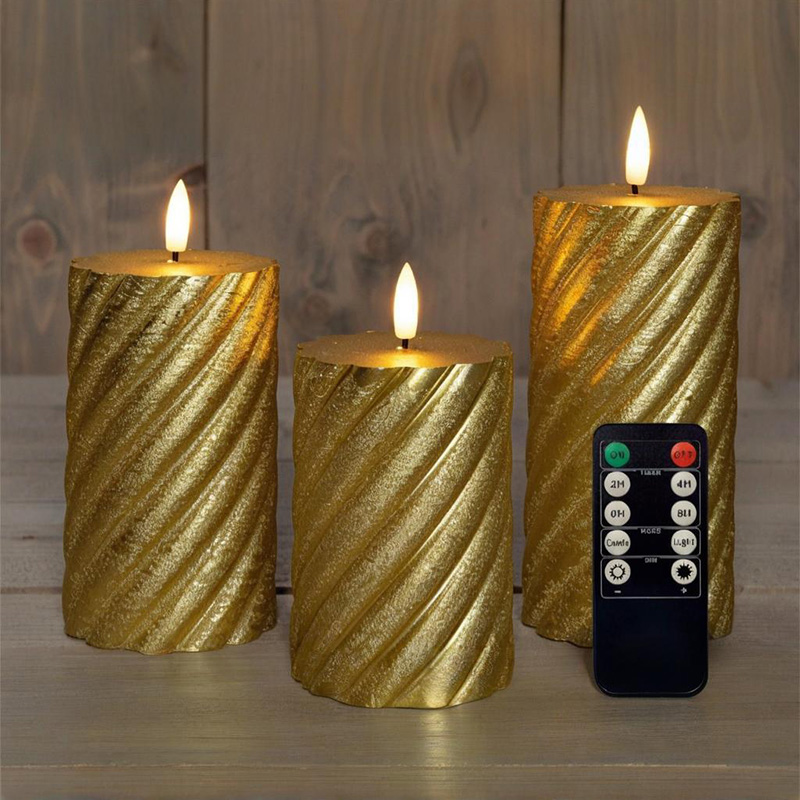
- Add one sculptural candle, such as a twisted spiral, as the focal point.
Sideboard and Bookshelf Staging
Sideboards and consoles along a wall are perfect for mirrored trays. A mirrored tray instantly doubles the perceived brightness of two or three candles and reflects the flicker across the room. Place one tall taper in a brass or ceramic holder at the back of the tray and two glass votives or short pillars at the front corners, then add sprigs of dried eucalyptus or olive greenery to bridge the heights. On bookcases, keep the rhythm simple: one slim pillar on every second shelf, pulled slightly away from the book spines so the arrangement does not look crowded.
Dining Table Centerpieces That Serve Both Everyday Dinners and Holiday Parties
A dining table needs candles that sit low enough not to obstruct conversation, yet tall enough to appear intentional from a seated position. Even better, choose LED models with a timer so the table is ready to glow when guests sit down and turns itself off after dinner without anyone touching it. This combination of low sight-line interference and automatic shutdown is why flameless tapers have become a favorite of busy hosts.
Start with Tapers, Then Layer
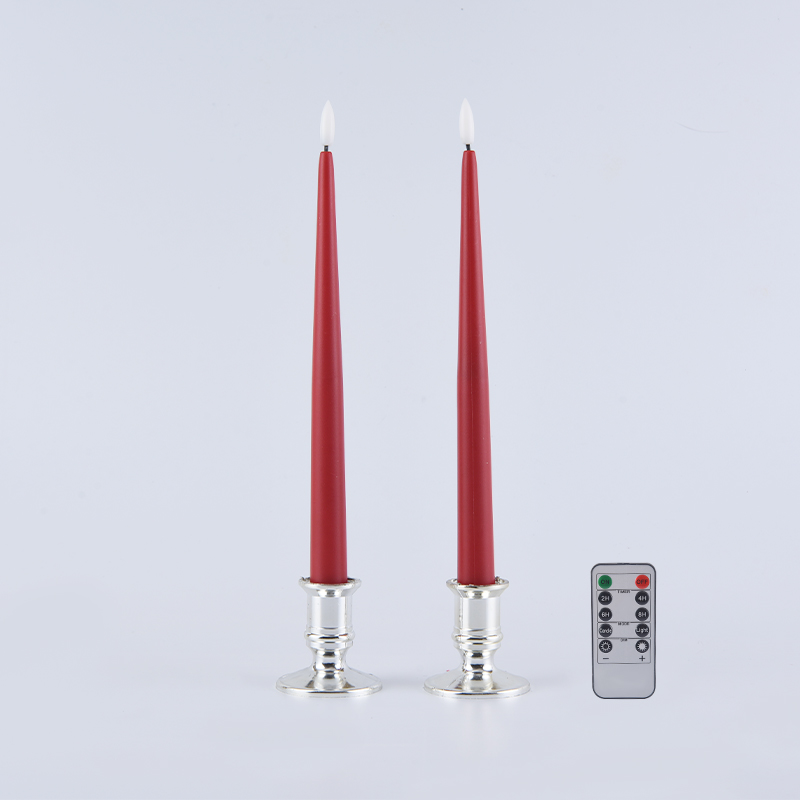
Begin with two or three taper candles in simple holders aligned along the center line of the table. Place them at different distances from each other so the line feels natural rather than perfectly symmetrical. Then add one short pillar or several glass votive candles at the center to create a secondary layer of light closer to the table surface. This dual-layer structure, taper height plus votive height, is the same technique that professional tablescapers use for luxury weddings and editorial shoots.
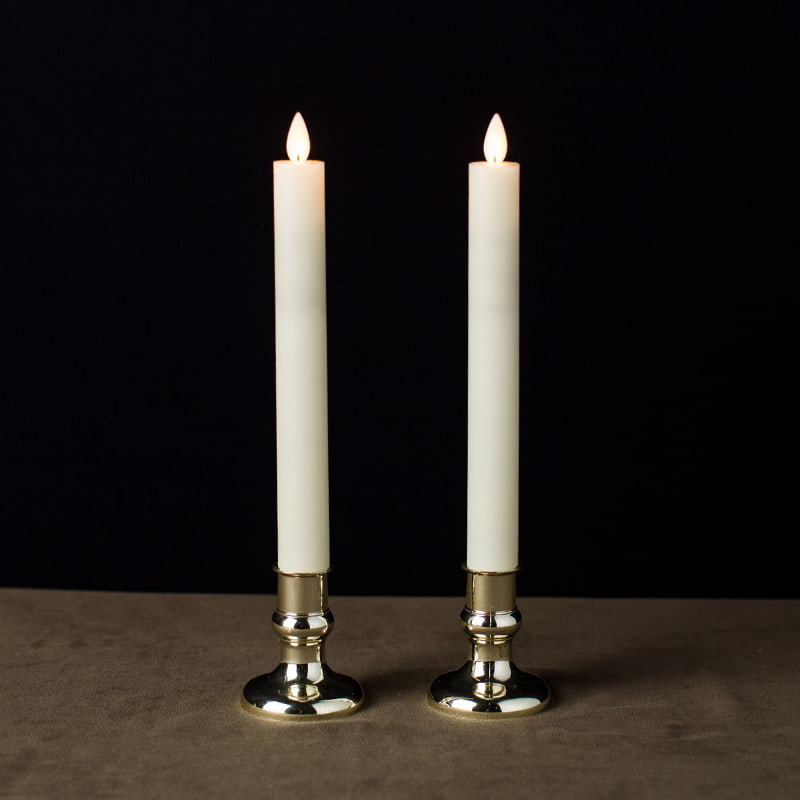 Ivory Flickering Flameless Taper Candles for CandlesticksDesigned to fit standard candlesticks, these taper candles deliver an elegant, smoke-free flame with remote control convenience. They suit the dual-layer tablescape technique mentioned, adding height alongside votives or pillars for sophisticated lighting.View Product →
Adding Texture Without Clutter
Add organic texture rather than more candles. A single eucalyptus runner, a series of polished pebbles, or a scattered arrangement of small pine cones will make the table feel styled without turning into a flea-market display. Because LED candles generate no heat, you can safely place them inside glass cloches or directly surrounded by dried flowers and twigs.
- Lay a neutral linen runner from one end of the table to the other.
- Position three taper candles in low cylindrical holders spaced along the runner.
- Cluster three to five glass votive candles around the middle taper.
- Add greenery sprigs or a single floral stem at the base of each cluster.
- Set the timer to four or six hours and test the remote before guests arrive.
Bedroom and Bathroom Ambiance with Flameless Candles
Bedrooms benefit from the dimmable, warm light of LED candles after the overhead light is off. Place one small pillar or taper on each nightstand instead of the usual bedside lamp for the last ten minutes before sleep. A remote makes it possible to turn both off from the pillow, which is enough reason for many people to replace their old candles permanently.
In the bathroom, place two or three glass votive models on a tray near the bathtub. Glass-body LED candles are designed to look like frosted apothecary jars and feel completely at home on the tile or marble edge of a tub. If you want to bathe in the glow without worrying about turning the candles off afterward, choose a model with a timer and position the candles so the light reflects off a white wall or mirror for a soft, diffused effect.
The color temperature matters most here. Choose warm white or amber-toned candles for bathrooms and bedrooms; blue-white lighting will activate the visual system instead of relaxing it. Many premium LED candles offer a dimming function that lets you reduce brightness from 100 percent down to 15 percent, which often works better than turning them off completely.
Outdoor and Patio Decorating with Solar LED Candles
Outdoors, solar-powered LED candles are the most practical option because they eliminate the chore of replacing AA batteries in awkward patio containers. A solar candle charges from daylight during the afternoon and automatically turns on at dusk, which means the evening lighting runs itself without any switch being touched. Most solar candle sets provide eight to twelve hours of light after a full day of charging, more than enough for an evening on the porch.
Where Solar Candles Work Best
Line a garden path or balcony railing with four to six small solar tealights. Set a row of solar pillar candles along the edge of a stair landing so their light defines the change in elevation. Place one larger solar pillar inside a lantern with glass panels to keep drafts away and increase the glow radius. Because these candles have no flame, they withstand light wind and occasional drizzle, although you should still protect non-weatherproof models from heavy rain.
 Set of 4 White Solar LED Pillar Candles for Outdoor UseThese waterproof solar pillar candles charge in sunlight and automatically light at night, perfect for garden paths or balconies. Their flameless design withstands wind and light rain, making them a reliable outdoor decorating option.View Product →
What to Check for Outdoor Service
One caution from experience: the solar panel must receive enough direct sunlight. If an outdoor candle sits under a covered porch roof, it will only recharge a fraction of its capacity. Models with a detachable panel solve this by letting you put the panel in the sun while the candle sits in the shade. Also check that the candle body and battery compartment have a reliable seal before leaving them outside for an entire season.
Seasonal and Holiday Styling: Changing the Mood in Minutes
LED candles make seasonal decorating as simple as swapping shells or adding accessories, because the light source itself stays the same. Keep a set of ivory and cream candles for the base layer, then layer in color for specific holidays. It is a far more efficient approach than buying new wax candles four times a year.
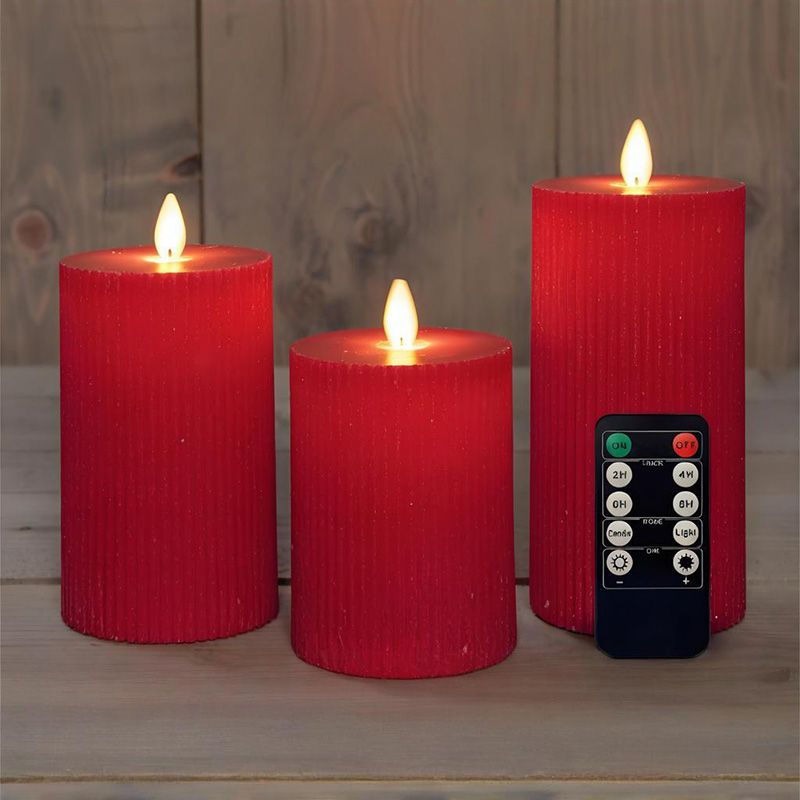
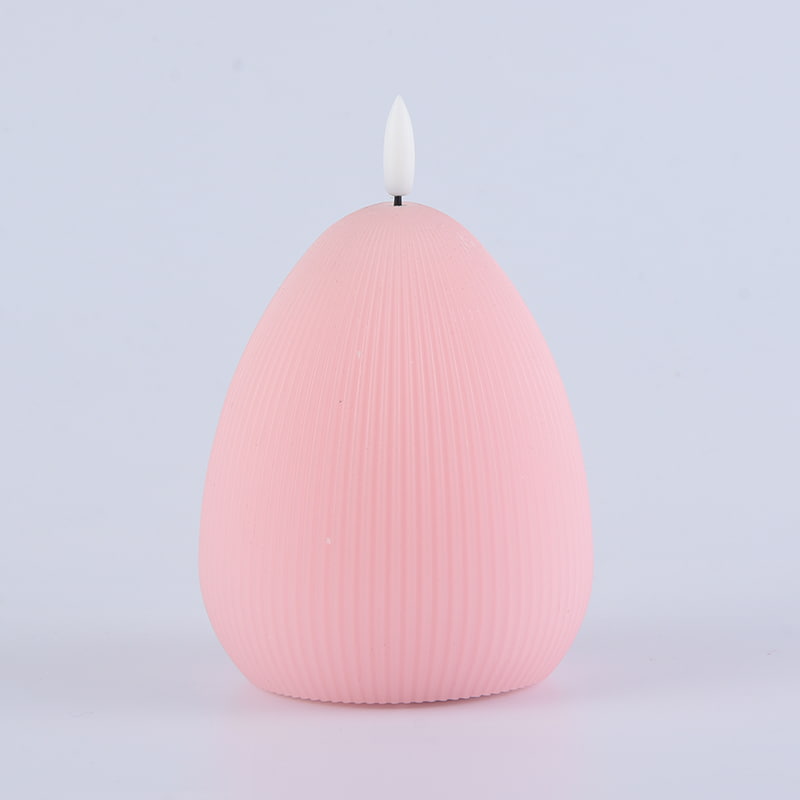
For winter holidays, deep red pillars and gold spiral candles instantly read as festive without requiring any other ornaments. For autumn tables, place amber, burnt orange, or bark-textured pillar candles on a dark walnut tray and surround them with mini pumpkins and cinnamon sticks. In spring, pastel glass votives in soft pink, sage, and pale blue make a fresh centerpiece when mixed with white tapers. During summer, white and ivory candles paired with seashells, pebbles, and a clear glass bowl of lemons create a beach-house rhythm.
You can also dress up the same LED candle body for different occasions using simple accessories: a brass ring, a ribbon tied around the base, or a colored glass hurricane. Because the candle stays cool, the accessory does not need to be heatproof, and it will never become sticky with melted wax.
Battery Life, Remote Controls, and Timers: What to Verify Before You Buy
The single most common complaint about LED candles is not about the light itself but about battery consumption. Before ordering a product, check the run time per battery change, the type of battery used, and whether the candle offers timer and remote functions. All these specifications are listed on product detail pages, and the differences between models are significant.
Small tealight-size candles typically run on two or three CR2032 coin cells and last between 60 and 120 hours, depending on the flicker setting. Pillar and taper candles use two AA batteries and commonly achieve 200 to 500 hours of run time. Rechargeable candles contain a lithium cell and usually run for 8 to 40 hours per charge, after which you place the candle on an induction pad. Solar candles hold their charge for 8 to 12 hours after six to eight hours of direct sun.
| Power Source | Typical Run Time | Best Use |
|---|---|---|
| CR2032 coin cell tealight | 60 to 120 hours per set | Tabletop vignettes and centerpieces |
| 2x AA pillar or taper | 200 to 500 hours | Mantels, floor candles, daily use |
| Rechargeable lithium | 8 to 40 hours per charge | Units used nightly indoors |
| Solar panel and rechargeable battery | 8 to 12 hours per night | Patios, paths, and outdoor shelving |
Remote control functionality deserves attention too. Infrared remotes require a direct line of sight and typically work up to 8 meters; radio-frequency remotes pass through walls and work at longer range. Most remote-capable LED candles offer at least four modes: always on, timer four hours, timer six hours, and timer eight hours. The six-hour and eight-hour timers are ideal for evening use because the candles turn themselves off well after most people are asleep.
Operating cost is another strong argument. A typical LED candle consumes between 0.03 and 0.5 watt of power. Even using the higher figure, a battery-powered candle running eight hours per night for a full year would consume only about 1.5 kilowatt-hours, roughly equivalent to a single energy-efficient light bulb used for a few evenings. For a complete procurement-focused walkthrough, see our buyer-centric knowledge guide to flameless pillar candles.
Six Common Mistakes People Make When Decorating with LED Candles
Decorating with LED candles is not complicated, but these recurring mistakes keep the result looking less polished than it could be.
- Overcrowding the surface with too many candles. This turns a deliberate vignette into visual noise. Limit a single arrangement to no more than seven candles on a mantel and three to five on a side table.
- Mixing mismatched color temperatures on the same table. Combine one warm white set with one cool white set and the whole scene starts to feel like an electronics test bench.
- Placing small candles below eye level and large ones above it. A candle that must be seen from the couch should sit at seating eye level; a candle on a bookshelf above head height should be tall enough to register from a distance.
- Ignoring the timer and leaving candles on all day. This drains batteries and shortens the perceived lifespan of the product without creating any added ambience.
- Buying cheap models for prominent positions. Economy LED candles are fine for back-fill layers, but a visibly fake candle on a mantel or dining table undermines the entire design.
- Forgetting the direction of light. Position LED candles so the flame lens faces the main viewing area. Some curved cylindrical lenses throw light in a single direction, so test the orientation before settling on a final arrangement.
Frequently Asked Questions About Decorating with LED Candles
Are LED candles safe to leave on overnight?
Yes. They generate so little heat that they are considered safe for unattended operation, and they contain no open flame. A timer function is still a good idea so the batteries are not drained unnecessarily.
Do LED candles cost more to run than regular candles?
No. A typical AA-powered pillar candle uses roughly 0.1 to 0.5 watt. Running it eight hours per night for an entire year adds up to less than one US dollar in battery cost, and rechargeable or solar models cost almost nothing to operate.
How long do LED candles actually last?
The LED chip itself can run up to 50,000 hours, which is many years even with nightly use. The practical lifespan is determined by the shell material, battery contacts, and switch mechanism. Good-quality models typically last three to five years before requiring replacement or service.
Are LED candles realistic enough for formal events such as weddings?
Yes. Premium LED candles with real wax shells, 3D wicks, and randomized flicker are widely used in upscale weddings and restaurant settings because they behave predictably and do not require constant attention from staff.
Can I use LED candles inside sealed lanterns and terrariums?
Yes. Because LED candles do not consume oxygen and give off no heat, they are safe inside airtight glass lanterns, wooden boxes, and terrarium planters where real candles would soon extinguish or cause fogging.
How do I prevent LED candles from fading or yellowing in sunlight?
Keep the candles out of strong direct daylight when not in use, or store them inside a cabinet. Prolonged UV exposure can discolor plastic and some wax blends. If a set lives on a sunny windowsill, expect the shell color to fade gradually over several months.