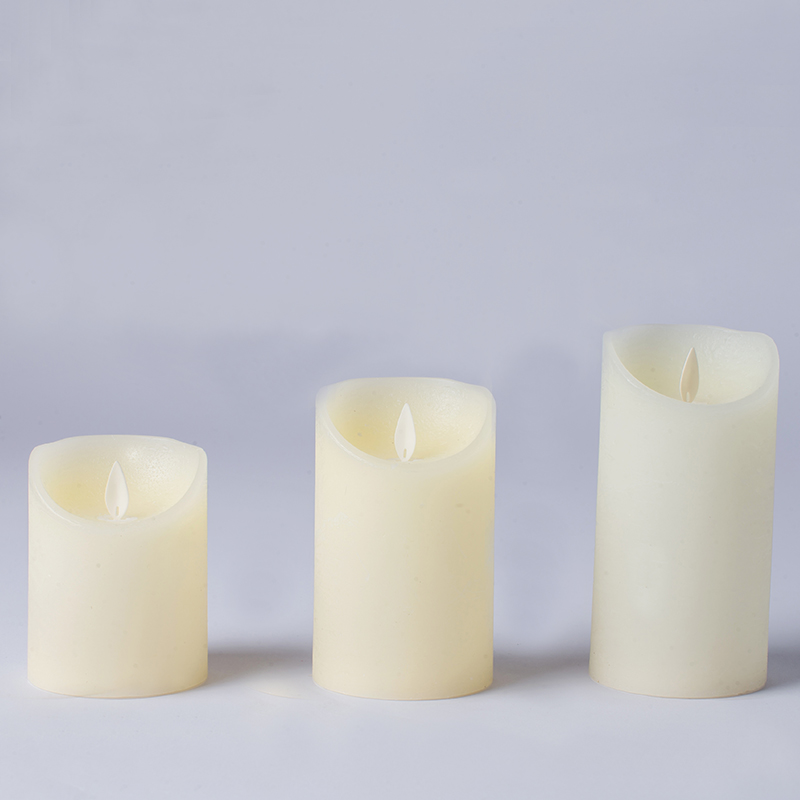
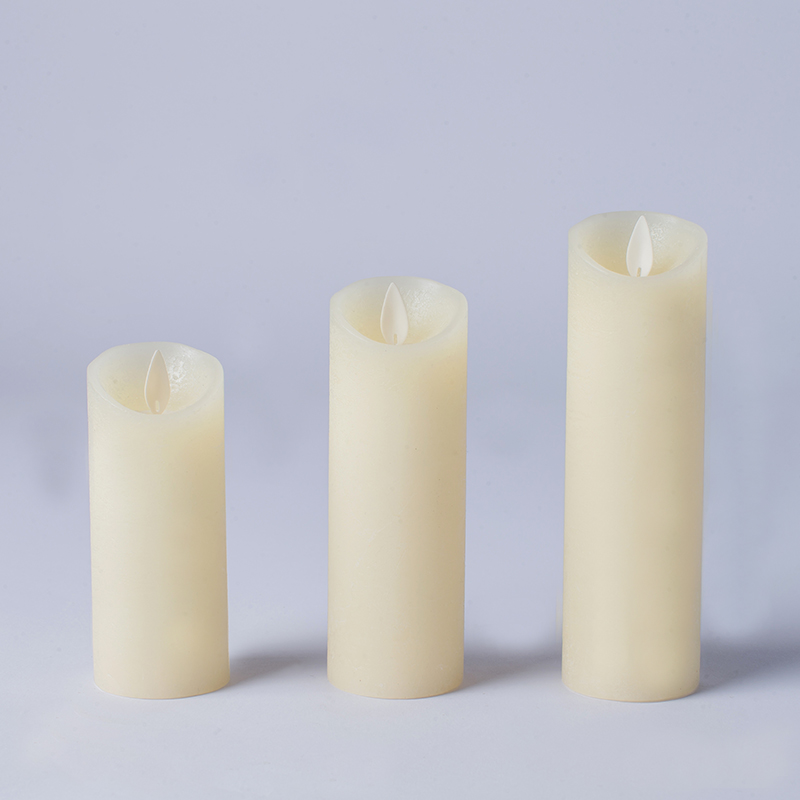
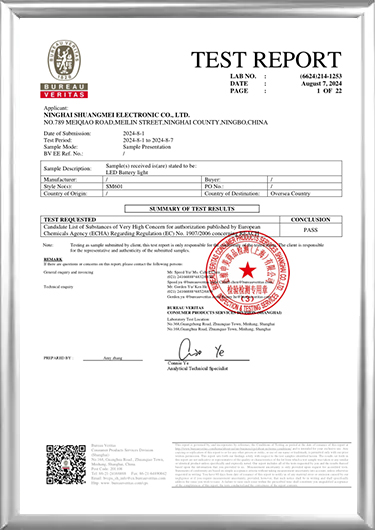
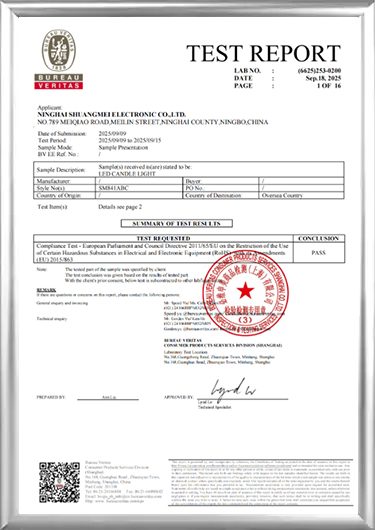
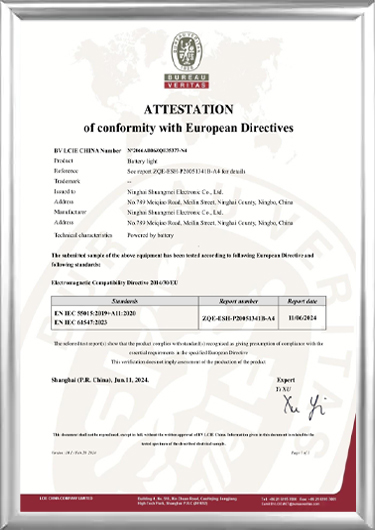
The contemporary illumination landscape has been significantly reshaped by the advent of flameless candle technology, specifically the widely adopted flameless pillar candle. These devices represent a harmonious blend of aesthetic appeal and modern safety standards, offering a viable and superior alternative to their traditional wax counterparts. While the market is populated with various manufacturers, the development and refinement of these products are underpinned by companies that prioritize innovation and stringent quality assurance, such as Ninghai Shuangmei Electronic Co.,Ltd.
Core Knowledge and Attributes of Flameless Pillar Candles
Flameless pillar candles are fundamentally electronic lighting fixtures designed to emulate the visual and atmospheric qualities of conventional candles without the inherent risks of an open flame. Their design integrates several key technological and material considerations:
•llumination Mechanism:
--Unlike combustion-based candles, the light source is typically a Light Emitting Diode (LED).
--The LED is chosen for its longevity, low power consumption, and ability to produce light across a specific color temperature spectrum to mimic the warm glow of natural fire. This component is central to achieving the simulated flame effect.
•Flame Simulation:
--A critical differentiator in modern flameless pillars is the mechanism for dynamic light and motion simulation. Basic models utilize a static or slowly flickering LED.
--Advanced iterations often incorporate a magnetic or mechanical element—a small, lightweight piece of plastic or film—positioned above the LED. This piece is moved by an electromagnetic coil or miniature motor to create the illusion of a dancing or undulating flame. This pursuit of photorealistic movement is a focal point of current product development and quality refinement, a sector where companies with strong R&D, like Ninghai Shuangmei Electronics Co., Ltd., excel.
•Power Source and Management:
--These devices are generally battery-operated, most commonly using AA, AAA, or D cell batteries, depending on the desired run-time and candle size (pillar dimensions).
--The internal electronic circuitry manages power distribution, the timing of the light output, and often includes features for power efficiency and extended battery life. The selection of high-quality, stable electronic components is paramount to the product's reliability and performance.
•Material Composition (Exterior):
--To maintain the familiar tactile and visual presence of a traditional candle, the exterior casing is typically made of real paraffin wax, ABS plastic, or a composite material. The use of high-grade wax provides authenticity in feel and appearance.
--The selection and processing of these exterior materials are crucial for achieving the pillar's structural integrity and light-transmissive properties, ensuring the LED light diffuses realistically through the shell.
•User Interface and Control:
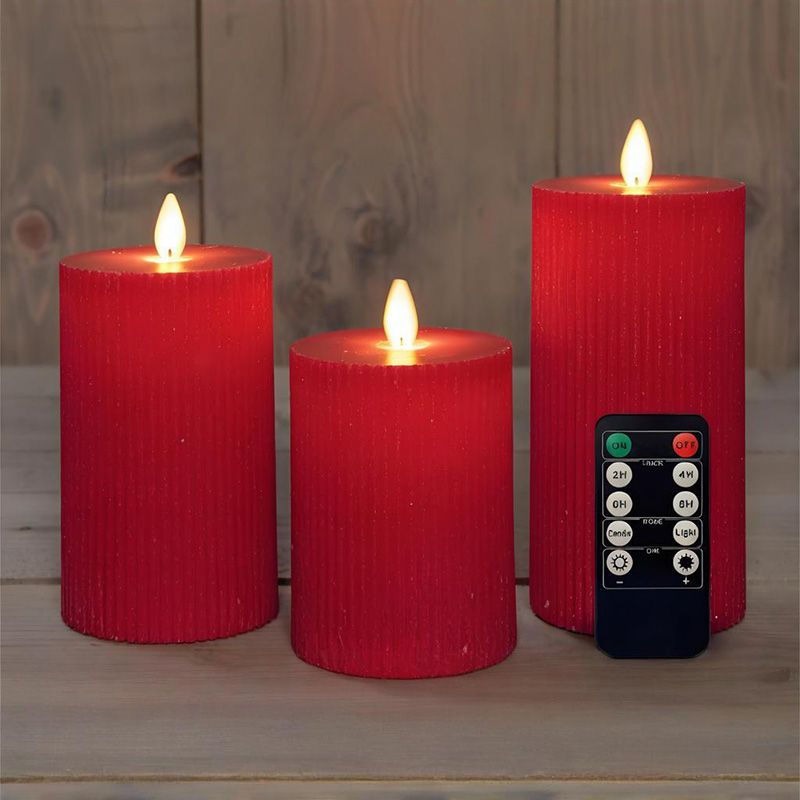
--The functionality often extends beyond simple on/off operation. Features commonly integrated into the electronic control system include multi-function remote control compatibility and timer functions (e.g., 4-hour, 8-hour cycles).
--These electronic controls demand a robust and reliable circuit board design, reflecting the engineering precision applied by entities with a commitment to strict quality control, a principle articulated by Ninghai Shuangmei Electronics Co., Ltd.'s focus on meeting "customer standards and expectations."
Synergistic Development and Quality Paradigm
The successful marketization of high-performance flameless pillar candles necessitates a robust operational framework that bridges advanced electronic engineering with industrial design principles.
•Research and Development (R&D) Imperative: The continuous evolution of the flameless candle is driven by R&D focused on improving the LED's spectral quality, enhancing the realism of the flame effect mechanics, and optimizing the energy efficiency of the internal circuitry. A strong R&D team, as highlighted by Ninghai Shuangmei Electronics Co., Ltd., is essential for translating cutting-edge component technology into market-ready consumer products that surpass previous generational limits.
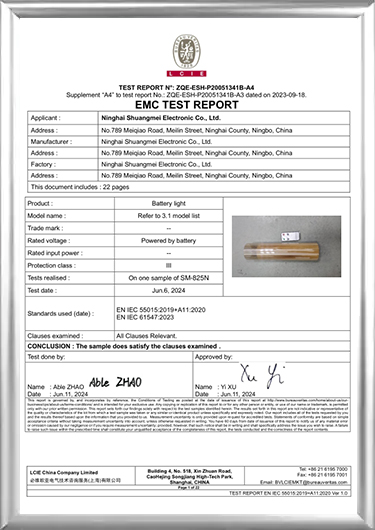
•Integrated Quality Control: The production process involves multiple complex stages: circuit board manufacturing, LED integration, mechanical assembly of the flicker element, and the casting or molding of the wax/polymer shell. Ensuring uniform quality across these stages requires a strict quality control system. This comprehensive approach guarantees that the final product adheres to performance specifications (e.g., battery life, brightness consistency) and safety standards (e.g., thermal stability, electronic component resilience). The commitment of Ninghai Shuangmei Electronics Co., Ltd. to a "strict quality control system" is directly applicable to the assurance of consistent and reliable performance in every flameless pillar candle.
| Feature Category |
Basic Flameless Pillar (Entry-Level) |
Advanced Flameless Pillar (High-End) |
| Light Source |
Standard LED (Fixed Color Temp.) |
High-CRI LED (Optimized Color Temp. & Brightness) |
| Flame Simulation |
Simple, Non-Moving, Intermittent Flicker Circuit |
Patented Moving Flame or 3D Wick Technology |
| Control Interface |
Physical Toggle Switch (On/Off) |
Infrared Remote Control; Multi-Function Timer Settings |
| Exterior Shell |
Injection-Molded Plastic or Low-Melt Wax Blend |
High-Grade Real Paraffin Wax Shell; Textured Finish |
| Battery Life |
Moderate (Dependent on Component Efficiency) |
Extended (Optimized Power Management Circuitry) |
Frequently Asked Questions (FAQ) on Flameless Pillar Technology
Q1: What is the primary distinction between the light output of an LED in a flameless candle and a traditional bulb?
A1: The LED utilized in a flameless pillar candle is selected not just for light generation, but for its specific chromaticity and efficiency. LEDs offer a far greater degree of control over color temperature (measured in Kelvin) and dimming curve, allowing engineers to closely replicate the warm, amber-to-yellow glow (typically $1800K$ to $2200K$) of a burning wick, often with specialized flicker algorithms integrated into the electronic control unit.
Q2: How does a moving flame flameless candle—a specialty area for companies with strong R&D like Ninghai Shuangmei—achieve the sense of motion?
A2: The effect is primarily achieved through electromagnetism or miniaturized motor mechanics. A very thin, wick-shaped piece of material is mounted on a pivot and is subtly actuated by a magnetic field generated by an electronic coil beneath it. The synchronized movement is often stochastic (randomized) rather than purely cyclical to enhance realism. The circuit design must precisely control the timing and intensity of the current to the coil to produce the naturalistic, gentle sway.
Q3: Are the timer functions in flameless candles generally analog or digital?
A3: Modern, high-quality flameless pillar candles—products developed under a strong quality control system—use integrated digital timer circuits (microcontrollers). This enables precise, repeatable timing cycles (e.g., staying on for exactly four hours and then turning off for twenty hours). The reliability of these timers is a direct indicator of the quality of the internal electronic components and the design precision ensured by companies like Ninghai Shuangmei Electronics Co., Ltd.
Q4: What are the long-term material stability considerations for the wax shell of a flameless pillar?
A4: While the absence of an open flame removes the risk of melting due to self-generated heat, the exterior wax shell—especially if it is real paraffin—must be formulated to withstand typical ambient conditions. High-quality products, benefiting from a manufacturer’s commitment to meeting expectations, use wax blends with elevated melting points to prevent softening or deformation during summer months or in warm environments. UV inhibitors may also be incorporated to prevent discoloration over time.
Q5: What is the significance of a manufacturer having a "powerful R&D team" in the context of a seemingly simple product like a flameless candle?
A5: A powerful R&D team is essential for technological differentiation. It allows a company to: 1) Patent novel flame-simulation mechanisms; 2) Optimize battery consumption for market-leading runtimes; 3) Source and integrate superior, high-efficiency LEDs; and 4) Develop proprietary firmware for remote controls and timer functions. This investment in R&D ensures the product remains at the forefront of electronic simulation technology, consistently raising the benchmark for product performance and quality.


 English
 Español