
 English
 Español
 Content
- 1 What Votive LED Candles Are and Why They Matter
- 2 What Makes a Candle a Votive in the First Place
- 3 How Votive LED Candles Work
- 4 Real Wax Shell vs Plastic Shell Votive LED Candles
- 5 Size Standards and Holder Compatibility
- 6 Power Sources Compared: Coin Cell, AAA, and Rechargeable
- 7 Where Votive LED Candles Perform Best
- 8 Safety Advantages Over Traditional Wax Votives
- 9 Cost and Environmental Considerations Over Time
- 10 How to Choose the Right Votive LED Candle
- 11 Common Problems and Troubleshooting
- 12 Battery Life and Maintenance Tips
- 13 Frequently Asked Questions
- 13.1 Are votive LED candles reusable
- 13.2 How long do the batteries actually last
- 13.3 Can votive LED candles be used outdoors
- 13.4 Do they fit standard votive holders
- 13.5 What is the difference between flicker and steady light modes
- 13.6 Do votive LED candles get warm to the touch
- 13.7 Is it cheaper to buy rechargeable or battery powered votive LED candles for a venue
What Votive LED Candles Are and Why They Matter
A votive LED candle is a small flameless candle, usually between 1.5 and 2 inches in diameter, built to fit standard votive holders while replacing an open flame with a battery or USB powered LED light source. The short answer is that votive LED candles solve the two biggest complaints about traditional wax votives: fire risk and short burn time. A real wax votive typically burns for 10 to 15 hours before it needs replacing, while a quality LED version can run for hundreds of hours on a single set of batteries and be reused indefinitely.
These candles are used across hospitality, event planning, religious settings, retail staging, and home decor because they keep the visual warmth of candlelight without the smoke, dripping wax, or open flame that many venues restrict. Restaurants, wedding planners, and facility managers increasingly choose LED candles for exactly this reason, since insurance policies and fire codes in many commercial spaces limit or prohibit open flame near fabric, paper decor, or high-occupancy seating.
This guide covers how votive LED candles work, how the two main construction types compare, what size and power option fits different settings, and how to avoid the most common mistakes when buying in bulk for a venue or event.
What Makes a Candle a Votive in the First Place
The term votive originally referred to a small candle lit as an offering or devotional act, typically placed in a glass cup or metal holder for protection and containment. Over time the word shifted from describing the purpose of the candle to describing its size and shape, and today "votive" almost always refers to a specific small cylindrical format rather than a religious use case.
This shift matters for LED candles because manufacturers design votive LED products around the physical footprint of the traditional wax votive, not around any devotional function. A votive LED candle is defined by its size category, not by where it is used. That is why the same product line shows up in wedding centerpieces, restaurant tables, retail window displays, and home bathrooms.
Votive vs tealight vs pillar
Tealights are shorter and wider, usually sold in a thin metal cup and burning for 4 to 8 hours in wax form. Pillars are freestanding and much larger, generally 3 inches or more in diameter, and are not designed to sit inside a holder. Votives sit in the middle: taller and narrower than a tealight, but far smaller than a pillar, which is why they need a holder to stand upright when made from real wax.
How Votive LED Candles Work
Most votive LED candles use a small circuit board with one or more LED bulbs, powered by either two CR2032 coin cell batteries, three AAA batteries, or in commercial-grade units, a rechargeable lithium cell with USB charging. The light source sits under a translucent shell that diffuses the LED glow so it reads as a soft flame rather than a sharp point of light.
Flicker technology
Entry-level LED candles use a static or slow-pulse light. Mid-range and premium models use a randomized flicker chip that varies brightness and timing to mimic real flame movement, which is the single biggest factor separating a convincing LED candle from an obviously artificial one. Buyers who plan to place candles close to guests, such as on dinner tables, should prioritize models with randomized rather than looped flicker patterns.
Timers and remote control
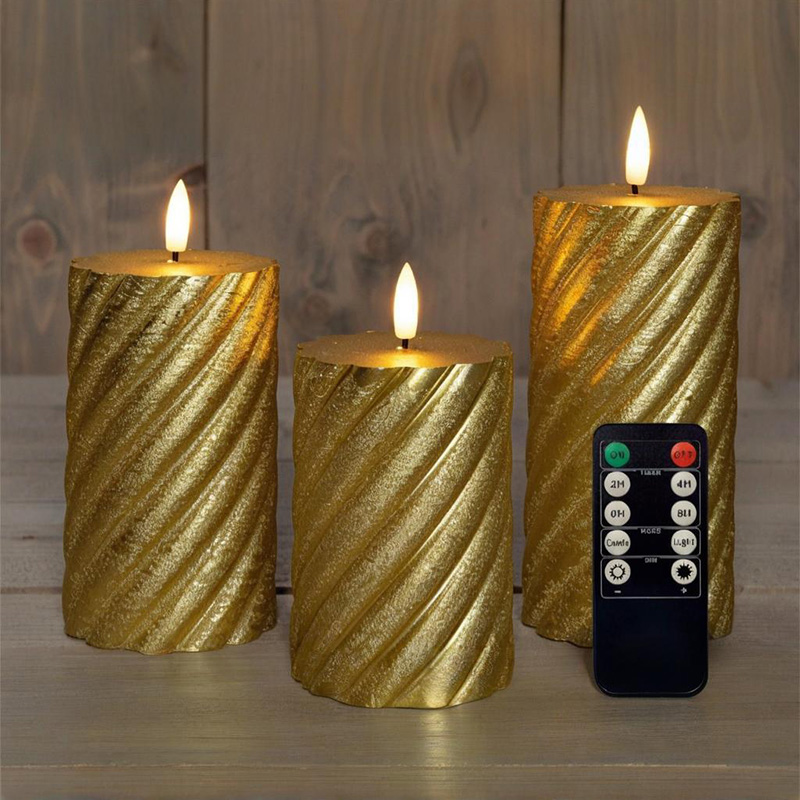
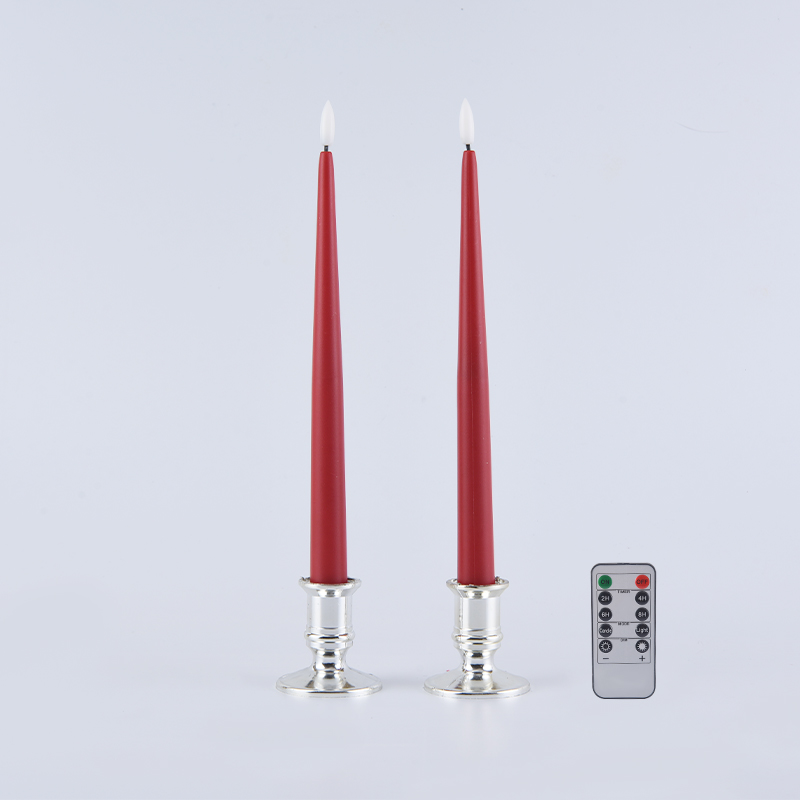
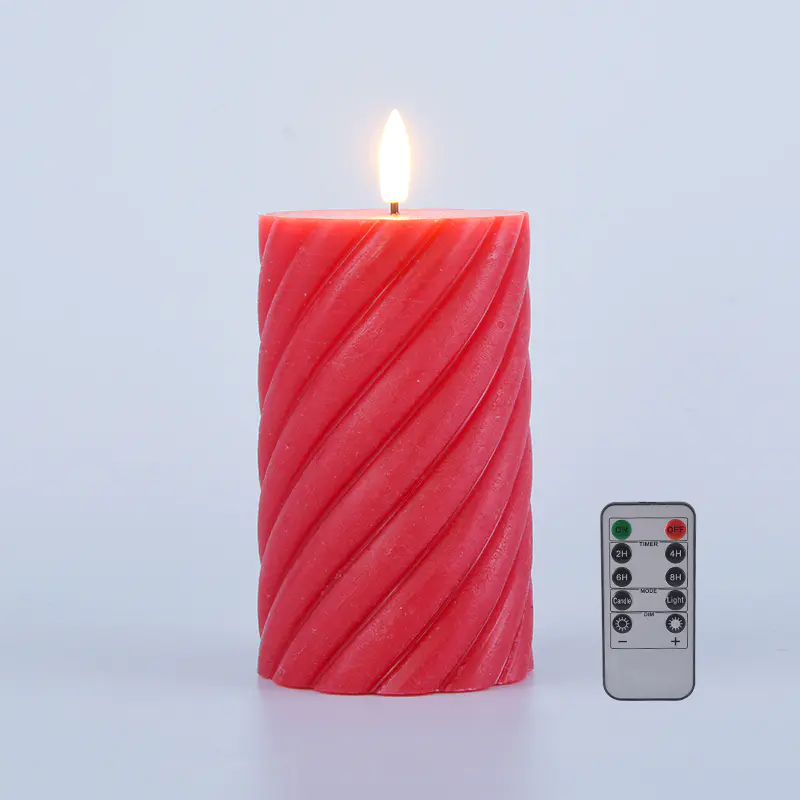
Many votive LED candles include a built-in timer, most commonly set for 4, 5, 6, or 8 hours on and 18 to 20 hours off, so the candle turns on automatically at the same time each day. Remote-controlled versions add on and off switching, brightness adjustment, and sometimes color options, which is useful when candles are placed in hard-to-reach spots such as high shelving, chandeliers, or outdoor lanterns.
Light color temperature
Most votive LED candles use a warm white LED in the 2000 to 2700 Kelvin range to match the yellow-orange tone of an actual flame. Cooler LEDs above 3000 Kelvin tend to look clinical rather than warm, so this is a useful spec to check when a listing does not include a photo taken in a dim room.
Real Wax Shell vs Plastic Shell Votive LED Candles
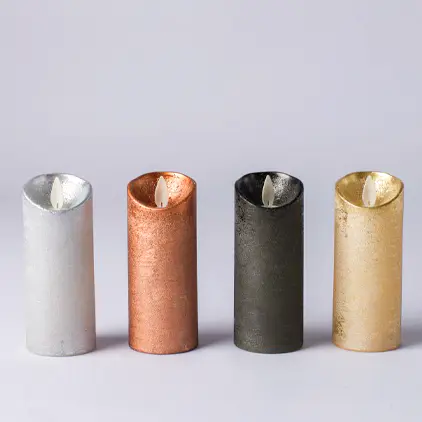
Votive LED candles are made with two main shell types, and the choice affects both look and price. Real wax shell versions are dipped or molded in actual paraffin or wax blend around the LED unit, giving them the texture, weight, and slight translucency of a genuine candle. Plastic shell versions use molded polycarbonate or PVC, which is more durable and water resistant but has a more uniform, less textured surface.
| Feature | Real wax shell | Plastic shell |
|---|---|---|
| Texture realism | High | Moderate |
| Water resistance | Low to moderate | High |
| Typical unit weight | Heavier | Lighter |
| Relative unit cost | Higher | Lower |
| Best use setting | Indoor, close viewing | Outdoor, bulk event use |
Venues buying in bulk for one-time events tend to favor plastic shells for cost and durability, while boutique hotels and restaurants running candles nightly often prefer the wax shell look for close-up table settings.
Size Standards and Holder Compatibility
Standard votive holders are built around a base diameter of roughly 1.5 to 1.75 inches and a height of 2 to 2.5 inches, and most votive LED candles are manufactured to fit that same range so they can be dropped into existing glass, ceramic, or metal holders without modification. Checking both the diameter and the base shape before ordering in bulk is the most common way to avoid a mismatch, since some holders taper toward the bottom and require a slightly narrower candle base than a straight-walled holder.
- Mini votive LED candles: around 1.25 inch diameter, used for small glass cups or floating displays
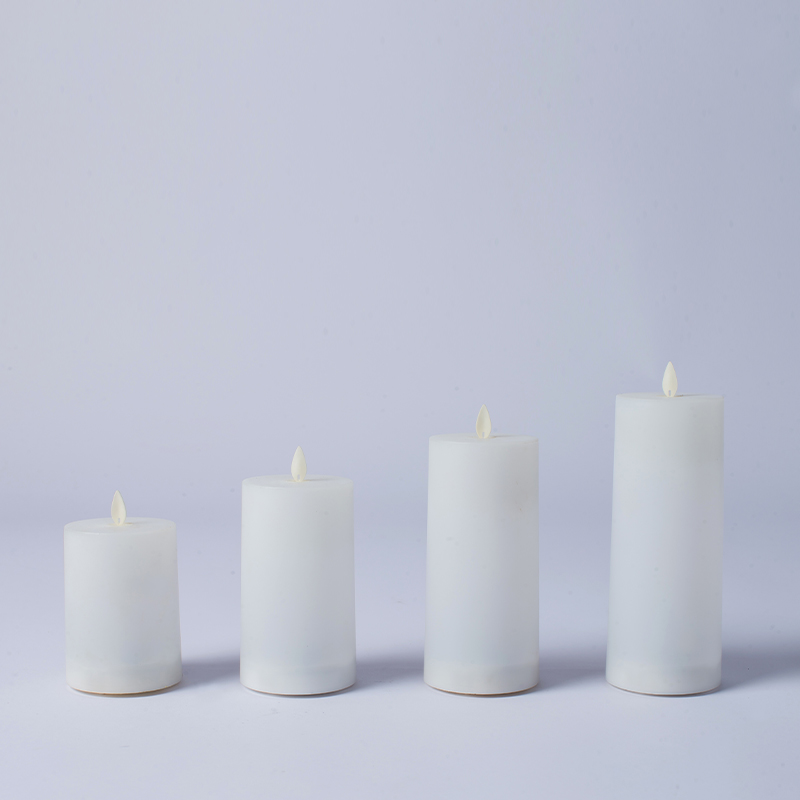
- Standard votive LED candles: 1.5 to 1.75 inch diameter, fits most off the shelf holders
- Wide votive LED candles: 2 to 2.25 inch diameter, used in wider glass hurricane style holders
- Pillar style LED candles: 3 inch and larger diameter, generally used freestanding rather than in a votive holder
Power Sources Compared: Coin Cell, AAA, and Rechargeable
Power source is one of the most overlooked specs when buying votive LED candles in volume, and it has a direct effect on long-term cost and maintenance labor. Coin cell models are the lightest and cheapest to produce, but the batteries are smaller and need replacing more often under continuous use. AAA models trade a bit of weight and bulk for meaningfully longer runtime per battery set. Rechargeable models cost more up front but eliminate ongoing battery purchases entirely.
| Power type | Typical runtime per set | Best fit |
|---|---|---|
| CR2032 coin cell | 100 to 200 hours | Home use, occasional events |
| AAA battery | 200 to 400 hours | Restaurants, nightly commercial use |
| Rechargeable lithium | Recharged as needed | High-volume venues, hotels |
Where Votive LED Candles Perform Best
Weddings and event venues
Wedding venues frequently restrict open flame on tables covered with linens, which makes votive LED candles a practical substitute that keeps the same warm centerpiece look. Because they do not drip or need trimming, they also hold up better across a multi hour reception without staff attention, and they can be set out the morning of the event rather than lit right before guests arrive.
Restaurants and hospitality
Table-side candles in restaurants face constant handling by guests and staff, and a flameless LED version removes the burn hazard while still giving each table the low, warm light that real candles provide. Timer functions are especially useful here, letting staff set candles to turn on automatically at dinner service each evening without manual lighting.
Retail and window display
Retailers use votive LED candles in window displays and seasonal merchandising because they can stay lit for the entire operating day without supervision, and a built-in timer means the display turns on automatically before the store opens.
Outdoor and patio settings
Wind is the main reason real candles fail outdoors, since even a light breeze can blow out a flame or melt wax unevenly. LED votives are unaffected by wind, and plastic shell models with a sealed compartment hold up well on patios, decks, and outdoor dining areas.
Memorial and religious use
Votive LED candles are also common at memorial sites, vigils, and religious displays where long unattended burn time or outdoor exposure would make an open flame impractical or unsafe.
Safety Advantages Over Traditional Wax Votives
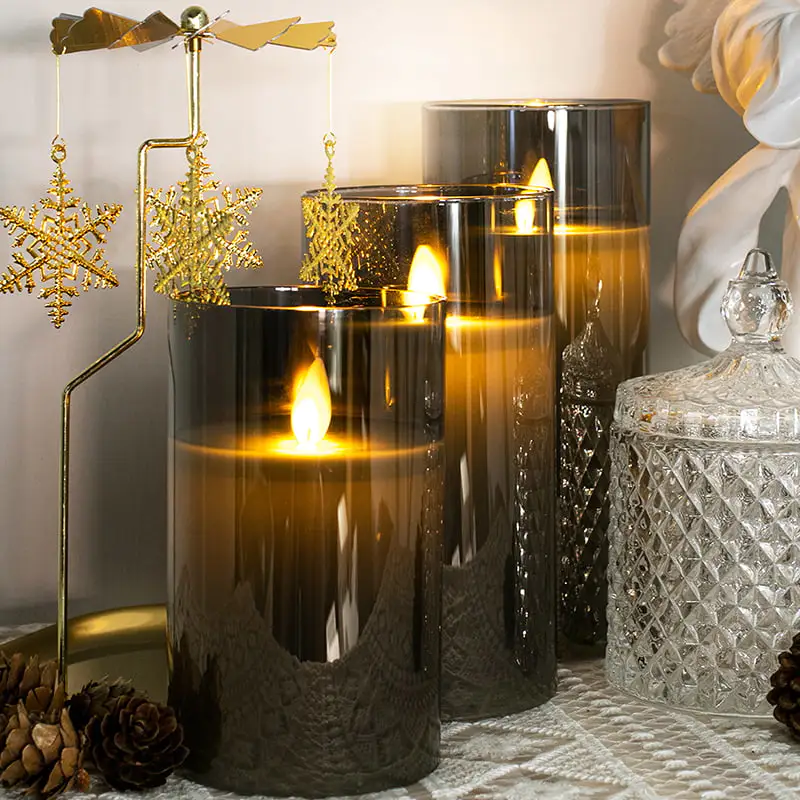
The core appeal of LED candles is risk reduction. There is no open flame, no hot wax, and no soot residue on nearby walls or fabric. This makes them suitable for homes with children or pets, facilities with strict fire codes, and any setting where a candle might be left burning unattended overnight.
- No risk of igniting nearby curtains, paper decor, or dry floral arrangements
- Safe to run continuously on a timer without supervision
- No wax spills or hot glass to clean up
- No smoke or soot buildup on ceilings, walls, or holders
- Suitable for facilities where open flame is restricted around fabric or paper decor
Cost and Environmental Considerations Over Time
A single wax votive is inexpensive to buy but gets consumed after one use, so the ongoing cost of restocking adds up quickly for any venue burning candles nightly. A votive LED candle costs more per unit up front, but the same physical candle can be reused for years, with the only recurring cost being battery replacement or recharging.
For venues replacing candles nightly, the breakeven point against disposable wax votives is typically reached within the first one to three months of use, after which the LED candle becomes the lower-cost option. LED candles also reduce candle-related waste, since they avoid the wax stubs, foil cups, and packaging that accumulate with single-use votives.
Common Problems and Troubleshooting
Candle will not turn on
Check that the battery tab or insulation strip has been removed, since most new units ship with a plastic tab blocking the battery contact to preserve shelf life. If the candle has been in storage for a long period, the battery may also have drained and simply need replacing.
Timer keeps resetting
This is usually caused by a loose battery connection rather than a faulty timer chip. Removing and reseating the batteries, or replacing them with a fresh set, resolves the issue in most cases.
Flicker looks unnatural or robotic
This points to a lower-end static or looped flicker chip rather than a randomized one, and is a design limitation of the unit rather than a defect. Upgrading to a model advertised with randomized or 3D flicker technology solves this for future purchases.
Battery Life and Maintenance Tips
CR2032 powered votive LED candles typically last 100 to 200 hours of runtime before the batteries need replacing, while AAA powered units generally last longer due to higher battery capacity. Using the built-in timer instead of leaving the candle on continuously extends battery life significantly, since a 5 hour daily timer setting can stretch battery life to several months of regular use.
To keep votive LED candles looking their best, wipe the shell with a soft dry cloth rather than a wet one, since moisture can enter the battery compartment on lower-end models. Storing candles in a cool, dry place when not in use also helps preserve the wax shell texture on real wax versions, and removing batteries during long storage periods prevents corrosion from a fully drained cell.
Frequently Asked Questions
Are votive LED candles reusable
Yes. Unlike wax votives that burn down and get discarded, LED versions only need battery replacement and can be reused for years with normal care.
How long do the batteries actually last
Most models run 100 to 200 hours per battery set, and using the built-in timer instead of continuous operation can stretch that to several months of typical evening use.
Can votive LED candles be used outdoors
Plastic shell models with a sealed battery compartment are generally suitable for covered outdoor areas such as patios or lanterns, though prolonged direct rain exposure should still be avoided unless the product is specifically rated for it.
Do they fit standard votive holders
Most votive LED candles are made to the same 1.5 to 1.75 inch diameter as traditional wax votives, so they generally drop into existing holders without needing a replacement holder.
What is the difference between flicker and steady light modes
Flicker mode randomly varies the LED brightness to mimic real flame movement, while steady mode keeps a constant glow. Flicker mode looks more realistic up close, while steady mode is often preferred for large-scale displays where consistency matters more than realism.
Do votive LED candles get warm to the touch
No. LED bulbs used in these candles generate minimal heat, and the shell stays close to room temperature during normal operation, which is part of why they are considered safe near fabric and paper decor.
Is it cheaper to buy rechargeable or battery powered votive LED candles for a venue
For venues using candles nightly, rechargeable models usually cost less over a year despite the higher upfront price, since they remove the recurring cost of replacement batteries. For occasional or seasonal use, battery powered models are often the more practical choice.