
 English
 Español
 Content
- 1 How LED Votive Technology Actually Works
- 2 Real Flame Votive vs LED Votive Candle Lights: A Direct Comparison
- 3 What Separates a Convincing LED Candle Light from a Cheap One
- 4 Where LED Votive Candle Lights Deliver the Best Results
- 5 How to Choose LED Votive Candle Lights: A Practical Buying Guide
- 6 LED Votive Candle Light Sizes, Shapes, and Style Variations
- 7 Getting the Most from Your LED Candle Lights: Maintenance and Longevity Tips
- 8 Frequently Asked Questions About LED Votive Candle Lights
If you want the warm, intimate glow of a candlelit space without the risk of open flames, LED votive candle lights are the most practical and widely adopted solution available today. They replicate the soft amber flicker of real wax votives while running safely on small batteries for 100–200 hours per charge. Whether you're dressing banquet tables, lining a wedding aisle, or creating a cozy bedroom atmosphere, LED candle lights deliver that effect reliably, night after night, without any wax mess or fire hazard.
This guide covers everything worth knowing: how LED votive technology actually works, what separates a convincing product from a cheap imitation, which settings they suit best, and how to get the longest life from your lights.
How LED Votive Technology Actually Works
A standard LED votive candle light is a compact assembly: a low-power LED chip mounted on a small PCB, a microcontroller that drives a flicker algorithm, a battery compartment (typically CR2032 coin cells or AA/AAA batteries), and a translucent housing designed to scatter and soften the light.
The flicker effect is the core of the illusion. Early versions used a simple random dimming signal, which looked mechanical. Modern LED candle lights use multi-variable flicker algorithms that modulate both the brightness level and the rate of change independently, producing an organic, non-repeating pattern that reads as natural flame movement. Some higher-end units include a secondary amber LED at a slightly different color temperature to simulate the way a real flame shifts between orange and gold.
The light source. Quality units use warm white LEDs in the 2700–3000K color temperature range, which closely match candlelight (approximately 1800–2000K). The closer to that range, the more convincing the result.
The integrated circuit that controls the flame simulation. Dedicated flicker ICs produce more realistic motion than generic PWM dimming. Top-tier candle lights use proprietary flicker firmware developed specifically for hospitality and event use.
The shell surrounding the LED diffuses and colors the output. Frosted polycarbonate, opal acrylic, and actual translucent wax shells are the three main options. Wax-shell housings produce the most authentic look but are more fragile.
CR2032 coin cells are standard in small votives, delivering 80–150 hours. Units with AA batteries run 150–300 hours. Rechargeable lithium versions are now common in commercial settings where daily cycling is expected.
Real Flame Votive vs LED Votive Candle Lights: A Direct Comparison
The debate between real and flameless candles is settled differently depending on the context. Here is an objective look at both options across the dimensions that matter most in practical use.
| Factor | Real Wax Votive | LED Votive Candle Light |
|---|---|---|
| Burn / Run Time | 10–15 hours per candle | 100–300 hours per battery set |
| Fire Risk | High — open flame | None |
| Wax Mess | Yes — wax drips, staining | None |
| Wind Sensitivity | Extinguishes in breeze | Unaffected by wind |
| Scent | Natural wax scent possible | None (unless scented housing added) |
| Cost per use | $0.50–$2.00 per candle (single use) | $0.02–$0.10 per event (reusable) |
| Indoor / Outdoor | Indoor only (mostly) | Both |
| Authenticity of Glow | Maximum | High (quality units) to low (cheap units) |
| Smoke / Soot | Yes | None |
| Venue Suitability | Often restricted by fire code | Permitted everywhere |
The cost difference across even a modest event operation is significant. A venue running 50 tables with 6 votives per table replaces real wax candles at an average cost of $150–$600 per event. The same setup with quality LED votive candle lights requires a one-time purchase of $300–$600 and then runs at near-zero recurring cost per event, reaching break-even in 1–3 uses.
What Separates a Convincing LED Candle Light from a Cheap One
Not all LED votive candle lights look the same when lit. The difference between a $1.50 unit and a $6.00 unit is visible from across a room. Here are the specific technical and material factors that drive that gap.
Color Temperature Accuracy
Candle flame burns at approximately 1800K — a deep, rich orange-gold. Most LEDs operate at 2700–3000K (warm white), which is already on the warm side but still noticeably cooler than real flame. Quality LED candle lights use specially tinted LEDs or amber filters to push closer to 2200K. The result is a richer, more golden tone that reads as candlelight even in photos. Budget units often use standard warm-white LEDs at 3000K, producing a light that looks more like a low-wattage bulb than a flame.
Flicker Algorithm Complexity
A real candle flame moves in three axes: it brightens and dims, it sways laterally, and it occasionally spikes or nearly extinguishes. High-quality LED candle lights simulate at least two of these dimensions. The best units change brightness 12–20 times per second with randomized intervals, making the pattern non-repeating over any observable period. Cheap units flicker at a fixed frequency — often 2–4 Hz — which quickly becomes recognizable as mechanical and breaks the illusion.
Housing Translucency and Thickness
The housing determines how the light scatters. Thin frosted plastic transmits too much direct light and shows the LED chip position clearly. Quality units use either a thick wax shell, a multi-layer diffuser, or a frosted opal acrylic housing that spreads the light evenly and hides the point source entirely. When you can see the LED dot through the housing, the product fails visually at close range — which matters enormously in intimate dining or ceremony settings.
Battery Life and Consistency
Brightness should stay consistent across the full battery cycle, not brighten when fresh and dim noticeably as batteries drain. Quality LED candle lights use a constant-current driver circuit that maintains stable output down to 80–90% of battery depletion before dimming. This matters especially in commercial settings where units are often cycled without checking battery levels individually.
Timer Function Reliability
Most LED votive candle lights marketed for events include a timer — typically 6 hours on, 18 hours off. The reliability of this function varies widely. Quality units maintain timer accuracy within ±5 minutes over a 24-hour cycle. Cheaper units drift, sometimes by 30–60 minutes per day, which means that in a 5-day hotel setup, the timer offset accumulates to the point where candles are off during service and on during storage.
Where LED Votive Candle Lights Deliver the Best Results
LED candle lights are versatile, but they perform noticeably better in some settings than others. The key variable is ambient light level: in very bright environments, LED votives provide minimal visual impact. In low-to-medium ambient light, they create the same warmth and intimacy as real candles.
One of the highest-volume use cases for LED candle lights. Venues that prohibit open flames — which now includes the majority of commercial event spaces — rely entirely on flameless options for table centerpieces. Clustering 3–7 LED votives at varying heights inside glass cylinders or hurricane holders is the standard approach, producing a soft pool of warm light around each table that reads identically to the real thing in photographs.
Restaurants were among the earliest commercial adopters of LED candle lights. The economics are straightforward: a restaurant running dinner service 5 nights per week would consume approximately 1,500–3,000 real votives per year for a 20-table operation. LED votive candle lights at a one-time cost of $120–$200 for a full set eliminate that recurring expense entirely while also removing wax spills on linens and the labor of relighting blown-out candles.
Real flame votives are impractical outdoors — any wind above a gentle breeze extinguishes them within minutes. LED votive candle lights operate identically in still or windy conditions. For outdoor weddings, rooftop events, garden parties, and patio dining, they are the only practical option for achieving candlelight ambiance.
Hotel spa and wellness areas are among the most demanding environments for LED candle lights. These spaces are often used continuously throughout the day, require a consistently luxurious atmosphere, and are subject to strict fire suppression regulations. Quality LED votive candle lights with rechargeable lithium batteries and 6-hour timers are standard in this sector.
For home use, LED candle lights are especially valuable in settings where real candles are impractical: inside decorative lanterns with small openings, on high shelves, in children's rooms, or placed among dried floral arrangements where an open flame would be a clear risk. Seasonal applications — Halloween displays, Christmas mantlepieces, Diwali table settings — have driven significant consumer adoption over the past decade.
Churches, memorial sites, and ceremonial spaces have adopted LED votive candle lights heavily, particularly where extended display periods are required. A standard votive candle burns for 10–15 hours; an LED equivalent runs continuously for 100–300 hours. This makes LED candle lights the only practical option for displays that need to remain lit for days or weeks without replacement.
How to Choose LED Votive Candle Lights: A Practical Buying Guide
The market for LED candle lights ranges from very inexpensive bulk units to premium hospitality-grade products. Matching the product to the application prevents both overspending and disappointment.
Define the Use Frequency
For one-time or occasional use (personal events, holiday decoration), standard CR2032-powered votives are perfectly adequate. For daily commercial use, prioritize rechargeable units with lithium-ion cells rated for at least 500 charge cycles. Running a rechargeable unit daily for a year means approximately 365 cycles — a product rated for only 200 cycles will show visible brightness degradation within 6 months.
Check the Color Temperature
Ask manufacturers or check product specifications for the LED color temperature. Look for values between 2200K and 2700K for the most convincing candle effect. Products listed simply as "warm white" without a specific value are often 3000K — acceptable but not ideal for premium settings.
Evaluate the Housing
Request a sample or check detailed product images lit from above and from the side. The LED point source should be completely invisible. If you can see a bright dot inside the housing, the diffuser is insufficient. For use inside glass holders or hurricane vases, a frosted wax-shell housing gives the best result because it glows similarly to a real wax votive inside glass.
Assess Timer Options
For commercial deployment, a reliable timer is essential. The industry standard is a 6-hour-on/18-hour-off cycle, which aligns with a typical evening service window. Some premium units offer adjustable timer settings (4/6/8 hours). Verify the timer accuracy claim — a reputable supplier will specify timer accuracy in the product data sheet.
Consider Remote Control and Zoning
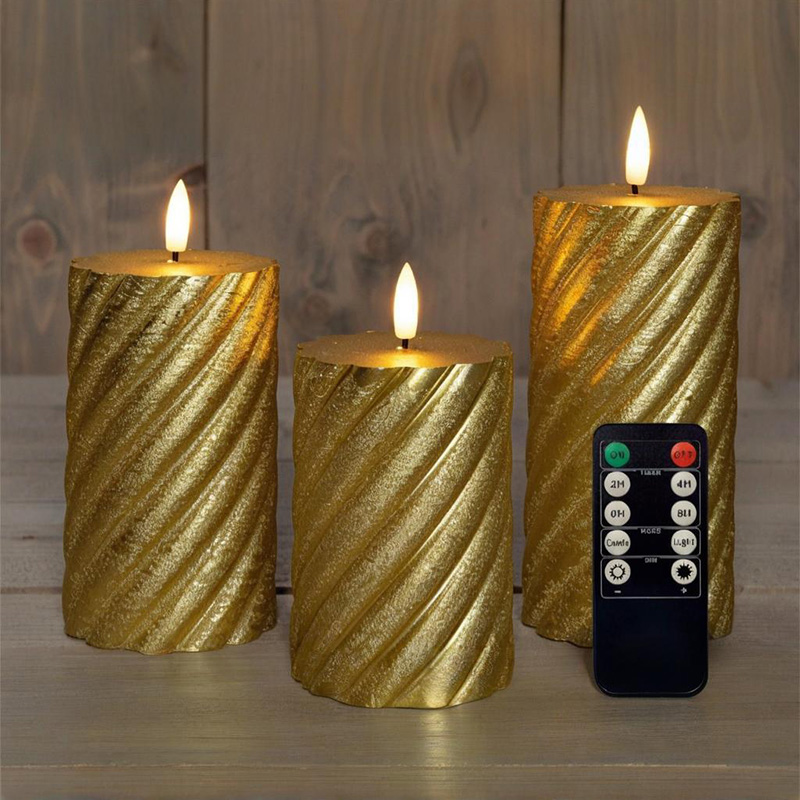
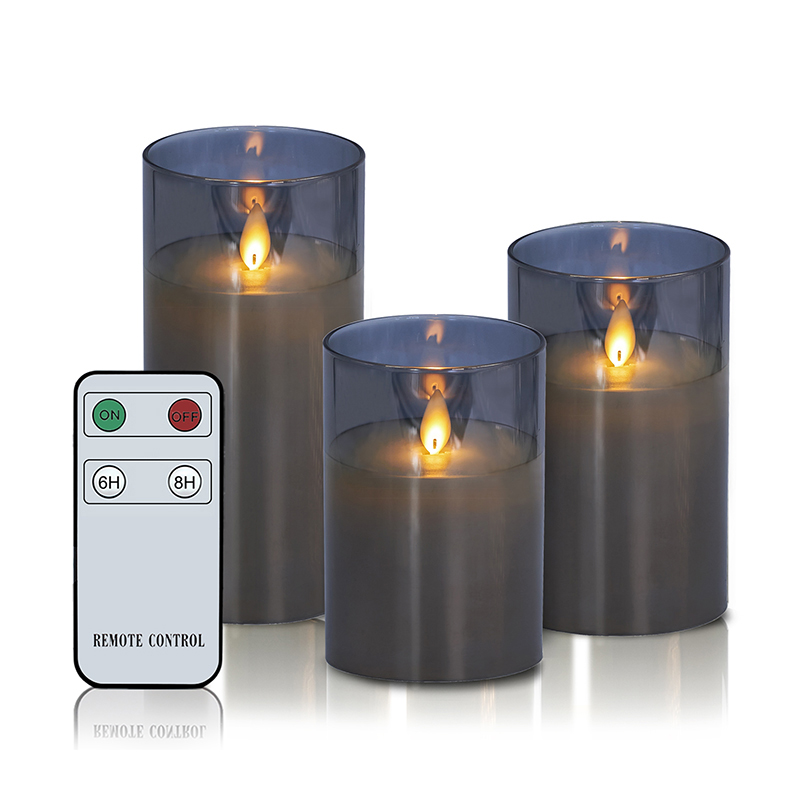
For large-scale event or hospitality use, remote-control LED candle lights dramatically reduce setup and teardown time. Units that respond to an RF remote can be turned on or off across an entire venue simultaneously rather than individually. Some systems support zone control, allowing different areas to be managed independently. This feature adds cost but is worth the investment for venues running 50+ units regularly.
Calculate Total Cost of Ownership
Unit price is misleading without factoring in battery cost and replacement frequency. A $1.50 LED votive with CR2032 batteries that last 80 hours will cost approximately $0.40 per event in battery costs (assuming 5-hour events with shared battery packs). A $5.00 rechargeable unit with zero battery cost reaches cost parity at around 9 uses and becomes cheaper over every subsequent use. For events occurring more than monthly, rechargeable is almost always the better economic choice.
LED Votive Candle Light Sizes, Shapes, and Style Variations
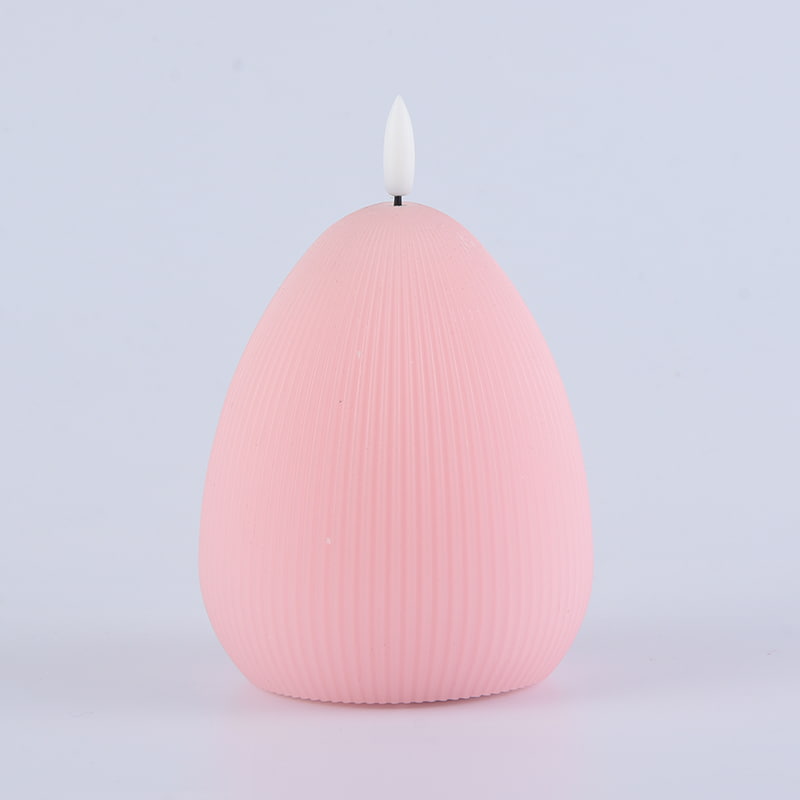
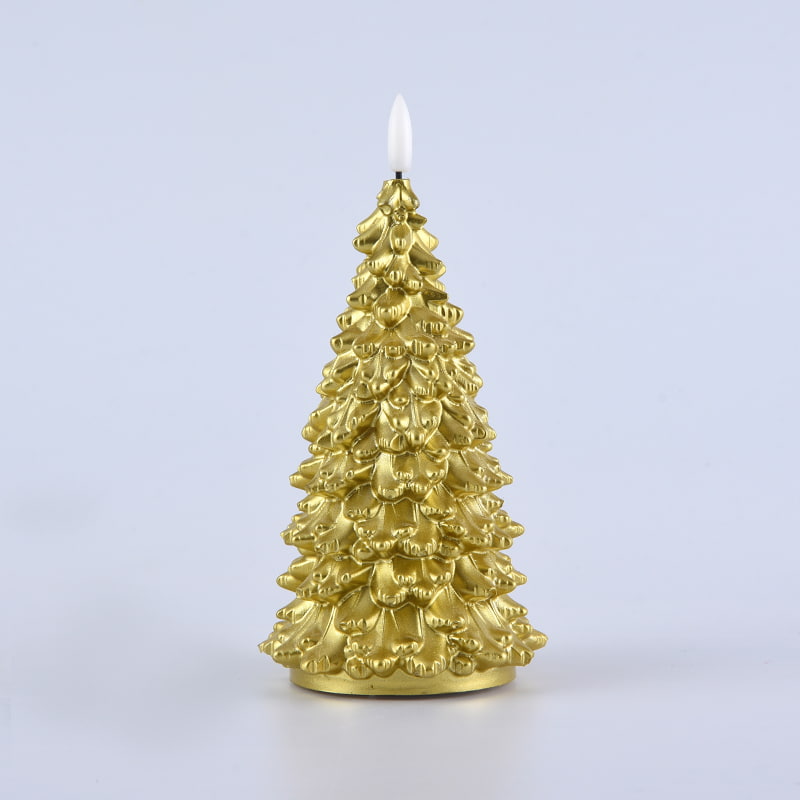
The standard LED votive replicates the classic votive candle dimension: approximately 1.75 inches in diameter and 2 inches tall. But the category has expanded significantly, and understanding the full range helps in selecting the right product for a specific visual context.
| Style | Typical Dimensions | Best For | Housing Type |
|---|---|---|---|
| Classic Votive | 1.75" D x 2" H | Tables, glass holders | Wax shell or frosted plastic |
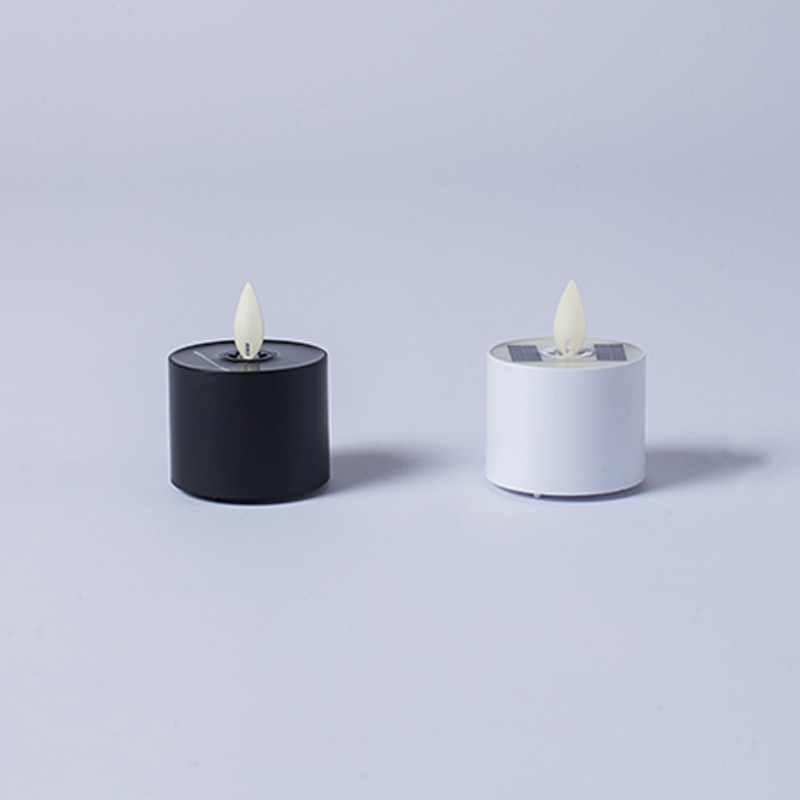
| Tealight Size | 1.5" D x 0.75" H | Tealight holders, lanterns | Clear or frosted disc |
| Pillar Votive | 2" D x 3–4" H | Centerpieces, mantels | Wax shell or opal acrylic |
| Floating Style | 2.5" D x 1.5" H | Water-filled bowls, ponds | Waterproof sealed shell |
| Color-Changing | Varies | Parties, themed events | Clear or colored glass shell |
| Remote Control | Standard votive or pillar | Large venues, hotels | Any type with RF module |
The floating style deserves special mention. Waterproof LED votive candle lights designed for use in water-filled bowls and decorative ponds have grown significantly in popularity for outdoor weddings and garden events. True waterproof units carry an IP67 rating, meaning they can be submerged to 1 meter for up to 30 minutes without damage. This enables table arrangements using wide shallow bowls of water with floating LED votives — an arrangement that's impossible with real candles and creates a striking visual effect, particularly outdoors after dark.
Getting the Most from Your LED Candle Lights: Maintenance and Longevity Tips
LED votive candle lights are low-maintenance compared to real candles, but they do require proper care to reach their rated lifespan. The following practices are standard in professional event and hospitality operations.
For coin-cell units, replace batteries when runtime drops below 4 hours regardless of whether the unit is still illuminating. Running batteries to full depletion can cause leakage that damages the PCB and is difficult to reverse. Keep spare battery sets in a sealed container to prevent pre-use discharge. Quality alkaline batteries outperform generics by 20–35% in runtime in LED votive applications.
Avoid deep discharge on lithium rechargeable units. The optimal practice is to charge after every 2–3 uses rather than running to full depletion. Most rechargeable LED candle lights reach a full charge in 2–4 hours via micro-USB or USB-C. Store at approximately 50% charge if not in use for more than a month — storing lithium cells at full charge for extended periods accelerates capacity degradation.
Wax-shell housings attract fingerprints and dust that visibly affect light scattering quality. Clean with a slightly damp microfiber cloth — never alcohol-based cleaners, which can cloud or crack the wax surface. Frosted plastic and acrylic housings can be cleaned with mild soapy water and dried thoroughly before use. Allow units to dry completely before powering on.
Store LED votive candle lights in a single layer in padded trays or individual foam slots to prevent housing damage. Stacking units directly will scratch wax shells and crack thin plastic housings. Temperature extremes shorten battery and LED life: store between 10°C and 35°C (50°F–95°F) and keep away from direct sunlight, which can yellow and harden wax shell materials over time.
The LED chip itself in a quality votive unit is rated for 50,000–100,000 hours of operation. At 6 hours of daily use, this equates to 22–45 years before the LED itself degrades to 70% of original brightness (the standard L70 rating). In practice, the battery housing, on/off switch, and timer circuit will require attention long before the LED does. Product failures in LED candle lights are almost always electrical connection issues, not LED burnout.
In commercial settings with large inventories, implement a rotation system where units cycle through use in numbered groups rather than always pulling from the same set. This ensures even battery cycling and identifies failing units before they cause visible inconsistency during events. A simple numbering system on the battery door with a rotation log is sufficient for most operations.