
 English
 Español
 Content
- 1 What Are Timer LED Candles and Why They're Worth It
- 2 How the Timer Mechanism Inside LED Candles Actually Works
- 3 Timer Settings Compared: 4H, 6H, 8H, and Remote-Adjustable
- 4 Key Specifications That Separate Good LED Candles from Disappointing Ones
- 5 Types of LED Candles with Timer Available on the Market
- 6 Where Timer LED Candles Work Best: Practical Use Cases
- 7 How to Get the Maximum Battery Life from Your Flameless Candles with Timer
- 8 Comparing Timer LED Candles to Real Candles: An Honest Assessment
- 9 Common Mistakes to Avoid When Buying and Using Timer LED Candles
- 10 Frequently Asked Questions About LED Candles with Timer
- 10.1 Can you override the timer and keep the candle on continuously?
- 10.2 Will the timer still work if I put the candle in a holder that blocks the base?
- 10.3 How do you reset the timer cycle to a different time of day?
- 10.4 Are LED candles with timer safe to leave unattended for weeks or months?
- 10.5 Do flameless candles with timer work in extreme temperatures?
What Are Timer LED Candles and Why They're Worth It
If you want candles that turn themselves on and off every day without any effort on your part, LED candles with timer are exactly what you need. These are battery-powered flameless candles equipped with a built-in microcontroller chip that manages a repeating on/off schedule automatically. You activate the candle once, and from that point on it follows the same daily cycle — glowing for a set number of hours, shutting off on its own, then turning back on the next day at precisely the same time. No matches, no worry about forgetting to blow out a flame, no wax mess on your furniture.
The most widely sold timer configuration is 6 hours on / 18 hours off in a continuous 24-hour loop. Switch the candle on at 7:00 PM, and it glows until 1:00 AM, then shuts itself off. The following evening at 7:00 PM it lights up again without any input from you. Some models offer 4-hour or 8-hour cycles, and premium versions with remote controls let you adjust the interval to whatever suits your routine.
The appeal goes well beyond convenience. Real candles carry genuine fire risk — the National Fire Protection Association reports that candles cause roughly 7,400 home fires in the United States each year. Flameless LED candles eliminate that hazard entirely. They produce no open flame, no carbon monoxide, no dripping wax, and virtually no heat. For households with young children, pets, or anyone who simply forgets to blow out candles before bed, the peace of mind alone justifies the switch.
This guide covers everything that matters: how the timer mechanism works, what specifications to look for when shopping, which types of battery operated candles with timer suit different situations, how to get the most battery life, and common mistakes buyers make. Whether you are outfitting a living room, planning a wedding reception, or stocking a restaurant with table lighting, the information here will help you buy the right product the first time.
How the Timer Mechanism Inside LED Candles Actually Works
Understanding the mechanics behind the timer helps you use these candles correctly and troubleshoot any issues that come up later. The timer is not a mechanical dial or an external clock module. It is a small integrated circuit chip — typically referred to as an IC chip — embedded inside the candle body near the base, sitting alongside the LED element and the battery contacts.
When you flip the candle's switch to the "on" or "timer" position for the first time, the chip registers that exact moment as the start point. It begins counting elapsed time from zero. Once the active period is complete — commonly six hours — the chip sends a signal that cuts power to the LED. The candle goes dark. The chip does not stop working during the off period; it keeps counting through the remaining eighteen hours of the cycle. When the full twenty-four hours have passed, the chip automatically restores power to the LED and the candle glows again at the same time it first came on.
This memory function is the key feature that makes timer LED candles genuinely useful for daily life. The chip anchors its cycle to the moment of first activation and repeats that rhythm indefinitely as long as the batteries hold charge. You do not need to reset anything day to day.
There is one practical implication worth understanding: if the batteries run out and you replace them, the cycle resets. The chip treats fresh battery installation the same as first-time activation, so the new on/off schedule is anchored to whatever time you replace the batteries. This is actually useful behavior — if your routine has shifted and you want the candles to run at different hours, simply replace the batteries and switch them on at your new preferred time.
When battery voltage drops close to depletion, some timer chips lose their timing accuracy. You may notice the candle switching on or off at irregular intervals — this is a reliable indicator that battery replacement is overdue, not a product defect.
Timer Settings Compared: 4H, 6H, 8H, and Remote-Adjustable
Not all flameless candles with timer use the same cycle length. Here is a practical breakdown of the options available and which situations each one suits best.
| Timer Setting | On Period | Off Period | Best For |
|---|---|---|---|
| 4-Hour | 4 hours | 20 hours | Short evening use, dinner tables, battery conservation |
| 6-Hour (standard) | 6 hours | 18 hours | General home décor, most everyday situations |
| 8-Hour | 8 hours | 16 hours | Long evenings, seasonal displays, hospitality settings |
| Remote-Adjustable (2H/4H/6H/8H) | Your choice | Remaining hours | Flexible schedules, households with varying routines |
For the majority of buyers, the 6-hour standard works well because it aligns naturally with a typical evening — candles on after dinner, off by midnight or shortly after. The 4-hour setting drains batteries more slowly and works well for people who want ambient light just during a meal or a brief relaxation period. The 8-hour setting is popular in retail spaces, hotel lobbies, and holiday displays where candles are often turned on mid-afternoon and need to remain lit through the evening hours.
Remote-controlled models with adjustable timers cost more — usually between $5 and $15 extra per candle compared to fixed-timer versions — but offer genuine flexibility. Many remotes allow you to select from 2, 4, 6, or 8-hour intervals, dim or brighten the LED, and switch between steady glow and flicker modes. If your schedule is inconsistent or you use the candles across different rooms with different needs, the investment is worthwhile.
Key Specifications That Separate Good LED Candles from Disappointing Ones
The LED candle market has expanded enormously over the past decade, and the quality range is wide. Products that look identical in a photograph can behave very differently in a real room. These are the specifications that actually determine whether a candle looks convincing and performs reliably.
LED Color Temperature
This is the single most important visual factor. Real candlelight burns at around 1800K to 2000K on the Kelvin scale — a deep, warm amber. The best flameless candles with timer use LEDs rated between 2700K and 3000K, which falls in the warm white range similar to traditional incandescent bulbs. Avoid any candle described as "cool white" or "daylight" — those LEDs are in the 5000K to 6500K range and will look harsh and artificial, nothing like a candle flame.
Flicker Quality
Cheaper models produce a mechanical, repetitive flicker — the LED blinks on and off at a fixed interval, which the eye quickly identifies as artificial. Higher-quality battery operated candles with timer use a randomized flicker algorithm, sometimes combined with a moving physical element or a 3D wick component that physically sways. The randomized pattern is noticeably more convincing because real flame movement is never perfectly regular. When product listings describe "natural" or "random" flicker, that is what they mean.
Wax Coating vs. Pure Plastic Body
The feel and look of the candle body matter more than many buyers expect. Budget candles use plain white or ivory plastic that looks unmistakably synthetic under close inspection. Mid-range and premium LED candles with timer coat the outer shell with real wax or use a wax-filled construction, which gives the surface the texture, translucency, and weight of an actual candle. When light shines through a wax shell, it creates the same soft glow you see in a real pillar candle — plastic simply cannot replicate this effect convincingly.
Battery Type and Expected Life
Battery life varies enormously depending on candle size, LED brightness, and battery chemistry. Small votive-style flameless candles running on a single CR2032 coin cell typically last 200 or more hours. Mid-size pillar candles using two or three AA alkaline batteries commonly reach 300 to 500 hours of cumulative on-time. Larger pillar candles with three C or D batteries can run for 700 to 1,000 hours. Switching from standard alkaline batteries to lithium chemistry extends runtime by roughly 30 to 40 percent and performs more reliably in cold temperatures — a consideration for candles placed outdoors or near drafty windows in winter.
Battery compartment design also matters. Look for a sliding or screw-off compartment at the base that is easy to access without tools. Some budget models require prying off a sticker-sealed panel, which becomes inconvenient after multiple battery changes.
Waterproofing for Outdoor Use
Standard indoor LED candles are not waterproof. If you plan to use them on a covered patio, inside a jack-o'-lantern, in a garden lantern, or in any location where moisture is a factor, you need candles specifically rated for outdoor use. True outdoor-grade flameless candles with timer use a sealed plastic housing (not wax, which absorbs moisture) and a twist-lock battery compartment that prevents water ingress. Look for IP44 or IP65 ratings — IP65 indicates full protection against water jets from any direction, which is the standard worth having for genuinely exposed outdoor placements.
Types of LED Candles with Timer Available on the Market
Timer-equipped flameless candles come in several distinct forms. Each has characteristics that make it better suited for certain placements and settings.
Pillar Candles
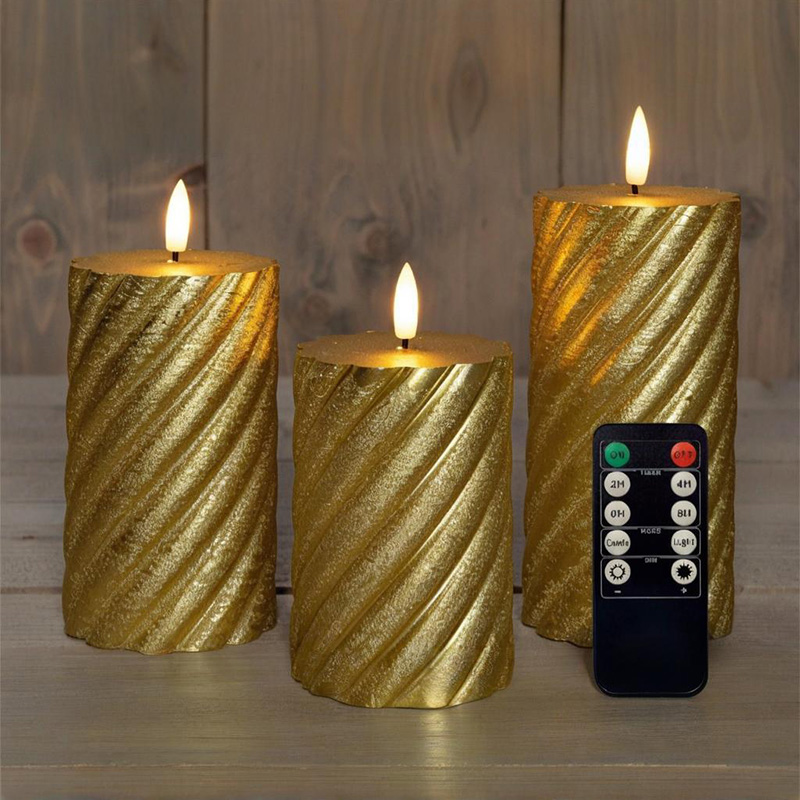
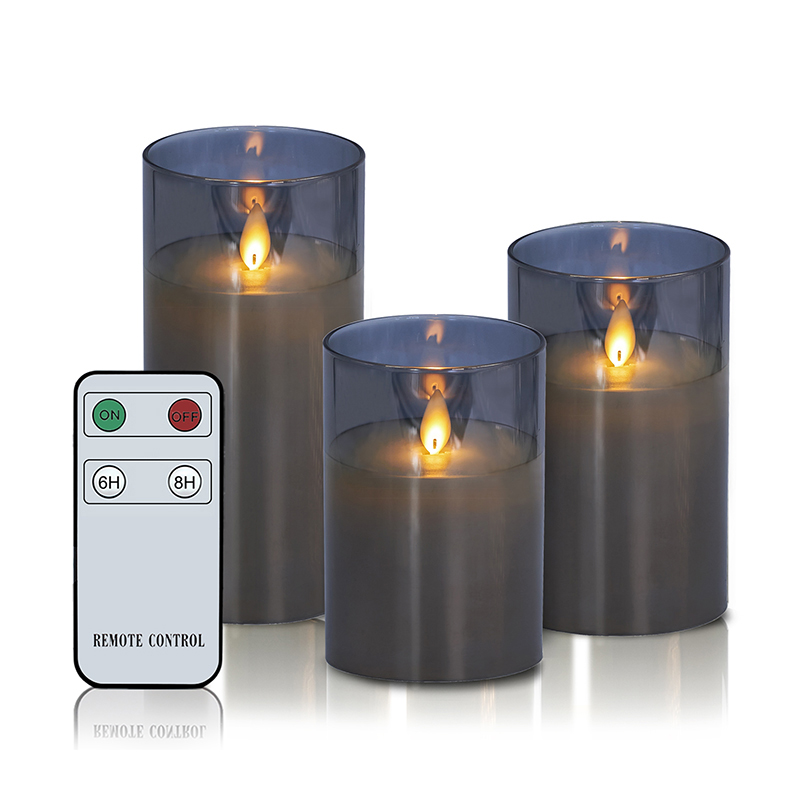
The most common and most versatile type. Pillar-style LED candles with timer typically range from 3 inches to 9 inches in height and 3 to 4 inches in diameter. They stand on their own without a holder, making them easy to group together on mantels, dining tables, shelves, and window sills. Pillar candles are usually available in sets of three or more graduated heights, which creates a layered display effect. Because of their larger battery compartments, they tend to have the best battery life of any LED candle type.
Taper Candles
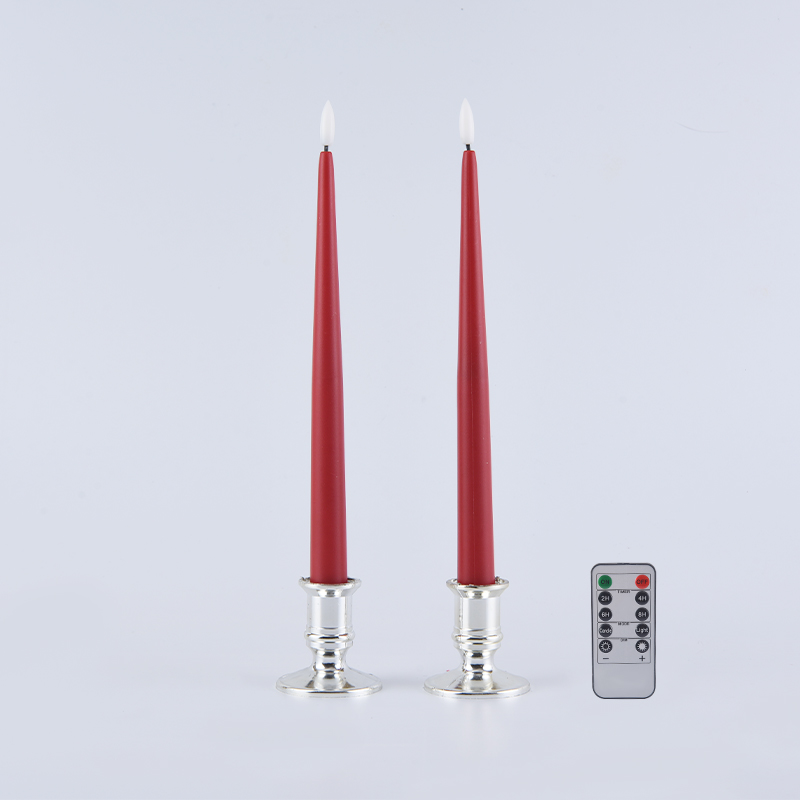
Tall, slender flameless taper candles with timer are designed for use in candlestick holders. They are a popular choice for formal dining settings, churches, and holiday table arrangements. The narrow profile and upright stance create a classic, elegant look. Most taper versions run on two AA or AAA batteries housed in a compartment near the base. Battery life is somewhat shorter than pillar candles due to the smaller compartment, but quality models still manage 150 to 300 hours of on-time.
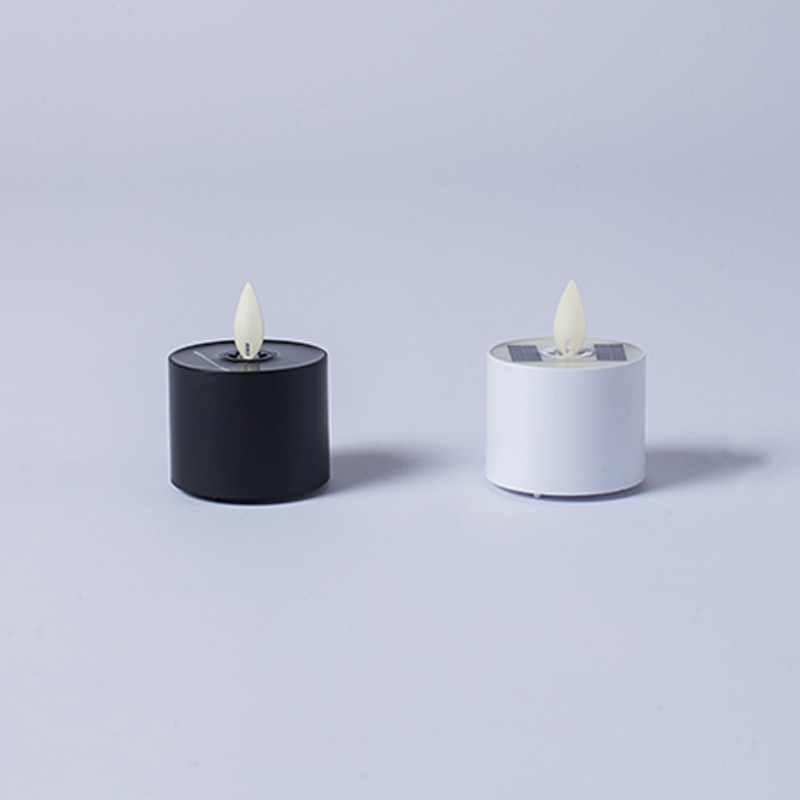
Votive and Tea Light Candles
Votive-sized and tea light LED candles with timer are the smallest format. They are typically used in clusters — lining a pathway, filling a tray, or placed inside glass votive holders and lanterns. The coin cell batteries they run on (usually CR2032) give them a quoted life of 200 or more hours. Their compact size makes them especially popular for event use: wedding reception tables, restaurant settings, and seasonal window displays where dozens or hundreds of candles are needed and individual manual operation would be impractical.
Window Candles
Electric window candles with timer are designed specifically for placement in window frames. They are particularly popular during the Christmas season, when illuminated windows are a traditional decorative element. Most window candle models feature a suction cup or clip base for secure mounting and a warm white LED that glows steadily rather than flickering. The timer function is especially valuable here because window candles are often difficult to reach once placed, and the automated schedule means the light appears consistently every evening without anyone needing to access the candle.
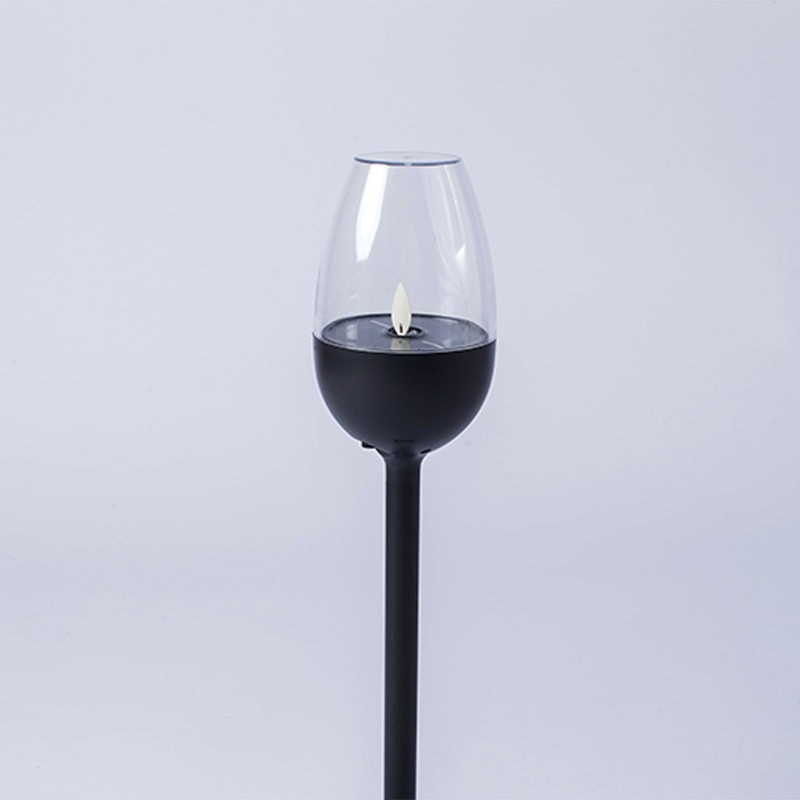
Outdoor Waterproof Candles
A distinct category built for exterior and weather-exposed use. These use sealed plastic bodies rather than wax, and their battery compartments are twist-locked or gasket-sealed to prevent moisture from reaching the electronics. Despite the utilitarian construction, quality outdoor timer LED candles still produce convincing warm-glow illumination and realistic flicker. They are used in outdoor lanterns, garden arrangements, front porch decorations, and inside carved pumpkins for Halloween displays.
Where Timer LED Candles Work Best: Practical Use Cases
The combination of automated scheduling and zero fire risk makes LED candles with timer genuinely more practical than real candles in several specific settings. These are the situations where they provide the clearest advantage.
Everyday Home Ambiance
For people who use candles regularly as part of their home atmosphere — on the mantel, kitchen counter, or beside the bathtub — the automated schedule eliminates the daily task of lighting and extinguishing candles. You set the timer once and the candles follow your routine on their own. For households where someone works from home or arrives back late, the candles are already glowing when the evening begins. This use case alone explains why battery operated candles with timer have become a staple product in home goods retail.
Holiday and Seasonal Decorating
Christmas, Halloween, Thanksgiving, and other seasonal periods drive a significant portion of flameless candle sales. During these times, candles are often placed in window displays, on stairs, across mantels, and in outdoor arrangements — many locations that would be inconvenient to visit twice daily. Timer LED candles handle this automatically, turning on each evening and off each night throughout the entire holiday season without any maintenance. The outdoor-rated versions are particularly valuable for front porch and garden displays where real flames would be extinguished by wind or rain.
Restaurants and Hospitality Settings
Restaurants that use candle lighting on tables face a daily operational task of lighting and later extinguishing dozens or hundreds of individual candles. Battery operated candles with timer eliminate this entirely — staff sets the candles in place, activates the timers on the first day, and the candles manage their own schedule from that point on. There is no fire risk, no melted wax on table linens, and no need for staff to circulate with a lighter before service. For hotels with lobbies, hallways, or room amenity displays, the same logic applies at a larger scale.
Vacant Properties and Home Security Staging
Real estate agents and property managers sometimes use timer LED candles in vacant homes to create the appearance of occupancy. Candles glowing in windows at consistent evening hours suggest the property is lived in, which can deter break-ins. Obviously, real candles would be completely unsuitable for this purpose. Timer-controlled LED versions are safe to leave unattended indefinitely and serve the purpose well.
Weddings and Events
Event planners favor flameless candles with timer for several reasons. Many venues prohibit real flames outright due to fire codes or insurance requirements. Even where flames are permitted, managing hundreds of candles at a reception — keeping them lit, replacing burned-down ones, preventing drips on linens — requires significant labor. Votive and pillar LED candles with timer are set up once during venue preparation and run through the entire event on their own. The result is consistent ambient lighting throughout the evening without any ongoing maintenance.
How to Get the Maximum Battery Life from Your Flameless Candles with Timer
Battery cost is one of the few ongoing expenses associated with timer LED candles, and it is easy to reduce through informed choices. These practices make a meaningful difference in how long each set of batteries lasts.
- Use alkaline batteries from established brands rather than no-name generics. Generic batteries often have lower total capacity and can cause timer irregularity as they deplete.
- For candles in hard-to-reach or outdoor locations, switch to lithium batteries. They last 30 to 40 percent longer than alkaline cells in LED applications and perform reliably down to -20°C, unlike alkaline batteries which lose capacity in cold conditions.
- Avoid rechargeable NiMH batteries in most timer LED candles. They operate at 1.2 volts rather than the 1.5 volts of alkaline cells, and this lower voltage can cause the timing chip to behave erratically, particularly as the charge drops.
- Choose a shorter timer cycle if you do not need eight hours of light. A 4-hour timer uses the battery at the same rate per hour as a 6-hour timer, but runs only four hours each day instead of six, which extends total battery life proportionally.
- Store candles with batteries removed during extended periods of non-use, such as between holiday seasons. Even in the "off" phase of its cycle, the timer chip draws a small amount of current. Over several months of storage, this parasitic drain can flatten the batteries before the next use.
- Replace batteries in the whole set at once rather than one candle at a time. This keeps all candles on synchronized schedules, which is particularly useful when you have multiple candles set to turn on at the same time each evening.
To put realistic numbers on this: a standard pillar candle running three AA alkaline batteries on a 6-hour timer cycle will consume roughly 6 hours of battery power each day. At 300 total hours of rated runtime, that translates to about 50 days of daily use per set of batteries — roughly seven weeks. Switching to lithium batteries pushes that to nine or ten weeks between changes.
Comparing Timer LED Candles to Real Candles: An Honest Assessment
Timer LED candles are not a perfect substitute for real candles in every respect. Understanding the trade-offs helps you decide where to use each type and avoid disappointment.
| Factor | Real Wax Candles | LED Candles with Timer |
|---|---|---|
| Fire safety | Open flame risk | No flame, no risk |
| Visual realism | Organic, fully natural | Very convincing from 3+ feet |
| Scent | Available in scented versions | None (unless scented wax body) |
| Automated schedule | Manual only | Built-in 24-hour cycle |
| Long-term cost | Replaced when burned down | Battery cost only, candle lasts years |
| Outdoor use | Wind extinguishes flame | Weatherproof versions available |
| Warm heat output | Yes — gentle warmth in a room | Virtually none |
| Wax drips / mess | Common with pillar and taper styles | None |
| Suitable for children and pets | Requires supervision | Safe, no supervision needed |
The area where real candles hold a clear advantage is scent. Scented candles — whether soy, paraffin, or beeswax — release fragrance as the wax burns, which LED candles cannot replicate through the LED mechanism alone. Some manufacturers offer LED candles with a scented wax body, where the candle's outer shell is made from actual scented wax. The heat generated by the LED (which is minimal) does release a faint scent, but it is nothing like the fragrance throw of a burning scented candle. If fragrance is important to your candle use, real candles are the better choice for that specific purpose. For everything else — safety, convenience, cost over time, outdoor use, and automated scheduling — timer LED candles are a practical improvement.
Common Mistakes to Avoid When Buying and Using Timer LED Candles
After reviewing hundreds of buyer complaints and product reviews, certain mistakes come up repeatedly. Avoiding these will save you money and frustration.
- Buying based on product photos alone. The image in a listing is always taken under flattering conditions with professional photography. A candle that looks like warm, natural candlelight in a stock photo may produce a harsher, obviously artificial light in your actual space. Check the listed color temperature (aim for 2700K–3000K) and read user reviews that specifically comment on lighting quality.
- Overlooking the difference between timer mode and constant-on mode. Many LED candles have two switch positions — one for constant-on operation and one for timer mode. New users sometimes activate the constant-on setting, notice the candle doesn't turn itself off, and assume the timer is broken. Check the switch positions in the product documentation before concluding there is a defect.
- Using indoor candles outside. A standard wax-body LED candle placed in a garden lantern or on a porch railing will be damaged by moisture over time. The battery compartment is not sealed, and water intrusion will corrode the contacts. Only purchase candles specifically listed as waterproof or outdoor-rated for any exterior placement.
- Expecting all candles in a set to synchronize automatically. If you buy a set of six pillar candles and activate each one at a slightly different time, each will follow its own cycle anchored to its individual activation time. To keep them synchronized — which looks better when they're displayed together — activate all candles at the same moment by switching them all on within the same minute.
- Choosing price over quality for high-visibility placements. A set of three budget pillar candles placed on a mantel at eye level will be examined closely by anyone in the room. The artificial flicker pattern and cool-toned LED color will be obvious. Reserve budget options for less scrutinized placements — inside lanterns, behind frosted glass, or in dark corners where the exact quality of the flicker is less noticeable.
- Not accounting for battery compartment accessibility before purchasing. Some candle designs place the battery compartment in a location that is difficult to reach once the candle is placed inside a holder or lantern. Before committing to a style, check that the compartment is accessible with the candle in its intended position, or confirm you can easily remove the candle for battery changes.
Frequently Asked Questions About LED Candles with Timer
Can you override the timer and keep the candle on continuously?
Yes, on most models. The majority of flameless candles with timer include both a timer-mode switch position and a separate constant-on position. Sliding to the constant-on setting disables the timer chip and keeps the LED burning until you manually switch it off or the batteries run out. This mode uses battery power faster, so it is not recommended for extended use, but it is available for situations where you want the candle lit throughout an event regardless of timing.
Will the timer still work if I put the candle in a holder that blocks the base?
Yes. The timer chip is internal and does not require any external signal or light exposure to function. It runs entirely from the battery, regardless of what surrounds the candle body. The only thing that would disrupt the timer is a voltage drop from depleted batteries or physically toggling the switch.
How do you reset the timer cycle to a different time of day?
The simplest method is to replace the batteries and switch the candle back on at your new desired start time. The chip treats the fresh battery installation as a reset and anchors the new cycle to the moment you activate it. If the batteries are still in good condition, you can also switch the candle fully off (not to the timer position, but to the off position if one exists), wait a few seconds, and then switch back to timer mode — though not all models support a manual cycle reset this way.
Are LED candles with timer safe to leave unattended for weeks or months?
Yes, within the limits of battery life. Because there is no flame, no heat source, and no combustible material involved in the candle's operation, there is no fire or heat-related hazard from leaving them unattended. The only thing that will happen if batteries deplete while you are away is that the candles simply stop glowing. This makes timer LED candles a practical choice for vacation homes, rental properties, or seasonal displays that are not checked regularly.
Do flameless candles with timer work in extreme temperatures?
Indoor candles function normally within the temperature range typical of any heated or cooled interior space — roughly 0°C to 40°C. Outdoor candles face more challenging conditions. Standard alkaline batteries lose significant capacity below freezing, which can shorten runtime and occasionally cause timer irregularity. Lithium batteries maintain their rated capacity down to approximately -20°C and are the recommended choice for any candle used outdoors during winter months.