
 English
 Español
 Content
To understand how flameless LED candles work, you can imagine them as a small electronic system disguised as a candle. Unlike traditional candles that produce light through chemical combustion, these candles "trick" our eyes through a clever combination of circuitry and optical design.
⇨ Here are some key aspects of how these electronic candles work internally:
→ Power Source and Circuitry
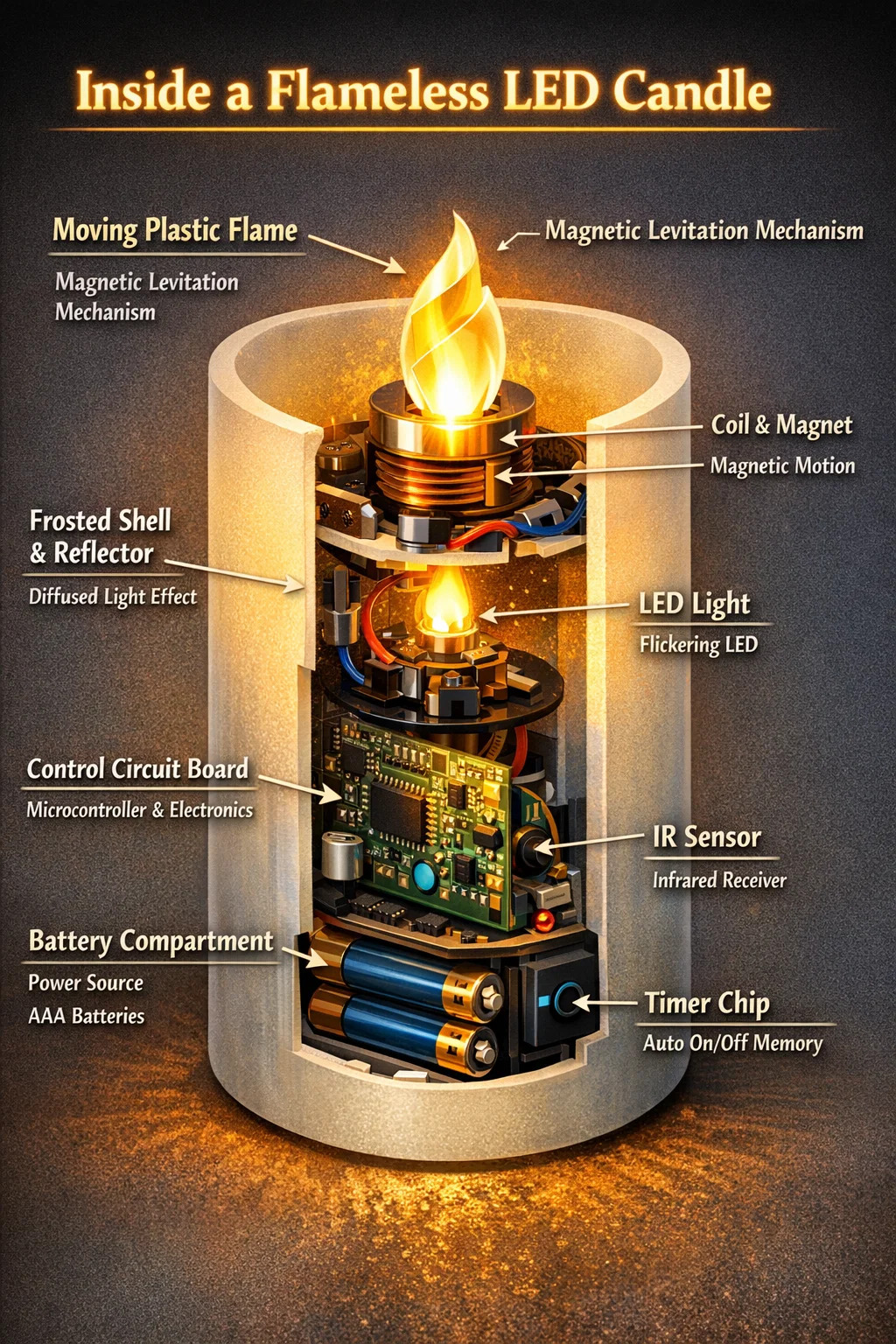
Each flameless LED candle typically has a battery compartment at its base. When you turn on the switch, the battery power activates a miniature control circuit board inside. This circuit board acts as the candle's "brain," controlling when the light turns on and how its brightness changes.
→ LED Light Source
The core light source of this type of candle is a semiconductor light-emitting diode (commonly known as an LED). Unlike ordinary light bulbs, this LED emits a warm yellow light similar to a real flame. Even more cleverly, the circuit board controls the current to fluctuate, causing the light to randomly flicker and dim, thus simulating the visual effect of a flame flickering in a breeze.
→ Realistic "Flickering" Mechanical Design
To make flameless LED candles look even more realistic, many high-end models incorporate a mechanical device:
Magnetic Levitation: A movable plastic piece is installed at the wick position.
Principle: A small coil inside is energized, generating magnetic force that constantly pushes and pulls this small plastic piece.
Effect: Combined with the LED light, this flickering plastic piece casts shadows onto the wall or casing, making it look like a flame is dancing.
→ The Magic of Reflection and Refraction
To make the light less harsh, the designers of electronic candles use special frosted materials on the outer layer of the "flame," or install a reflector at the base of the wick. This makes the light softer and more even, and from the side, the way the light diffuses is very similar to the burning of real candle wax.
→ Smart Timing and Remote Control
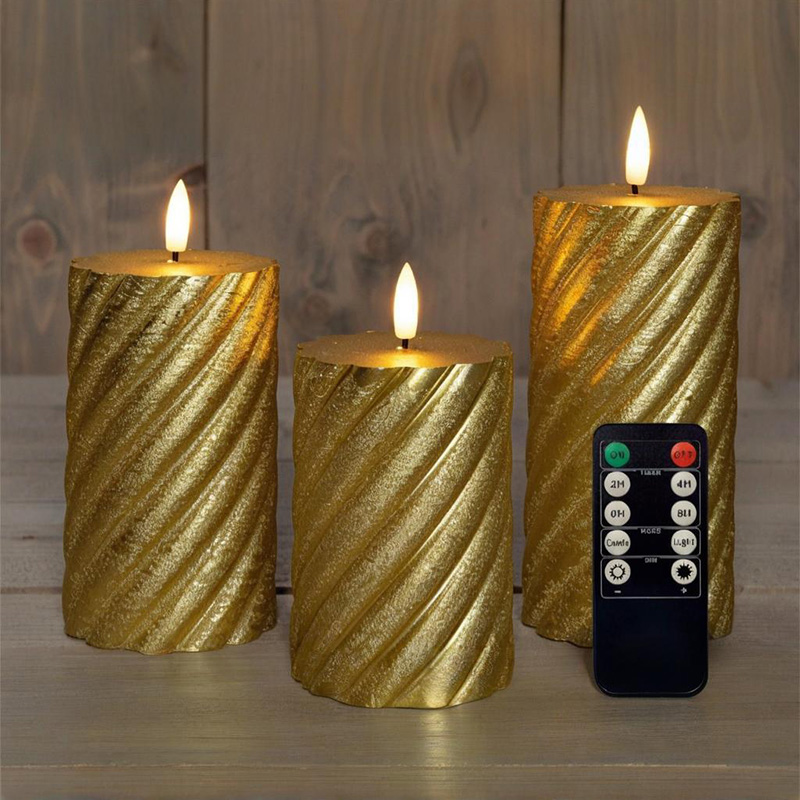
Many flameless LED candles also have built-in sensing elements. For example, some models have an infrared receiver, allowing you to remotely light them using a remote control. Some models even have a timer chip that remembers when you turn them on, automatically lighting up at dusk every day and turning off automatically late at night. This "memory" is entirely achieved through pre-programmed electronic circuits.
→Safe, sealed casing
Because no oxygen is needed for combustion, the entire internal structure can be tightly enclosed in a paraffin or plastic casing. This means that no heating components are directly exposed, and even after being on for a long time, the casing will only remain slightly warm, making it ideal for use in various home environments.