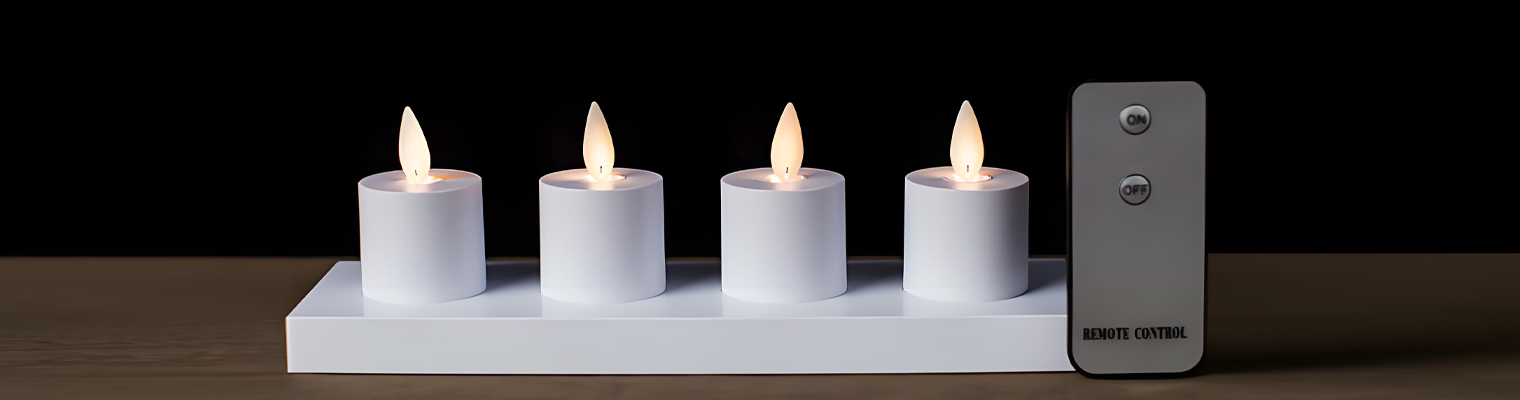
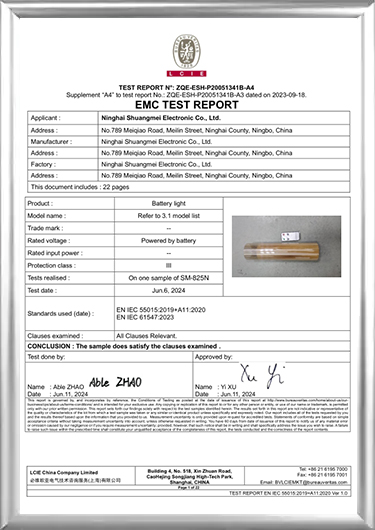
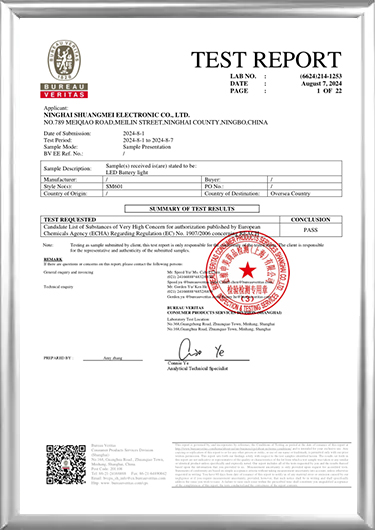
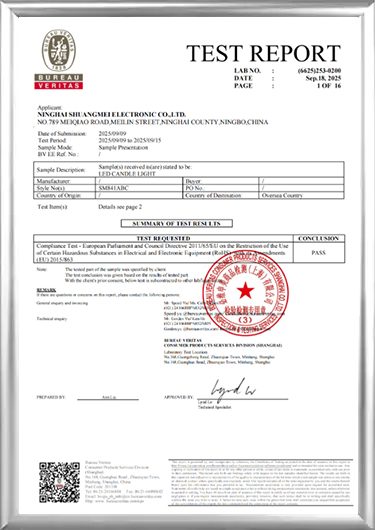
The evolution of ambient lighting has seen a significant shift toward solutions that prioritize both aesthetic appeal and operational efficiency. In this context, Flameless Rechargeable Candles represent a sophisticated blend of electronic engineering and design artistry, moving beyond the inherent limitations of traditional combustion-based lighting elements. Ninghai Shuangmei Electronic Co., Ltd., with its commitment to independent R&D and bespoke client solutions, sits at a critical intersection in the development and refinement of this specialized technology.
Core Principles and Operational Sophistication
Flameless Rechargeable Candles operate on fundamental principles of solid-state lighting and sophisticated power management, offering a robust and enduring alternative for environments ranging from hospitality to consumer decor.
Illumination Mechanism: At the heart of the product lies the Light-Emitting Diode (LED). Unlike incandescent sources, LEDs provide highly efficient light output with minimal thermal generation. The characteristic 'flicker' is not a physical flame but a carefully engineered control circuit that modulates the LED’s intensity and timing to mimic the stochastic movement and warm glow of a burning wick, achieving visual realism without combustion.
Energy and Power Infrastructure: The designation 'rechargeable' is paramount, indicating an embedded, long-cycle energy storage system—typically advanced lithium-ion or nickel-metal hydride cells. This infrastructure is seamlessly integrated with an inductive or contact charging interface, enabling the units to be rapidly replenished on centralized trays or bases. This architecture drastically reduces the operational costs and material waste associated with single-use batteries.
Material Science and Form Factor: The external housing often utilizes materials chosen for aesthetic fidelity and durability. Many advanced units employ real paraffin wax shells, providing the authentic tactile and visual texture of a traditional candle. This wax, however, remains unmelted and pristine due to the LED's low heat profile, preserving the candle's form factor indefinitely. The design versatility, supported by Ninghai Shuangmei's extensive product line, allows for various forms, including tealights, votives, pillars, and tapers.
Control and User Interface: Modern Flameless Rechargeable Candles incorporate advanced control functionalities for enhanced user experience and integration into controlled environments. These may include radio frequency (RF) or infrared (IR) remote control capabilities for simultaneous management of multiple units, as well as integrated programmable timers for automated cycling (e.g., 5 hours on, 19 hours off).
Synergy with Ninghai Shuangmei Electronic Co., Ltd.
The expertise and operational ethos of Ninghai Shuangmei Electronic Co., Ltd. are particularly well-suited to the demands of the advanced Flameless Rechargeable Candle market, especially concerning customization and intellectual property.
Customization in Optical and Shell Design: The company's dedicated R&D team is positioned to provide specialized solutions addressing nuances in client requirements. This involves tailoring the light temperature (color) and flicker frequency of the LED output to meet specific ambiance needs—for example, a very warm, slow flicker for high-end dining versus a brighter, faster pulse for event spaces. Furthermore, the capacity for developing specialized, patented enclosures (e.g., specific finishes, water-resistant designs, or unique decorative elements) aligns perfectly with the need for distinct product offerings.
Power Management Innovation: The industry requires continued advancements in power efficiency and recharge cycles. Ninghai Shuangmei’s core competence in electronics allows for the development of highly optimized charging circuits and battery management systems that maximize operational time between recharges and extend the overall lifespan of the embedded power cell, a key factor in commercial and hospitality applications.
Intellectual Property and Market Differentiation: The mention of multiple domestic and international product patents underscores the company's commitment to delivering novel and unique value. In the highly competitive electronic lighting sector, this focus on unique design and innovative technology is essential for establishing and defending market share against generic alternatives.
Technical Feature Overview
The core appeal of this technology is encapsulated in its functional advantages over conventional candles.
| Feature Category |
Technical Aspect Focus |
Operational Benefit |
| Safety |
Absence of Open Flame/Combustible Material |
Eliminates fire hazard and associated liabilities. |
| Maintenance |
Sealed Electronic System & Non-Consumable LED Source |
Requires no wick trimming, wax cleanup, or frequent replacement. |
| Durability |
Solid-State Components & Robust Housing |
Exhibits long operational lifetime, often measured in thousands of hours for the LED. |
| Flexibility |
Cordless, Rechargeable Power Source |
Enables placement in non-wired or difficult-to-access locations. |
| Ambiance |
Optically Engineered LED/Diffuser System |
Provides the aesthetic warmth and visual movement of candlelight. |
| Control |
Integrated Circuitry and External Interface |
Allows for remote control, synchronization, and automated timing functions. |
Frequently Asked Questions (FAQ)
Flameless Rechargeable Candles, as an advanced electronic product, often lead to specific inquiries regarding their long-term performance and technical upkeep.
Q1: How is the 'realistic flicker' effect technically generated?
A: The effect is achieved through a miniature, pre-programmed control circuit utilizing micro-controllers or similar logic. This circuitry introduces a subtle, non-repeating variance in the pulse-width modulation (PWM) of the LED, which changes the perceived light intensity and movement in a way that physiologically mimics the chaotic nature of a convection-driven flame.
Q2: What is the primary advantage of inductive charging technology in these units?
A: Inductive charging utilizes electromagnetic transfer across a small air gap, eliminating the need for exposed metal contacts. This dramatically improves the unit's ingress protection (IP) rating against moisture and accidental spills, increasing its longevity and reliability, particularly in demanding commercial environments like restaurants or outdoor event settings.
Q3: Does the LED light source eventually need replacement?
A: The integrated LED is a highly durable, solid-state component. Its lifespan is generally measured not in failure, but in L70-L50 metrics, which refer to the duration until the light output declines to 70% or 50% of its initial luminosity. This operational lifespan often exceeds 50,000 to 100,000 hours, meaning the power source (the rechargeable battery) will typically complete hundreds of charge cycles before the LED reaches its long-term depreciation point.
Q4: Can the exterior wax coating melt if the candle is left in sunlight or high temperatures?
A: Yes, even though the internal LED generates minimal heat, the paraffin wax used in the external shell maintains its low melting point, similar to traditional wax. Sustained exposure to direct sunlight or temperatures approaching the wax's melting threshold (often around 120°F or 50°C) can cause structural deformation of the shell, so environmental consideration is necessary for placement.
Q5: What considerations are involved in battery degradation over time?
A: The embedded rechargeable cell will experience a natural decline in its storage capacity over multiple charge-discharge cycles. The design quality, often emphasized by companies like Ninghai Shuangmei through specialized electronics, focuses on optimized charging and discharge profiles to minimize this degradation, ensuring the cell retains a high percentage of its initial capacity for a maximized number of cycles.
Q6: How does Ninghai Shuangmei address bespoke requests for housing materials beyond wax?
A: Leveraging their independent R&D capability, the company can develop and integrate alternative housing materials, such as specific grades of polycarbonate, treated glass, or unique resin composites. This flexibility is essential for clients requiring specific characteristics like enhanced impact resistance, specific optical diffusion properties, or superior environmental resistance for outdoor use.


 English
 Español